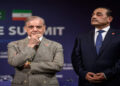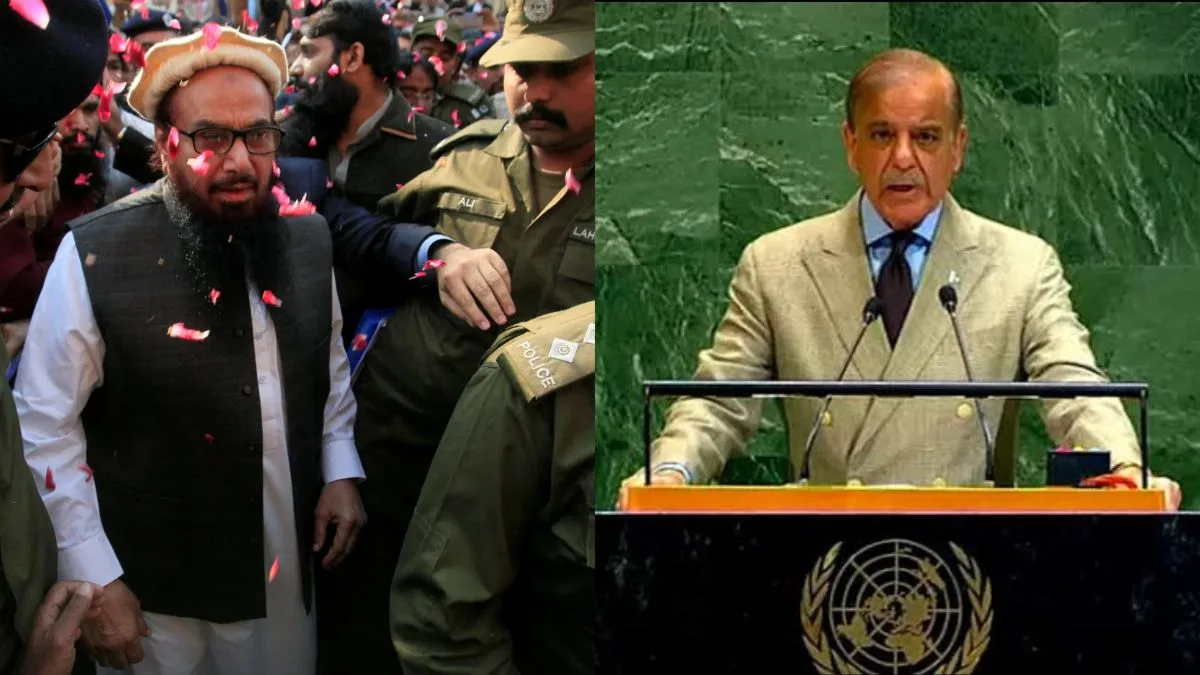
Pakistan Prime Minister Shehbaz Sharif used his address at the 81st UN General Assembly to flag an “alarming rise” in Islamophobia, accusing an “RSS-driven Hindutva ideology” in neighbouring India of fuelling religious hatred, lynchings, communal violence, attacks on places of worship, and curbs on religious freedom. He cited the recent demolition of a 150-year-old mosque in Uttar Pradesh’s Saharanpur as evidence and reiterated long-standing claims on Kashmir, alleging illegal occupation and rights abuses while calling for a UN-mandated plebiscite.
From India’s perspective, this is predictable propaganda recycled at every UNGA. India has consistently rejected Pakistan’s assertions on Kashmir, affirming that Jammu and Kashmir is, was, and will remain an integral part of India.
New Delhi typically exercises its Right of Reply through a junior diplomat, dismissing such interventions as interference in internal affairs and highlighting Pakistan’s own sponsorship of cross-border terrorism.
Communal incidents occur in India, as in any large diverse democracy, and are addressed through law, courts, politics, and public debate, not state doctrine. India’s Muslim population of over 200 million enjoys constitutional equality, political representation, and growing economic participation; claims of systemic “RSS-driven” erasure ignore this scale and India’s plural democratic framework.
Reality Inside Pakistan: Hinduphobia as State Practice
Pakistan’s foundational Two-Nation Theory institutionalised the othering of Hindus. At Partition, non-Muslims formed a substantial share of the population in what became Pakistan; today Hindus are reduced to roughly 1.6–2%.
Temples have been systematically destroyed, converted, or abandoned, of hundreds of pre-Partition sites, the vast majority are gone or repurposed.
Forced conversions and marriages of Hindu (and Christian) girls, especially in Sindh, remain rampant: dozens to hundreds of cases are documented annually by groups like the Centre for Social Justice, with minors disproportionately targeted and justice routinely denied.
Blasphemy laws are weaponised for land grabs, personal scores, and mob violence; minorities face extrajudicial killings, temple attacks, employment discrimination, and curriculum that portrays Hindus as historical enemies.
Hinduphobia is not fringe, it is embedded in textbooks, political rhetoric, and social norms. Backlashes to events in India (e.g., Babri Masjid) have triggered mass temple destruction and killings of Hindus in Pakistan. Ahmadis are constitutionally considered non-Muslim and face severe restrictions; Christians and Shias endure similar patterns of violence and forced conversion. This is not isolated vigilantism; it reflects the Pakistani state’s ideological and institutional priorities.
Pakistani State Policy and Internal Realities
Pakistan’s military-intelligence complex has long cultivated jihadist groups as strategic assets against India (Kashmir) and for influence in Afghanistan. Osama bin Laden lived for years in Abbottabad near the Pakistan Military Academy until the 2011 U.S. raid, hardly the mark of a state rigorously combating extremism.
The 2002 murder of Wall Street Journal reporter Daniel Pearl in Karachi involved militants with ties to groups historically linked to the ISI; Khalid Sheikh Mohammed later claimed responsibility for the beheading. These are not ancient history; they illustrate a pattern of selective tolerance and dual policy.
In Balochistan, enforced disappearances, extrajudicial killings, and collective punishment by security forces (Frontier Corps, intelligence agencies, and proxies) are extensively documented by local human-rights monitors and UN experts.
Hundreds of cases are reported yearly, including students, activists, women, and even children; families face harassment when they demand accountability. The state frames this as counter-terrorism against Baloch insurgents, yet the scale, impunity, and targeting of peaceful voices point to deeper repression over resources and autonomy.
Alas, there is no RSS in Pakistan to blame internal terror on!
The Rashtriya Swayamsevak Sangh is an Indian socio-cultural organisation with no organisational presence, shakhas, or official activity in Pakistan. Historical RSS participation existed in pre-Independence pre-Partition India in what is now Pakistan, especially among Sindhi Hindus before; but post-1947, the new Pakistani state suppressed it and most Hindus fled persecution and torture by the Islamist state of Pakistan or were marginalised within the society there.
Pakistani rhetoric routinely invokes “RSS ideology” or “Hindutva” as a bogeyman to deflect its population’s focus on its withered state of affairs within the state. Strategists and analysts have long noted Pakistan’s use of externalised grievances to deflect from internal failures, economic distress, military dominance, ethnic insurgencies, and the costs of supporting proxies.
The pattern of raising Kashmir and “Islamophobia” at the UN while ignoring Balochistan, minority flight, and jihadist safe-havens is textbook. As many South Asia watchers observe, a state that cannot protect its own Hindus, Ahmadis, or Baloch citizens lacks moral standing to lecture democracies on religious freedom.
Sharif’s speech fits the annual script: moral high ground abroad, denial and deflection at home. India’s response remains consistent, reject the narrative, highlight facts on the ground, and focus on its own democratic evolution. True religious harmony requires accountability where persecution is structural, not selective amplification of the neighbour’s flaws.
Pak PM Shehbaz Sharif’s Self-Goals at the UNGA
Pakistani leadership’s performances keep supplying their own rebuttals. Alongside blaming “RSS-driven ideology” for India’s alleged religious intolerance, he has previously claimed credit for containing terrorists who would otherwise be “roaming on the streets of New York or London.”
#WATCH | New York, US: "When will you prosecute Lashkar-e-Taiba (LeT) chief Hafiz Saeed?" ANI questions Pakistani Prime Minister Shehbaz Sharif again as he leaves the UN headquarters. Pakistani PM refuses to answer. pic.twitter.com/hqzw9w3lDM
— ANI (@ANI) September 24, 2026
And when confronted this week at the UN headquarters by an Indian reporter asking when Pakistan would stop harbouring terrorists and when it would prosecute Lashkar-e-Taiba founder Hafiz Saeed, Sharif simply walked away without answering.
The “New York and London” Line
In his 2025 UNGA address (the clip has been widely recirculated ahead of and during the 2026 session), Sharif positioned Pakistan as a global bulwark against terrorism. “Had these terrorists not been encountered by us, they would have been roaming on the streets of New York and London and God knows, Far East,” he said. The formulation has been popularly rendered as “If we haven’t controlled our terrorists…” – a phrasing that many observers treated as an inadvertent confession that Pakistan hosts the very networks it claims to fight. Whether the exact words were “these” or “our,” the implication is the same: Pakistan presents itself as the indispensable container of terrorists who would otherwise threaten Western cities.
گھر کے پچھلے صحن میں سانپ پالنے کا نتیجہ یہی ہوتا ہے کہ ایک دن گھر والوں کو بھی ڈستے ہیں۔ پاکستان نے پچاس برس پہلے انتہا پسند جہادیوں کو مسلح کرنا شروع کیا تھا۔ اب پاکستان دہشت گرد حملوں کا نشانہ بننے والے ممالک میں سب سے اوپر ہے۔ ہے کوئی سبق سیکھنے والا؟ pic.twitter.com/zJ7cSD1NSw
— Husain Haqqani (@husainhaqqani) September 25, 2026
This sits uneasily with the Global Terrorism Index 2026 ranking Pakistan as the world’s most terrorism-impacted country, with 1,139 deaths and 1,045 attacks in 2025. The snakes kept in the backyard (as Husain Haqqani and Hillary Clinton before him warned) are biting Pakistan hardest.
Walking Away from Hafiz Saeed
At this year’s UNGA, the contradiction became even sharper. As Sharif entered and later left the UN headquarters, an ANI journalist repeatedly asked two questions that he chose to turn a blind eye and a deaf ear to. “Prime Minister, when will you stop harbouring terrorists?” and “When will you prosecute Lashkar-e-Taiba (LeT) chief Hafiz Saeed?”
Sharif offered no reply on either occasion and walked on. Hafiz Saeed, the UN-designated terrorist and alleged mastermind of the 2008 Mumbai attacks (and named by India’s NIA in connection with more recent plots including Pahalgam), has long operated from Pakistani soil with only intermittent, limited legal action , usually on financing charges rather than the core terrorism cases India and others have pressed.
The silence speaks louder than any prepared UNGA paragraph about Islamophobia or Kashmir.
Experts Who Have Called the Bluff
South Asia specialists have documented this pattern for years:
C. Christine Fair, Georgetown University scholar and author of Fighting to the End, has repeatedly shown how Pakistan’s military-dominated strategic culture treats India as an existential “Hindu” threat, instrumentalises Islamist proxies, and produces an apartheid-like system for non-Muslims. The blowback terrorism and minority persecution are features, not bugs, of that ideology. Fair has been vocal that no one is truly safe in Pakistan outside narrow sectarian lines, and that the state’s own choices, not any Indian organisation, explain the violence.
Francesca Marino, Italian journalist and author who has reported extensively from inside Pakistan (including books exposing terror networks and Balochistan), has consistently called out Islamabad’s double game: sponsoring groups that attack India while denying responsibility, and repressing internal dissent and minorities. Her work details how the establishment runs “terror factories” and how voices exposing it are hounded.
Jeff M. Smith, strategic analyst, has long argued that betting on Pakistan as a reliable partner was a strategic mistake. The military’s support for the Taliban, Haqqani Network, and anti-India groups, combined with Osama bin Laden’s long residence near a military academy and the dual policy on terror, produced exactly the instability now reflected in the GTI rankings. Pakistan’s civilians pay the price for the establishment’s choices.
These are not Indian talking points. They come from independent analysts who have studied primary sources, military writings, and ground realities.
Back to the Core Question
Pakistan routinely invents an Indian ideological villain. Strategic experts and journalists alike, such as Christine Fair, Francesca Marino, Jeff M. Smith, and Husain Haqqani have all, in different ways, called this the long-running Pakistani bluff: externalise blame, claim victimhood or indispensable status, and avoid accountability for the networks and policies that produce both internal chaos and cross-border violence.
The reality remains unchanged: Pakistan’s problems with terrorism, religious intolerance, and minority persecution are home-grown. No amount of UN podium rhetoric or selective silence can relocate the responsibility.