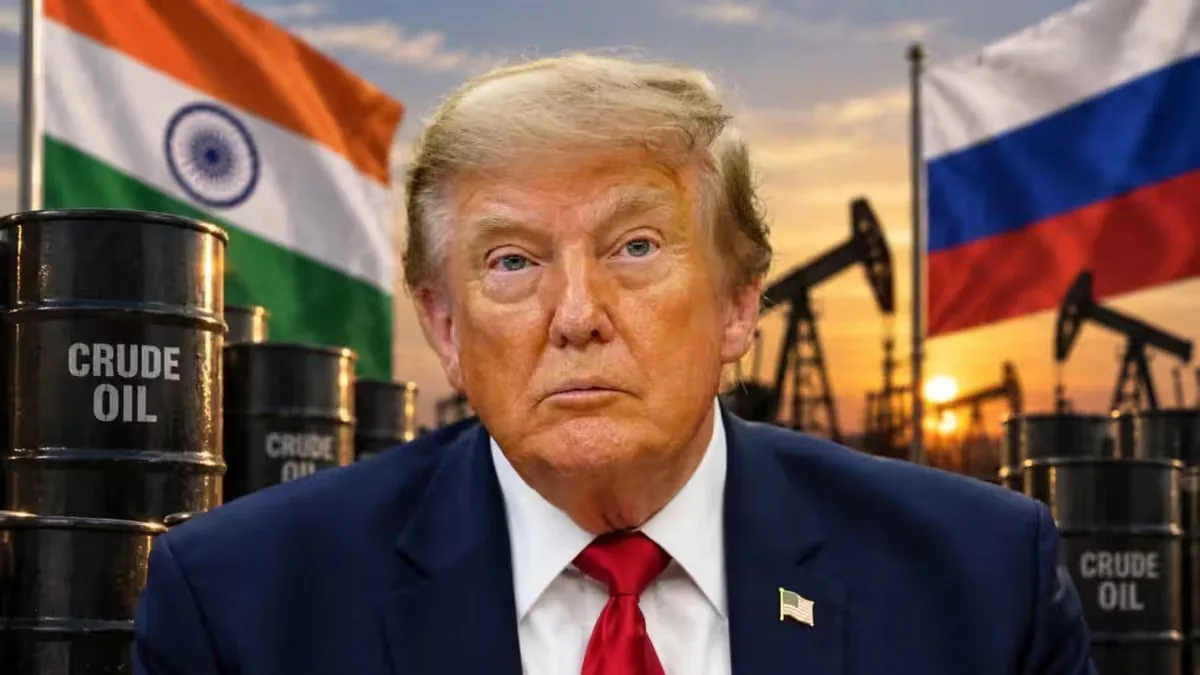
On October 16, Friday President Trump signed an executive order to grant an exemption for sanctions and tariffs mandated by the Lindsey O. Graham Sanctioning Russia and Iran Act of 2026. The President told the Congress that this decision was “in the national interest of the United States”. If this waiver were not issued, Washington would have the legal right to impose sanctions on the five top importers of Russian oil and gas in as little as 30 days. India was on that list.
The headlines call it “major relief”. It is that. But Indians should read it for what it really is: proof that a confident nation, standing firm on its national interest, can absorb the heaviest economic pressure Washington can apply, and outlast it.
A law written to coerce
The Graham Act began life in 2025 as the Sanctioning Russia Act, sponsored by Senators Lindsey Graham and Richard Blumenthal. Early drafts threatened secondary tariffs of 500 per cent on countries that “knowingly engage” in Russian energy trade. The version Trump signed on September 18, settled on up to 100 per cent for the top buyers, leaving the timing and rate to the President.
Its purpose was never only to punish Moscow. It was to compel sovereign nations, India foremost among them, to surrender their energy choices to Washington’s foreign policy priorities. For India, which imports the overwhelming share of the crude that runs its economy, this was not a trade dispute. It was an attempt to dictate the terms of Indian energy security from abroad.
The pressure had been building for over a year. In August 2025, the United States added a 25 per cent penalty on Indian goods for buying Russian oil, on top of a 25 per cent reciprocal tariff. The February 2026 framework removed the penalty and cut the reciprocal rate to 18 per cent, while the White House claimed India had committed to reduce its Russian purchases. In July came a further 10 per cent tariff under Section 301. Had the Graham Act’s tariffs been applied, Indian exports would have faced a wall of duties that would have effectively shut them out of the American market.
India did not blink
Through all of it, New Delhi held its ground with quiet dignity. It did not trade insults. It simply made clear, again and again, that India’s energy decisions are governed by the needs of 140 crore citizens and by affordability, not by instructions from any foreign capital. It showed that alternatives to Russian crude were too expensive for a nascent economy. That’s strategy autonomy in action. The exemption shows that a significant power with economic heft and geopolitical clout is not easily bullied. Washington needs India as a partner in the Indo-Pacific more than it can afford to confront.
The hypocrisy laid bare
The deeper lesson lies in Washington’s own conduct. Barely a week before the waiver, the same administration struck a deal with Vladimir Putin to import Russian diesel into the United States to bring down fuel prices before the November 3, midterm elections. The country that called India’s purchases a threat to world order now buys Russian fuel for its own voters.
The contradiction has not gone unnoticed in Washington. Twenty-two members of Congress wrote to the President demanding “full and faithful” implementation of the law and objecting to the diesel deal. For India, the point is simpler. Rules that bind others and bend for oneself are not rules. They are leverage.
Challenges in the path of strategic autonomy
Indians should celebrate, but not relax. The executive order suspends the tariffs. It does not repeal them. The President can reimpose them whenever he chooses and the order directs continued monitoring of Russian oil purchases by India and others, with reports on developments that “may require further action”. The threat has been postponed, not removed.
That is precisely why the timing matters. Secretary of State Marco Rubio arrives in New Delhi on October 20. Commerce Minister Piyush Goyal said on October 15 that the first phase of the trade agreement has been “finalised” and is in legal drafting, to be implemented once India secures a competitive advantage. Washington will now negotiate with a suspended tariff in its back pocket.
The real fault lines of the trade talks were never about Russian oil. They concern agricultural market access, particularly dairy and grains. Finance Minister Nirmala Sitharaman has said that the negotiations have reached a “plateau” where further concessions would be “very, very difficult”. US Trade Representative Jamieson Greer says a deal is not “imminent”.
India always protects the livelihoods of India’s farmers and dairy producers and the cultural and economic place of the cow and the small farm in Bharat, are not bargaining chips to be traded for relief from a tariff that should never have been threatened.
The road ahead
Three lessons follow. First, strategic autonomy works, but only when it is backed by economic weight and the patience to wait out pressure. India is building that weight through manufacturing, exports to diverse markets and Atmanirbhar Bharat in critical sectors.
Second, energy security cannot depend on any single supplier or any single patron. India, in this direction, is diversifying its energy basket across Russia, the Gulf, Africa, the Americas and renewables, so that no capital can ever again hold the threat of energy-linked tariffs over Indian heads.
Third, India is negotiating as an equal. The waiver strengthens New Delhi’s hand. It shows that Washington blinks when the costs of coercion become real. India is on the path of concluding a fair trade agreement and has declined to ink any deal signed under the shadow of a suspended threat.
The age of unilateral economic coercion is meeting the reality of a multipolar world. Trump’s waiver is not a gift to India. It is Washington’s recognition that a self-confident Bharat cannot be ordered, only engaged. The task now is to make sure that lesson becomes permanent.