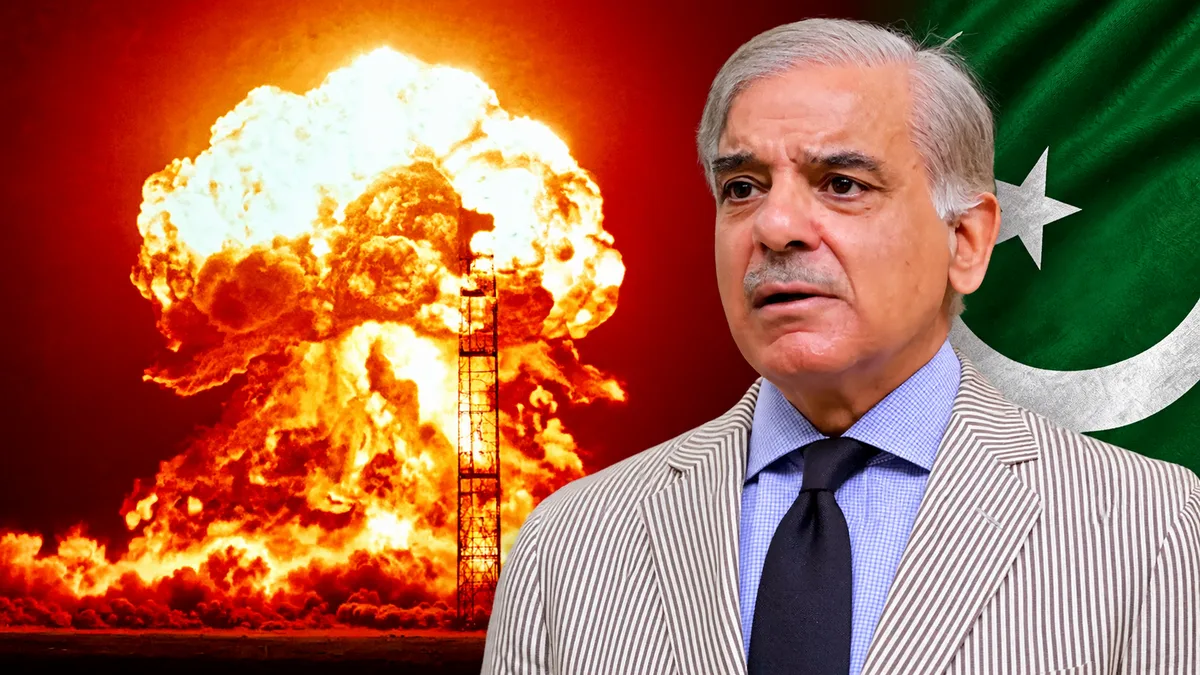
NEW YORK: India has issued a sharp warning to Pakistan at the United Nations, asserting that the nuclear weapons must not be treated as “routine instruments of statecraft”. India also declared that New Delhi will not bow to nuclear blackmail. Exercising its Right of Reply at the UN General Assembly’s First Committee, India also reaffirmed Jammu and Kashmir’s integral status, defended its right to respond to terrorism and called for accountability for states that use non-state actors to pursue hostile objectives.
India rejects Pakistan’s claims on J&K; Reiterates territorial integrity
India on Friday, October 9, 2026, exercised its Right of Reply during the plenary meeting of the First Committee of the United Nations General Assembly, which deals with disarmament and international security. The response came after Pakistan raised the issue of Jammu and Kashmir(J&K), prompting New Delhi to reiterate its position on the territory and address concerns over regional security and escalation.
Delivering India’s response, Anmol Sher Singh Bedi, Senior Adviser (Disarmament) at India’s Permanent Mission to the Conference on Disarmament in Geneva, categorically stated that Jammu and Kashmir(J&) is an integral and inalienable part of India.
“We call for India’s illegally occupied territories to be vacated and returned”, Bedi said, referring to Pakistan-occupied territories. He maintained that India does not seek conflict and has consistently advocated peace, while emphasising that peace cannot be sustained without accountability for reckless actions. “India has always stood for peace and continues to seek peace with one and with all. However, if there is no accountability for reckless actions, then peace rarely becomes a pause between crises”, he said.
Nuclear weapons are not instruments of statecraft
Addressing concerns about escalation in the region, Bedi underlined that India’s military capabilities are defensive in nature, shaped by its security environment and not directed against any particular state. He stressed that the conduct of states must be assessed over time rather than through statements alone. “We heard concerns about escalation. However, these are best judged by conduct over time. Nuclear weapons must not be treated as routine instruments of statecraft”, he said.
Bedi cautioned that the use of nuclear deterrence to shield activities below the threshold of conventional warfare could increase regional instability instead of preventing conflict. “A posture that relies on nuclear overhang to limit the consequences of subconventional activity raises the risk of escalation and not the prospect of restraint”, he said.
His remarks underscored India’s concern that nuclear capabilities must not become a shield for cross-border terrorism or other hostile activities.
India slams Pakistan’s democratic crisis & lack of accountability
Slamming Pakistan’s approach to recurring crises, Bedi described India’s stand on persistent pattern of provocation, denial of responsibility and subsequent appeals for restraint after India responds. He argued that the lack of democratic accountability among those exercising power in Pakistan contributes to the repetition of such crises.
“Where those in power are neither elected by people nor accountable to them, their decisions carry no risk and impose no cost for those who take them. That is how crisis becomes an instrument of power. That is how instability becomes useful and that is how the cycle keeps on repeating”, he said.
India also reiterated that the use of non-state actors does not absolve a state of responsibility for violence carried out under its patronage. “The use of force by states under the garb of non-state actors does not erase the state’s responsibility. India’s right of self-defense remains intact”, Bedi said.
India outlines 3 non-negotiable exercise to deal with cross-border terrorism
He then outlined three principles that New Delhi considers non-negotiable in dealing with terrorism and the security challenges emanating from across the border. “First, any terrorist attack against India will receive a fitting response. Second, India will not bow to nuclear blackmail. Third, India will make no distinction between those who sponsor terrorism and those who mastermind it”, he said.
Referring to India’s military response following the Pahalgam terror attack, Bedi said the actions taken in May 2025 were prompted by a grave provocation and were undertaken in self-defence. The April 22, 2025, attack in Jammu and Kashmir’s Pahalgam killed 26 civilians, most of them tourists. The Resistance Front, identified as a proxy of Pakistan-based Lashkar-e-Taiba, was linked to the attack.
In retaliation, India launched Operation Sindoor in May 2025, targeting terror infrastructure in Pakistan and Pakistan-occupied Kashmir. “These actions were measured, targeted and designed to be non-escalatory”, Bedi said, reiterating India’s position that its response was directed at terrorist infrastructure rather than intended to trigger a wider conflict.
Indus Waters Treaty & nuclear network: India flags trust deficit and proliferation risks
Beyond terrorism and nuclear deterrence, India also raised concerns over the Indus Waters Treaty, linking the agreement’s continued operation to the principles of good faith and mutual cooperation on which it was established. Bedi said that the treaty’s foundations could not be undermined. “A state cannot undermine those foundations of trust and cooperation and at the same time insist that the privileges flowing from the relationship remain untouched”, he said.
Following the Pahalgam attack, India announced that the Indus Waters Treaty would be held in abeyance until Pakistan credibly and irrevocably ends its support for cross-border terrorism and other forms of terrorism. India also highlighted the risks associated with nuclear proliferation, invoking the history of the network led by Pakistani nuclear scientist Abdul Qadeer Khan, widely known as the father of Pakistan’s nuclear bomb.
The AQ Khan network facilitated the proliferation of nuclear equipment and technical know-how internationally. Its activities contributed to growing concerns about the spread of nuclear weapons capabilities and the need for stronger international safeguards, including measures associated with UN Security Council Resolution 1540, adopted in 2004 to prevent the proliferation of weapons of mass destruction and related materials.
Bedi said that the network’s history remained relevant amid demands for unrestricted nuclear cooperation and transfers of advanced weapons and military capabilities. He urged governments and responsible suppliers to exercise heightened vigilance over sensitive technologies. “We urge all states and all responsible suppliers to exercise the highest degree of vigilance, not because of India, but for their own security”, he said.