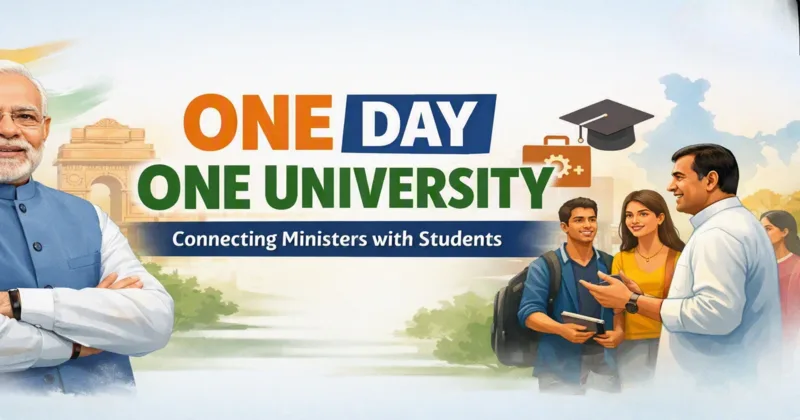
New Delhi – The Narendra Modi-led Central government is planning a nationwide ‘One Day, One University’ programme in order to boost and strengthen its direct engagement with Gen Z and understand the concerns, aspirations and views of youth. Under the proposed initiative, one Union minister will visit one university each day to meet students, hear their concerns and understand their views on issues affecting young Indians. As per sources, the idea was discussed at the Union Cabinet meeting chaired by Prime Minister Narendra Modi. Education Minister Pralhad Joshi and Youth Affairs and Sports Minister Mansukh Mandaviya have reportedly been given the responsibility of coordinating with various universities and Union ministers for the proposed visits in the coming days.
One Day, One University: What is the Modi Government Planning?
Under the proposed One Day, One University programme, Union ministers will visit universities across India and have direct interactions with students. The main objective is to create a platform where young people can raise their concerns, share their views and discuss issues that are affecting their education, careers and future.
The ministers, in return, are also expected to inform students about government schemes and welfare programmes for youth and students. The outreach could therefore work in two ways i.e., helping the government communicate its policies while giving ministers an opportunity to understand issues on the ground.
🚨 HUGE: Modi Govt plans a “One Day, One University” programme. 🔥
Union Ministers will visit a different university every day. They will interact with students & hear their concerns.
=> They will also highlight youth-focused government schemes.
— Megh Updates 🚨™ (@MeghUpdates) August 19, 2026
Why is Modi Government Focusing on Gen Z?
Education, competitive exams, jobs and career opportunities remain major concerns for students, with many young people looking for better opportunities and greater clarity about their future. The ‘One Day, One University’ outreach is being planned as the government looks to connect more directly with young Indians and understand the issues that matter most to them.
The recent student protests and concerns over examination systems, including the NEET 2026 paper leak issue, have also highlighted the need of listen to students. Through direct interaction, the government can understand their concerns, what they expect and aspire to while giving them an opportunity to put their views forward.
The focus on Gen Z outreach also shows how young Indians communicate today. Students are highly active on Instagram and other social media platforms, where they are openly discussing education, jobs, exams and national issues. Meeting students directly could help the government build a stronger connection with the younger generation and understand what they expect from policymakers.
If we look at it from a broader perspective, it is part of the Modi government’s larger effort to connect with young people in a more direct and relatable way. Prime Minister Modi had earlier asked Union ministers to become more active on Instagram and other social media platforms and communicate with young audiences in a more engaging manner.
The Cabinet also reviewed how Union ministers are performing on social media, including their reach and engagement on Instagram, X, Facebook and LinkedIn. This shows that the government is looking to connect with Gen Z both online and offline through social media as well as direct interaction with students at universities.
Focus on Education, Jobs and Youth Opportunities
During these proposed university visits, it is expected that students may talk about issues that directly affect their lives, such as higher education, exams, jobs, skill development and career opportunities. These interactions could give students a chance to share the difficulties they face and what they expect from the government.
At the same time, the government is focusing on new career opportunities for young people in areas such as manufacturing, space, nuclear energy and semiconductor production. It has also announced youth-focused measures related to online coaching, AI skills and identifying sports talent, aimed at helping young Indians build skills and prepare for future opportunities.
Since universities are located across different parts of India, the programme could also help Union ministers understand the different challenges faced by students in different regions. What a student needs in one part of India may be very different from the concerns of a student in another. Direct conversations could therefore give the government a clearer picture of what young people across the country are really looking for.
What Could ‘One Day, One University’ Mean for Students?
If implemented effectively, the One Day, One University programme could become a direct communication channel between the government and India’s student community. For students, the key benefit would be an opportunity to put questions and concerns directly before Union ministers. For the government, the visits could provide first-hand feedback on how young people view education policies, government schemes and employment opportunities.
The government is also expected to decide how students from different backgrounds and regions will be included in the outreach. More details are likely to become clear once the programme is formally finalised and the schedule for the university visits is announced.