Five Indian initiatives transforming plastic waste into resources
October 1, 2026
  • Read Ecopy
  • Circulation
  • Advertise
  • Careers
  • About Us
  • Contact Us
Android AppiPhone AppArattai
Organiser
  • ‌
  • Bharat
    • Assam
    • Bihar
    • Chhattisgarh
    • Jharkhand
    • Maharashtra
    • View All States
  • World
    • Asia
    • Europe
    • North America
    • South America
    • Africa
    • Australia
  • Editorial
  • International
  • Opinion
  • RSS @ 100
  • More
    • World Hindu Congress 2026
    • Op Sindoor
    • Analysis
    • Sports
    • Defence
    • Politics
    • Business
    • Economy
    • Culture
    • Special Report
    • Sci & Tech
    • Entertainment
    • G20
    • Azadi Ka Amrit Mahotsav
    • Vocal4Local
    • Web Stories
    • Education
    • Employment
    • Books
    • Interviews
    • Travel
    • Law
    • Health
    • Obituary
  • Subscribe
    • Subscribe Print Edition
    • Subscribe Ecopy
    • Read Ecopy
  • ‌
  • Bharat
    • Assam
    • Bihar
    • Chhattisgarh
    • Jharkhand
    • Maharashtra
    • View All States
  • World
    • Asia
    • Europe
    • North America
    • South America
    • Africa
    • Australia
  • Editorial
  • International
  • Opinion
  • RSS @ 100
  • More
    • World Hindu Congress 2026
    • Op Sindoor
    • Analysis
    • Sports
    • Defence
    • Politics
    • Business
    • Economy
    • Culture
    • Special Report
    • Sci & Tech
    • Entertainment
    • G20
    • Azadi Ka Amrit Mahotsav
    • Vocal4Local
    • Web Stories
    • Education
    • Employment
    • Books
    • Interviews
    • Travel
    • Law
    • Health
    • Obituary
  • Subscribe
    • Subscribe Print Edition
    • Subscribe Ecopy
    • Read Ecopy
Organiser
  • Home
  • Bharat
  • World
  • Operation Sindoor
  • Editorial
  • Analysis
  • Opinion
  • Culture
  • Defence
  • International Edition
  • RSS @ 100
  • Magazine
  • Read Ecopy
Home Bharat

From Waste to Resource: How five Indian initiatives are giving plastic a second life

Across India, local initiatives are reshaping plastic waste management through reduction, reuse, collection, recovery and recycling. From Trichy’s cloth-bag campaign to Patiala’s plastic-to-chipboard facility, these efforts show how everyday waste can find a second life

WEBDESKWEBDESK
Oct 1, 2026, 08:00 am IST
inBharat, Delhi
Follow on Google News
Representative Image

Representative Image

Facebook
Twitter
WhatsAppTelegramEmail

NEW DELHI: What if the plastic bag picked up at a market, the milk pouch emptied at home or the snack wrapper thrown away did not have to end its journey as waste?

Across India, local communities, municipal bodies and social organisations are experimenting with practical ways to change the plastic cycle from reducing single-use plastic and promoting reusable bags to collecting, recovering and transforming difficult-to-recycle waste into new products.

🔰What if plastic didn’t have to end as waste? ♻️

▪️From cloth-bag campaigns to milk-pouch buy-backs and recycled products, local initiatives across India are showing how plastic can Reduce → Reuse → Return → Recover → Recreate.

➤Explore five initiatives changing the… pic.twitter.com/CymqT1yFUY

— PIB India (@PIB_India) September 29, 2026

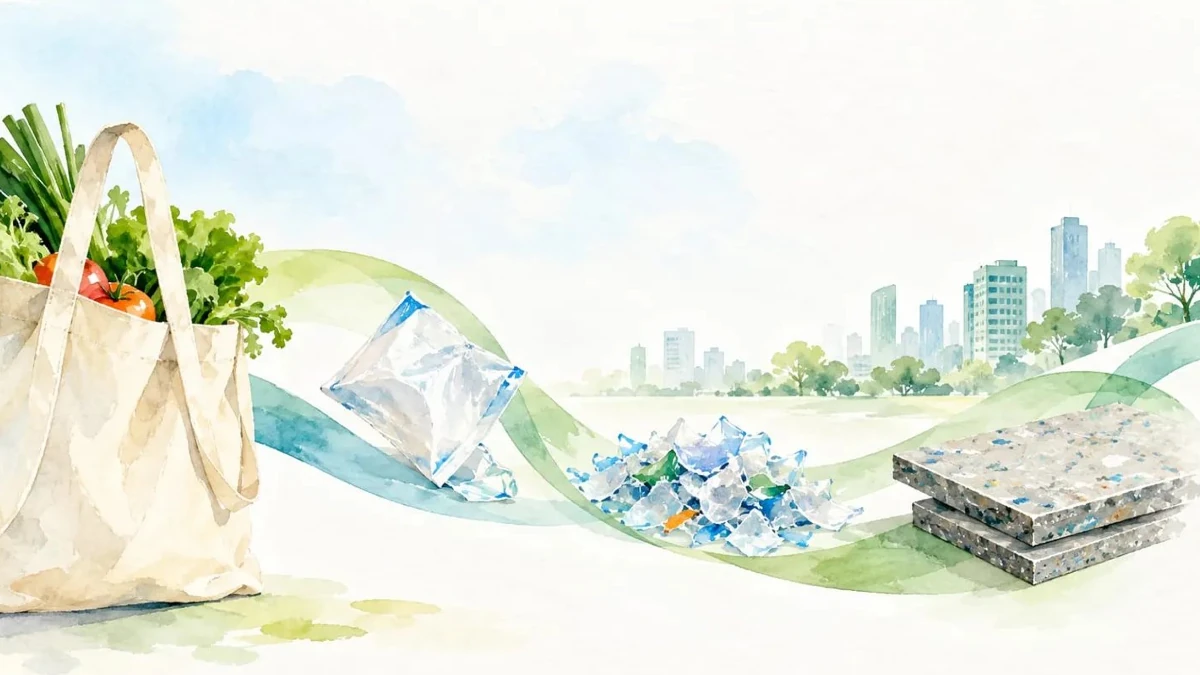
The journey can be summed up in five words:

REDUCE → REUSE → RETURN → RECOVER → RECREATE

As the Swachh Bharat Mission, launched on October 2, 2014, approaches its 12th year, initiatives across different parts of the country show how everyday choices and local waste-management systems can work together to tackle plastic waste.

REDUCE: Trichy takes on single-use plastic at markets

Markets can generate large quantities of plastic waste every day, making them an important starting point for reducing consumption.

In Trichy, Tamil Nadu, the city corporation launched a campaign in 2022 targeting single-use plastic use in three major farmers’ markets Tennur, K.K. Nagar and Woraiyur. Around 220 vendors were brought into the initiative.

Through the “Thunippai Thiruvizhai” or Cloth-Bag Festival, vendors and shoppers were encouraged to move towards reusable alternatives.

The reported results included:

  • Tennur: 2,200 kg of single-use plastic avoided in one year
  • K.K. Nagar: 620 kg avoided in four months
  • Woraiyur: 300 kg avoided in six months

The initiative focused on a basic principle: the most effective plastic waste is often the plastic that never enters the waste stream.

REUSE: ‘Thaila ATMs’ make reusable bags accessible

Carrying a reusable bag sounds simple, but remembering to take one along is often the challenge. In Vita, Maharashtra, the Nagar Parishad has attempted to solve that problem with five “Thaila ATMs” installed at busy locations.

Operating much like vending machines, the units allow shoppers to insert a coin or note and receive a reusable cotton bag. The bags are stitched by women from local Self-Help Groups, linking plastic reduction with local livelihoods.

The machines use GSM technology to track bag availability and alert officials when stocks fall. The initiative has reportedly sold around 6,000 bags, with the weekly market alone recording nearly 200 bags sold in a day.

Other efforts in Maharashtra include enforcement and promotion of alternatives. In Indapur, authorities seized 25 kg of plastic bags and imposed a Rs 90,000 fine, while a Self-Help Group in Wardha distributed 17,000 paper bags.

RETURN: Used milk pouches get a second chance

A discarded milk pouch can quickly become another piece of plastic waste. In the Andaman and Nicobar Islands, however, residents are being encouraged to return used pouches through a buy-back initiative.

Consumers can hand over empty milk pouches at designated collection points and receive rewards such as fresh milk and discounts.

The project was undertaken in collaboration with the Andaman and Nicobar Islands Integrated Development Corporation Limited (ANIIDCO) and the Sri Vijaya Puram Municipal Council (SVPMC).

By November 2024, the initiative had collected 17,600 milk pouches, with rewards equivalent to 352 litres of milk distributed to participating residents.

The model creates a direct incentive for households to return used plastic rather than throw it away.

RECOVER: Bengaluru turns collected plastic into usable material

Collecting plastic is only the beginning. Before it can reach recyclers, it often needs to be separated, sorted and processed. In Bengaluru, the Swachhata Kendra Material Recovery Facility was established in 2019 under the United Nations Development Programme’s Project Prithvi.

Managed by social organisation Hasiru Dala, the facility sorts plastic waste and processes it through shredding and baling, preparing the material for recycling. The centre also provided employment to 76 Safai Saathis during the COVID-19 pandemic.

Processed plastic from the facility has been used in products and applications including roads, agricultural water pipes and furniture.

The model demonstrates how a waste collection system can become part of a larger recovery chain rather than simply moving discarded material from one location to another.

RECREATE: Patiala tackles difficult multilayered plastic

Some plastic waste is particularly difficult to recycle. Multilayered plastics (MLPs) are commonly found in chocolate wrappers, biscuit packets, chips packets and shampoo sachets. Because they combine materials such as plastic, paper and aluminium, separating their components can be challenging.

In Patiala, a CSR-supported Plastic Recycling Facility (PRF) is processing such low-value plastic waste into a new material. The plastic is first sorted, cleaned and shredded into flakes. Through hot and cold pressing, the flakes are then converted into chipboard, which can serve as an alternative to plywood.

The resulting boards can be used for furniture, roofing and temporary shelters, while offering resistance to water and termites. The facility has a reported capacity of 10 tonnes of plastic a day and produces around 75 to 100 chipboards.

Also Read: Pakistani LeT militant linked to Pahalgam Attack, Hashim Moosa killed in Budgam encounter | Operation Korag

Five approaches, one plastic journey

The five initiatives operate in different settings and address different problems, but together they illustrate a larger shift in how plastic waste can be viewed.

  • Trichy focuses on preventing unnecessary single-use plastic.
  • Vita makes reusable bags available when shoppers need them.
  • Andaman and Nicobar Islands creates an incentive to return used milk pouches.
  • Bengaluru demonstrates the importance of sorting and processing collected plastic.
  • Patiala shows how even difficult multilayered waste can potentially be converted into another usable material.

The broader message is straightforward:

Reduce what you use. Reuse what you can. Return what can be collected. Recover what can be processed. Recreate from what might otherwise be discarded.

India has also prohibited identified single-use plastic items from July 1, 2022, adding a regulatory layer to efforts aimed at reducing plastic pollution.

But rules alone cannot determine what happens to plastic after it is purchased and used. The examples from markets, homes, collection points and recovery facilities show how local participation can influence that journey.


Topics: Swachh Bharat MissionPlastic usePlastic Recycling FacilityThaila ATMs
Share
Tweet
SendShareSend
✮ Subscribe Organiser YouTube Channel. ✮
✮ Join Organiser's WhatsApp channel for Nationalist views beyond the news. ✮
Previous News

India’s Strategic Fort for Siliguri: Underground military, rail & highway web—7 layered security amid external shocks

Related News

Swachh Bharat Mission-Gramin has turned rural sanitation into a people-led movement focused on lasting cleanliness and waste management

Swachh Bharat Mission: How rural India turned sanitation into a sustainable people’s movement

Mission Zero: Depalpur clears 1,250 tonnes of legacy waste, becomes first Swachh Shehar Jodi city

Mission Zero: Madhya Pradesh’s Depalpur clears 1,250 tonnes of legacy waste, becomes first Swachh Shehar Jodi city

From Landfills to Public Art: How Andhra Pradesh’s Madanapalle is rewriting the blueprint for zero-waste cities

India's Swachh Sagar, Surakshit Sagar 2026 campaign will unite science & public participation to combat marine pollution & protect coastline

Swachh Sagar, Surakshit Sagar: How India’s coastal cleanliness campaign is transforming ocean conservation

GOBARdhan turning India’s waste into wealth and rewriting the rural economy of Swachh Bharat

GOBARdhan: Turning waste into wealth and transforming the rural economy of Swachh Bharat

A representative image

Decentralisation to digitalisation: Budget charts new rural growth blueprint

Load More

Latest News

Representative Image

From Waste to Resource: How five Indian initiatives are giving plastic a second life

AI Generated Representative Image

India’s Strategic Fort for Siliguri: Underground military, rail & highway web—7 layered security amid external shocks

International Day of Older Persons

Rethink as older population nears 2.1 billion by 2050: UN chief on International Day of Older Persons

Modi Speaks to Trump: Trade Deal, Defence, Energy and Global Security Discussed

PM Modi, President Trump Phone Call: Trade, defence, energy and critical technology take centre stage

ED questions delay in registering a case against former CM Pinarayi Vijayan over CMRL payments to Veena Vijayan

Keralam: ED questions delay in registering a case against former CM Pinarayi over CMRL payments to Veena Vijayan

Supreme Court allows UPI Merchant Discount Rate framework to proceed; Urges govt to explain legal basis of the policy

Representative Image

Students Are Not Customers: The psychological cost of over-caring campuses

Indian Captain Smit Machchhar was injured in the cockpit confrontation as Flydubai Flight FZ1073, bound for Tel Aviv, was diverted to Saudi Arabia.

Who Is Smit Machchhar? Indian Captain stabbed on Flydubai flight to Israel who helped avert a 9/11-style catastrophe

Glimpses of the Three-Day Van Yatra in Odisha

Vanvasi Kalyan Ashram organises three-Day van yatra in Odisha; Delegation explores tribal life and culture

Kalyani (Left) Mohd Shafi (Right)

Andhra Pradesh: Butcher Mohd Shafi arrested for killing Kalyani and dumping body parts in canal in Vijayawada

Load More
  • Privacy
  • Terms
  • Cookie Policy
  • Refund and Cancellation
  • Delivery and Shipping

© Bharat Prakashan (Delhi) Limited.
Tech-enabled by Ananthapuri Technologies

  • Home
  • Search Organiser
  • Bharat
    • Assam
    • Bihar
    • Chhattisgarh
    • Jharkhand
    • Maharashtra
    • View All States
  • World
    • Asia
    • Africa
    • North America
    • South America
    • Europe
    • Australia
  • Editorial
  • Operation Sindoor
  • Opinion
  • Analysis
  • Defence
  • Culture
  • Sports
  • Business
  • RSS @ 100
  • Entertainment
  • More ..
    • Sci & Tech
    • Vocal4Local
    • Special Report
    • Education
    • Employment
    • Books
    • Interviews
    • Travel
    • Health
    • Politics
    • Law
    • Economy
    • Obituary
  • Subscribe Magazine
  • Read Ecopy
  • Advertise
  • Circulation
  • Careers
  • About Us
  • Contact Us
  • Policies & Terms
    • Privacy Policy
    • Cookie Policy
    • Refund and Cancellation
    • Terms of Use

© Bharat Prakashan (Delhi) Limited.
Tech-enabled by Ananthapuri Technologies