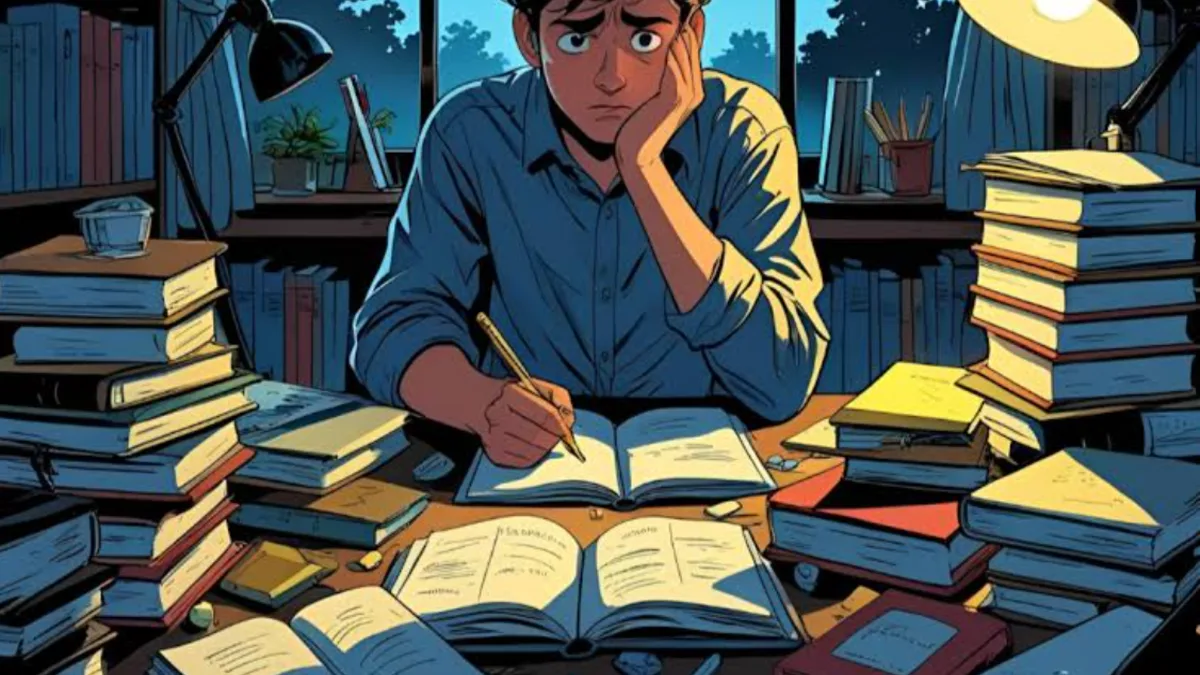
In recent years, several private universities and institutes in Bharat have seen large-scale unrest, often set off by rumours or by grievances that students felt were ignored. In Punjab in September 2026, two private universities were disrupted. Unverified social media claims set off overnight protests involving hundreds of students. At one campus the protest turned violent: property was vandalised, parts of buildings were allegedly set on fire and a national highway was blocked for hours. When police used force, students responded with stone-pelting, and police vehicles were set on fire. Classes were suspended for ten days and a special investigation team was formed. The same state had seen something similar in September 2022. Reports that objectionable videos of female hostel residents had been leaked led to a massive overnight protest at a private university, which had to be shut for several days. Police later said the more alarming rumours, including claims of suicide attempts, were false. In Uttar Pradesh in mid-2025, students and parents protested at a private university after two students died by suicide within weeks of each other, and faculty members were arrested. In Rajasthan in August 2023, an argument in a hostel mess queue at a private university grew into a violent clash between groups of students from different regions, and 36 students were arrested.
The triggers of such incidents vary. Sometimes it is an unverified post on a messaging group. Sometimes it is a complaint that students feel was not heard. Sometimes it is a tragedy, such as the loss of a fellow student, that leaves peers grieving and searching for someone to hold responsible. In many cases, the facts later turn out to be different from what was first believed. Yet the intensity and speed of the reaction remains striking. in private universities, unrest tends to be triggered by rumours or grievances, while in public universities it is more often political.
Each situation has its own circumstances and deserves to be judged on its own facts. But the recurring pattern points to something that goes deeper than problem of administration or law and order . It points to the psychological condition of a generation of students, and to the kind of environment our private campuses have created for them.
How the Customer Model Shapes the Student’s Mind
Much of private higher education in Bharat now working as service industry. Students are treated as customers; campuses or courses are sold through hostels, food courts, fests, concerts, celebrities, film actors/actresses and placement brochures. Faculty are evaluated partly on student satisfaction. Institutions hesitate to fail students, discipline them or demand much of them, because a dissatisfied customer may leave, complain or post a bad review.
This is not merely an administrative arrangement; it is more a psychological environment, and young minds adapt to the environment they live in. When a student is repeatedly told, directly or indirectly, “you have paid, so you will be satisfied,” several psychological things begin to happen inside that student.
The Psychological Problems We Are Creating
1. Low frustration tolerance. Resilience develops only when a young person faces difficulty, struggles, and discovers they can get through it. When institutions smooth away every obstacle and problem, whether by reopening exams, relaxing attendance or pressuring teachers to raise marks, students never build this capacity. The first genuine setback, a failed interview, a harsh boss, a broken relationship, feels catastrophic, because they have never practised coping with anything smaller.
2. An external locus of control. Psychologists distinguish between people who believe outcomes depend on their own effort (internal locus of control) and those who believe outcomes depend on others (external). A campus where the faculty are blamed for every poor result, it teaches students that their success is someone else’s job. Such students develops a sense of powerlessness, and powerlessness is a direct pathway to anxiety and depression.
3. Learned helplessness disguised as comfort. Martin Seligman’s research showed that when individuals repeatedly experience outcomes they do not control, they stop trying. Over-care produces a gentler version of the same thing: students stop believing they can solve their problems if they have never been required to solve their own problems. They wait for the institution or somebody else to solve things.
4. Fragility. Young people are strengthened by exposure to manageable stress, and weakened by excessive protection as our immune system. Such systems are called antifragile and fragile. over-protected campuses may be producing the fragile: students who are fragile, easily hurt and quick to feel threatened or agitated.
5. A silent sense of emptiness. at some level of deep psyche students know or observe, whether they are actually learning. Parents are spending lakhs, many times taking loans or from their life savings and students are also spending their best years of life. When real competence does not arrives with the degree, a quiet frustration and guilt settle in the mind of students. Many students carry an unspoken feeling of being frauds, of holding a certificate they have not truly earned. This is fertile ground for anxiety, low self-worth and hopelessness.
6. Loneliness in a crowd. Campuses are busier than ever, full of events, clubs and entertainment, yet many students report feeling alone. Entertainment is not connection. Deep bonds form through shared struggle, working together on something difficult. When nothing is demanded, nothing is shared, and relationships remain shallow.
7. Emotional dysregulation and crowd psychology. A student who has never learned to sit with discomfort and difficulty has little capacity to pause when some anger arises. Social psychology describes a concept of deindividuation: in a crowd, individuals lose their sense of personal responsibility and act in ways they never would do alone. Additionally social media, where a rumour travels faster than any reliable or official statement, and pent-up frustration can explode in few minutes. When campus unrest erupts, it is often not only about the immediate trigger; it is about the stored-up restlessness that the trigger releases.
8. Dopamine without meaning. Entertainment at all times, whether on campus or online (on screen), teaches the mind to expect immediate gratification and reward. Deep learning, which takes time, the delayed gratification and reward, becomes intolerable for the students. So the students begin to see learning as suffering and torture, and entertainment as the release from the torture.
The Pressure Has Shifted to the Wrong Place
In this model, the total pressure of accountability lies with the faculty. Teachers are expected to make sure of attendance, performance, placement, and high feedback scores without making students uncomfortable. Rigour becomes risky, leniency becomes safe. Faculty themselves experience burnout and moral distress, knowing they are certifying competence that does not developed in the students.
At the same time, authority must never be misused. Harassment, humiliation and neglect of complaints of any student by any faculty member or administrator are serious wrongs and must be dealt seriously. The goal is not harshness, but healthy, fair demand.
Students Are Raw Material, Not Customers
If education must be described in economic terms as industry, (and in principle it should not be a profit-making enterprise at all), then students are not customers but raw material with immense potential, waiting to be transformed into capable human beings. Iron becomes steel only through the furnace. Clay becomes a pot only under the potter’s pressure. A customer is served; a learner is shaped.
Bharatiya tradition understood this. The gurukula emphasised tapas, disciplined effort that burns away weakness. The Kathopanishad describes the path of knowledge as sharp as a razor’s edge. Nachiketa does not receive wisdom through comfort, but by waiting patiently and refusing easy temptations. The dignity of the learner lay in striving. Psychology today confirms the same insight through the idea of self-efficacy: confidence grows from mastering real challenges, not from being praised or protected.
What Needs to Change
Institutions must market learning, not lifestyle, restore fair academic standards, judge faculty by learning outcomes rather than satisfaction scores, and build fast grievance and crisis-communication systems so rumours cannot fill the silence. Mental health support should become preventive, with coping skills, trained mentors, and regular yoga and meditation. Structured challenges and a growth mindset can build resilience. Parents should seek honest progress reports and stop rescuing children from every difficulty. Students must own their learning and pause before reacting to unverified information. Regulators should assess universities on learning outcomes, student well-being and grievance redressal, not merely infrastructure.
Conclusion
The anger we see on some campuses is often not the disease but the symptom. Beneath it lies a generation that has been comforted but not strengthened, entertained but not educated, protected but not prepared. Over-care, however well-intentioned, is quietly weakening young minds and feeding anxiety, emptiness and sudden outbursts.
The kindest thing a university can do for a student is to believe in their capacity, expect a great deal from them, and stand beside them while they rise to it. Real care is not hospitality. Real care is transformation. Over caring campuses are fertile ground for those elements who intend to increase unrest in the nation. The violence and agitation in private universities will increase if culture of hard work is not developed.