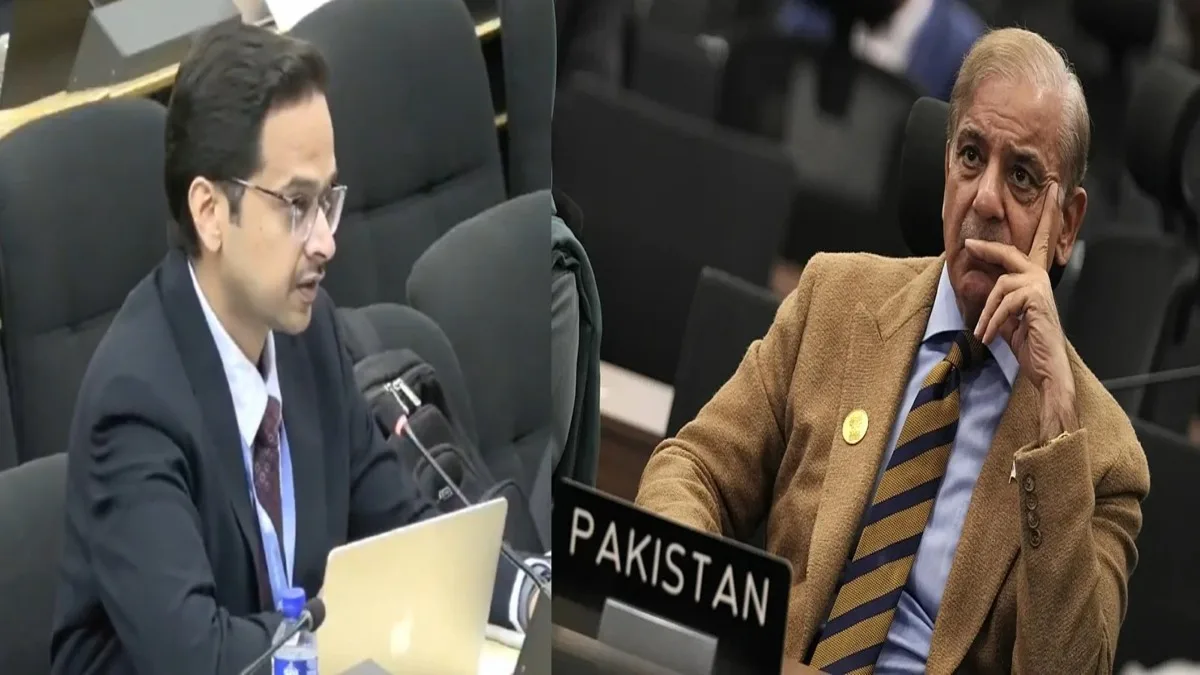
GENEVA: India launched a sharp diplomatic counterattack against Pakistan at the United Nations Human Rights Council (UNHRC) in Geneva on September 24, Thursday and exposed how Islamabad is using the international forum to pursue illegal territorial claims over Jammu and Kashmir(J&K) and systematically trying to deflect the global attention from its own economic, human rights challenges and terror conspiracies.
Exercising India’s Right of Reply during the Council’s 63rd regular session, Indian diplomat Kshitij Tyagi strongly rejected Pakistan’s illogical remarks on Jammu and Kashmir(J&K) as an “extraordinary combination of historical revisionism, invented statistics and sectarian insinuation”. Indian diplomat also called on Pakistan to vacate the portions of Jammu and Kashmir(J&K) under its illegal occupation. New Delhi also flagged concerns over terrorism, minority rights and the human rights situation in Pakistan-occupied Jammu and Kashmir(PoJK) under the iron fist of Islamabad.
#WATCH | While responding to Pakistan at the UN Human Rights Council, Indian diplomat Kshitij Tyagi said, "India exercises its right of reply in response to Pakistan's extraordinary combination of historical revisionism, invented statistics and sectarian insinuation. Since… pic.twitter.com/4IRduUWAJh
— ANI (@ANI) September 24, 2026
J&K will always remain integral to India
Responding to Pakistan’s repeated references to J&K, Tyagi reiterated New Delhi’s position that the Union Territory is an integral and inalienable part of India. “Since Pakistan appears to need the reminder under every agenda item: Jammu and Kashmir was, is and will always remain an integral and inalienable part of India. The only part of J&K under foreign occupation is the part Pakistan holds, which we again call upon it to vacate”, Tyagi said.
India has consistently rejected attempts by Pakistan to internationalise the Kashmir issue, maintaining that Pakistan should end its support for cross-border terrorism and vacate territory under its illegal occupation.
‘Theatrics’ at UN won’t solve Pakistan’s economic crisis
Turning to Pakistan’s steep economic crisis, India argued that Islamabad should concentrate on development and its domestic challenges instead of pursuing baseless territorial claims or the export of terrorism. “Pakistan would better serve its people by focusing on development, rather than by coveting territory of others or exporting terror”, Tyagi said.
He added that neither such actions nor Pakistan’s “theatrics in the Council” would help the country repay the loans on which its economy survives. The remarks came against the backdrop of Pakistan’s continuing economic difficulties and its repeated reliance on international financial institutions and lenders for survival.
India raises concern over minorities safety in Pakistan
At the UNHRC, India also exposed Pakistan’s treatment of religious and sectarian minorities. The diploamt said that the Hindu, Sikh and Christian populations in Pakistan had “shrunk drastically since independence” and reiterated that minority women and girls face abductions, forced conversions and forced marriages.
“Blasphemy laws hang over every minority household”, Tyagi said, while also referring to persecution against Shias, Ahmadiyyas, Ismailis and Hazaras. He further said that the places of worship belonging to minority communities had been attacked and desecrated.
Responding to Pakistan’s criticism of minorities in India, Tyagi contrasted the allegations with India’s constitutional and political system. “That is how Pakistan sees the faith of others and its own minorities live with the consequences”, he said, adding that India is home to one of the world’s largest Muslim populations. “Our minorities vote, legislate, sit on our highest court and lead our institutions”, Tyagi firmly stated.
Kashmiri Pandit exodus and Pakistan-sponsored terrorism
Exercising Right to Reply, India also brought up the exodus of Kashmiri Pandits from the Valley in the 1990s, attributing the root cause for displacement to Pakistan-sponsored terrorism. “Those same terrorists have since killed Kashmiris of every faith, many of them Muslim. The State that sponsored them is now asking this Council for an inquiry. The irony will not be lost on this Council”, Tyagi said.
India has repeatedly exposed how Pakistan has been unapolegitically supporting terrorist groups operating against India. Tyagi also referred to recent concerns raised at the UNHRC regarding civilian deaths, arrests and shortages of essential supplies in Pakistan-occupied Jammu and Kashmir(PoJK)
“This Council was told last Friday of scores of civilians killed since June in the territory Pakistan occupies, of students arrested in Islamabad and Rawalpindi and of food and medicine held back”, he said. New Delhin also questioned Pakistan’s response and argued that Islamabad itself should come under greater scrutiny at the Human Rights Council.
Human right violations in Balochistan surface at UNHRC
The wider UNHRC session also saw concerns raised over human rights violations by Pakistan and enforced disappearances in Balochistan and attacks against religious minorities. During the General Debate under Agenda Item 4, Diana Stephanie Dehimat made an appeal concerning Dr Sabiha Baloch, who is associated with the Baloch Yakjehti Committee (BYC).
Dehimat expressed concern that Dr Baloch could face arrest, enforced disappearance or death for speaking about the situation of the Baloch people. She also said, five of her colleagues were in prison for peacefully raising concerns over human rights violations. She further referred to BYC leaders Dr Mahrang Baloch and Sibghatullah Shah and said that both were serving life sentences following proceedings that had raised questions over due process.