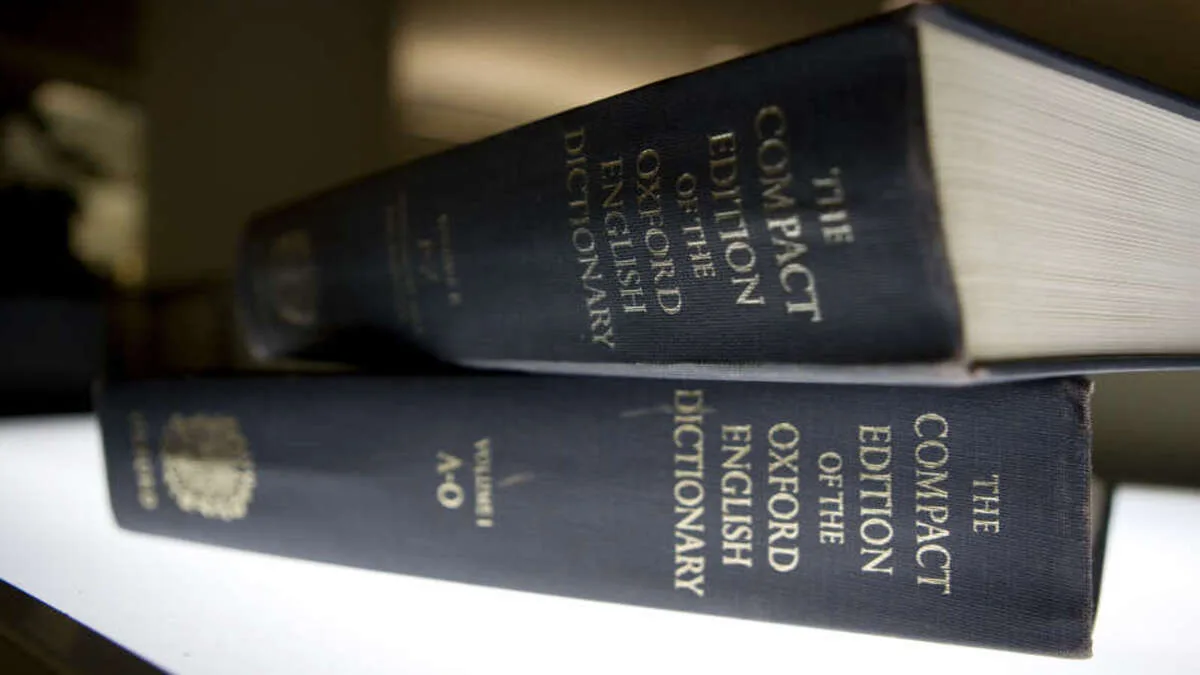
SAN JUAN: The Oxford English Dictionary (OED) has added more than a dozen words long used in Bermuda and across the Caribbean, formally recognising expressions rooted in the region’s distinctive culture, traditions and everyday speech.
Among the newly included words is “bimpert”, a Bermudian term of unknown origin used to describe a stupid or foolish person. It is often heard in the traditional Bermudian phrase, “A bimpert is justah wuffless bye,” which roughly means that an idiot is a worthless boy.
Another notable addition is “hornerman”, a term used in Trinidad and Tobago since 1975 to describe an unfaithful man or a man involved with someone else’s partner.
Leonard Alexander, a grocery store owner in Trinidad, welcomed the inclusion of “hornerman”, explaining that “to horn” refers to being unfaithful. He said the recognition of the term by the OED would help preserve an expression that has long been part of local culture. The list also includes “to get on”, a Caribbean expression meaning to have an emotional outburst or make a scene, and “to cut someone’s tail”, which refers to beating someone. Another addition is “vex money”, meaning money kept or carried by a woman in a safe place for use during an emergency or unexpected situation.
The OED has also recognised several words associated with Caribbean folklore and supernatural traditions. “Jablesse” refers to a malevolent, shape-shifting female spirit with one cloven hoof, said to take the form of a beautiful woman at night to lure men to their deaths. The word is derived from “diablesse”, the French word for female demon. “Douen” is another folklore-related term. It describes a supernatural figure typically portrayed as a short child with backwards-pointing feet and a large hat. According to traditional belief, it is the spirit of a child who died before baptism and is said to lure children into the forest by calling their names. The word is a variation of the Spanish “duende”, meaning elf.
Avionne George, a 45-year-old maintenance technician in Trinidad, said the formal recognition of such words could help preserve cultural traditions for younger generations, many of whom may no longer be familiar with older expressions such as “douen” and “la jablesse”.
Several food-related terms have also been added. These include “shadeesh”, a Bermudian word for chorizo; “sugar cake”, a sweet made from grated coconut boiled with sugar, water and spices; and “peanut punch”, a rich and frothy drink prepared with peanuts or peanut butter, milk, sugar and spices. The list also includes “nana” and “nani”, Hindi terms used in the Caribbean to refer to maternal grandparents. In Bermuda, the term “hamma” is used for a friend.
Other Caribbean English additions include “Trinbagonian”, referring to people from Trinidad and Tobago, and “canboulay”, the name for Carnival festivities in Trinidad that trace their roots to celebrations of emancipation from slavery.
Canboulay originated from an 18th-century harvest festival that British authorities attempted to suppress, resulting in riots. Those events are reenacted during Carnival celebrations to this day. The OED notes that the term derives from “burning cane”, which became associated with acts of defiance and rebellion.
Sherwin Williams, a construction worker in Trinidad, said the inclusion of the words in the OED would help people around the world understand their Trinidadian origins. “People recognize us by our slang,” he said.