UN Human rights council faces questions over selective outrage
October 16, 2026
  • Read Ecopy
  • Circulation
  • Advertise
  • Careers
  • About Us
  • Contact Us
Android AppiPhone AppArattai
Organiser
  • ‌
  • Bharat
    • Assam
    • Bihar
    • Chhattisgarh
    • Jharkhand
    • Maharashtra
    • View All States
  • World
    • Asia
    • Europe
    • North America
    • South America
    • Africa
    • Australia
  • Editorial
  • International
  • Opinion
  • RSS @ 100
  • More
    • World Hindu Congress 2026
    • Op Sindoor
    • Analysis
    • Sports
    • Defence
    • Politics
    • Business
    • Economy
    • Culture
    • Special Report
    • Sci & Tech
    • Entertainment
    • G20
    • Azadi Ka Amrit Mahotsav
    • Vocal4Local
    • Web Stories
    • Education
    • Employment
    • Books
    • Interviews
    • Travel
    • Law
    • Health
    • Obituary
  • Subscribe
    • Subscribe Print Copy
    • Subscribe & Read Ecopy
  • ‌
  • Bharat
    • Assam
    • Bihar
    • Chhattisgarh
    • Jharkhand
    • Maharashtra
    • View All States
  • World
    • Asia
    • Europe
    • North America
    • South America
    • Africa
    • Australia
  • Editorial
  • International
  • Opinion
  • RSS @ 100
  • More
    • World Hindu Congress 2026
    • Op Sindoor
    • Analysis
    • Sports
    • Defence
    • Politics
    • Business
    • Economy
    • Culture
    • Special Report
    • Sci & Tech
    • Entertainment
    • G20
    • Azadi Ka Amrit Mahotsav
    • Vocal4Local
    • Web Stories
    • Education
    • Employment
    • Books
    • Interviews
    • Travel
    • Law
    • Health
    • Obituary
  • Subscribe
    • Subscribe Print Copy
    • Subscribe & Read Ecopy
Organiser
  • Home
  • Bharat
  • World
  • Operation Sindoor
  • Editorial
  • Analysis
  • Opinion
  • Culture
  • Defence
  • International Edition
  • RSS @ 100
  • Magazine
  • Read Ecopy
Home Bharat

UN Human Rights Council: Is selective outrage undermining the credibility of global human rights institutions?

India’s criticism of the UN Human Rights Office over its selective approach to public statements has reignited debate over impartiality, accountability and double standards in global human rights advocacy. The issue also raises questions about whether victims of terrorism, religious persecution and extremist violence receive equal attention from international institutions

Diganta ChakrabortyDiganta Chakraborty
Oct 16, 2026, 08:40 pm IST
inBharat, World, International Edition
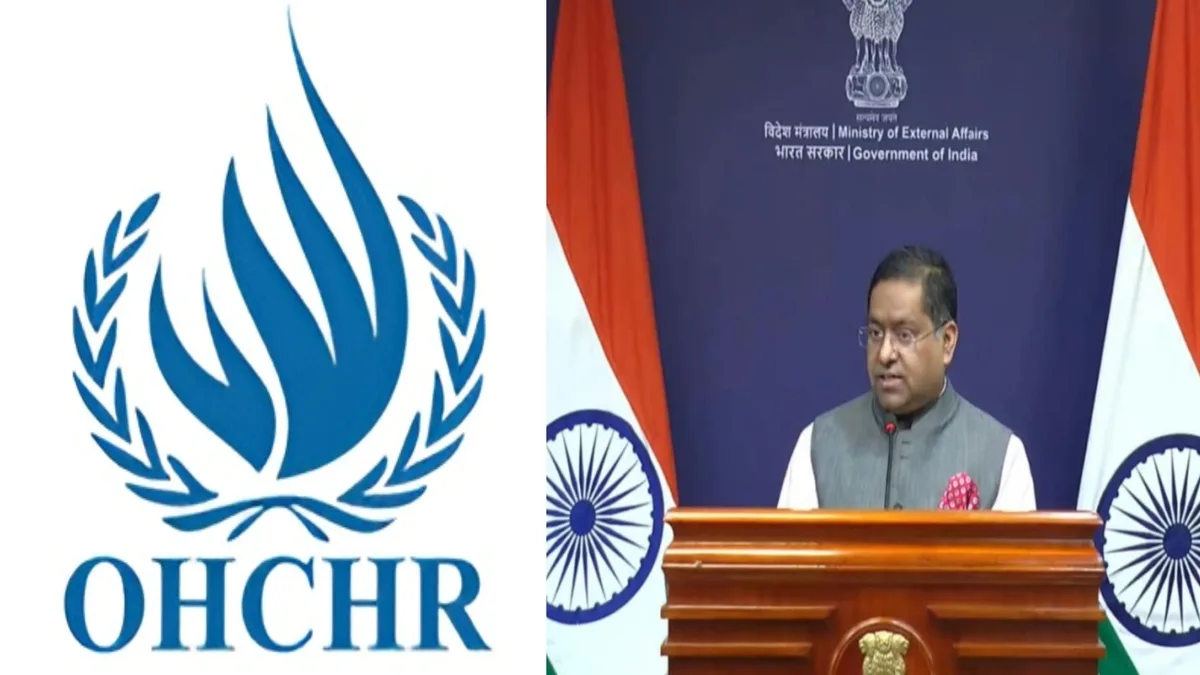
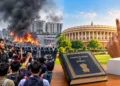
India questions the OHCHR’s selective approach to human rights, raising concerns over global double standards and impartiality

India questions the OHCHR’s selective approach to human rights, raising concerns over global double standards and impartiality

Facebook
Twitter
WhatsAppTelegramEmail

In his Letter from Birmingham Jail, American civil rights leader Martin Luther King Jr. wrote, “Injustice anywhere is a threat to justice everywhere.” But what if that “anywhere” becomes selective? When international human rights institutions scrutinise India but fail to demonstrate the same consistency in confronting terrorism and state violence, they risk undermining the very principles they claim to uphold.

Human rights are universal. They cannot be the exclusive concern of powerful nations, nor can they become instruments for political pressure against countries whose domestic policies do not align with the preferences of certain international commentators. Yet, the recurring controversy surrounding the United Nations human rights machinery raises an uncomfortable question: Are human rights being defended impartially, or are they increasingly becoming a tool of selective outrage?

The Government of India’s recent response to a statement by the Office of the United Nations High Commissioner for Human Rights (OHCHR) has once again brought this question into focus. New Delhi challenged what it considers an unwarranted interference in India’s internal affairs and questioned the institution’s selective approach to public criticism. India’s objection deserves serious consideration, not because the country should be immune from international scrutiny, but because an institution that demands accountability must itself demonstrate consistency, impartiality and intellectual honesty.

The Indian government made a pointed observation that deserves wider attention: “We also note that the OHCHR has an approach of extreme selectivity when it comes to public positions. Violent responses to protests in our neighbourhood have gone uncommented, as indeed have law enforcement actions in its own vicinity. Such double standards only erode the credibility of its standing and contribute to the loss of faith in multilateralism.” This statement strikes at the heart of the credibility crisis facing international institutions. If reports of police action, detention or restrictions on protesters in India attract immediate public commentary, why should comparable incidents elsewhere not invite equally vigorous scrutiny?

The question is not whether the UN should speak about India. It is whether it applies its principles consistently. Human rights cannot be defended through selective indignation, where the identity of the country involved determines the intensity of international condemnation. India is the world’s largest democracy, governed by a constitution that guarantees fundamental rights and provides institutional mechanisms for addressing grievances. Its judiciary, elected legislatures, media and civil society offer multiple avenues for public debate and accountability. These institutions are not beyond criticism, but their existence and functioning must be acknowledged when assessing the country’s human rights record.
Allegations of rights violations must be investigated fairly. Unlawful detention, excessive use of force and the suppression of peaceful dissent cannot be justified merely by invoking national security. Equally, allegations should not be treated as established facts without examining the available evidence, legal circumstances and broader context. The problem arises when international commentary appears to offer conclusions before adequately considering these distinctions.

Also Read: CJP leaders Saurav Das, Ashutosh Ranka sent to 5-day judicial custody after Jantar Mantar security breach

One of the most troubling aspects of international human rights discourse is the inadequate attention sometimes given to victims of terrorism, religious extremism and ideological violence. Terrorism is not merely a security challenge. It is a fundamental assault on human rights, beginning with the most basic right of all: the right to life. When terrorists deliberately murder civilians, target people because of their religious identity or use violence to intimidate communities, they attack the very foundations of a free society. India has experienced the devastating consequences of cross-border terrorism for decades. The 26/11 Mumbai terror attacks, the 2001 attack on the Indian Parliament and the Pahalgam terror attack of April 2025 illustrate the continuing threat posed by terrorism to Indian citizens. Yet, international discussions about human rights often appear more focused on questioning the actions of the Indian state than on sustaining public attention on the victims of terrorism and the ideologies that motivate such violence.

This imbalance deserves scrutiny. Where is the same sustained urgency when Islamist extremist organisations murder civilians, persecute religious minorities or use terror to impose their ideological ambitions? Where is the consistent emphasis on the rights of victims, the security of vulnerable communities and the accountability of those responsible? To be clear, the condemnation of Islamist terrorism is not a condemnation of Islam or Muslims as a whole. Terrorism must be judged by its actions and ideology, not used to stigmatise an entire religious community. The principle is straightforward: no religious, political or ideological justification can excuse the deliberate targeting of innocent people. The UN and its human rights institutions must recognise that protecting human rights also means protecting people from terrorism, religious persecution and organised violence. A framework that examines state action but fails to give comparable attention to non-state perpetrators risks presenting an incomplete picture of the human rights crisis.

India’s insistence on sovereignty is not a licence to violate fundamental rights, nor does national security justify every state action. However, India’s constitutional institutions, independent judiciary and democratic mechanisms deserve due consideration. International bodies must scrutinise domestic issues responsibly, not appear to prejudge them through selective public statements. The OHCHR’s credibility depends on applying consistent standards, regardless of geography or political alignment. When similar incidents receive different levels of attention, legitimate human rights advocacy risks being perceived as political posturing. The OHCHR must explain transparently why certain cases attract public condemnation while others remain unaddressed. What criteria guide its interventions? How does it verify allegations? Does it scrutinise comparable violations across regions with equal rigour? And are victims of terrorism, Islamist extremism and religious persecution given the same attention as those affected by state action? These are legitimate questions of accountability—not attempts to silence criticism.

The United Nations was established to promote peace, cooperation and respect for human rights. Its institutions can play a constructive role in identifying abuses, encouraging dialogue and supporting the protection of vulnerable populations. But their effectiveness depends on public trust. That trust cannot be sustained through selective outrage. If the international community expects India and other sovereign states to respond seriously to human rights concerns, international institutions must also be willing to examine their own inconsistencies.



Topics: terrorismUN Human Rights CouncilUnited NationsHuman RightsOHCHRreligious persecutionSelective outrageIndia
Share
Tweet
SendShareSend
✮ Subscribe Organiser YouTube Channel. ✮
✮ Join Organiser's WhatsApp channel for Nationalist views beyond the news. ✮
Previous News

CMRL-Exalogic Case: ED Summons former Keralam CM Pinarayi Vijayan for October 23, amid Supreme Court appeal

Related News

AI Generated Representative Image

Bharat is not Bangladesh: Radical seeds doesn’t yield regime change; Ballot box victory doesn’t guarantee prosperity

Racist Stickers in Australia targeting Indians

“Is this your culture?” Racist stickers in Australia target Indians with stereotypical statements; Sparks safety fears

Congress, Left-wing and Islamist groups converge in street mobilisation, raising concerns over attempts to replicate Europe-style unrest and destabilise India’s political order

Unmasking New Delhi Protests: Global parallels, ideological alliances & efforts to destabilise India’s democratic order

Dewi: Indian Embassy in Jakarta unveils AI assistant for swift consular services

Meet Dewi: The AI assistant of India in Indonesia; Upgrades diaspora outreach & digital diplomacy, Echoes cultural ties

(From Left to Right): Canada FM Anita Ananad with EAM Jaishankar, Anita Anand with PM Modi & Commerce Minister Piyush Goyal with Canada International Trade Minister Maninder Sidhu

India-Canada Ties Gain Pace: PM Modi & PM Carney discuss CEPA; FM Anita Anand in India to advance strategic relations

EAM Jaishankar hold talks with UAE Deputy Prime Minister & Foreign Minister Abdullah Bin Zayed Al-Nahyan

EAM Jaishankar Meets UAE Deputy PM Al-Nahyan: Reaffirms to deepen comprehensive strategic ties amid West Asia conflict

Load More

Latest News

India questions the OHCHR’s selective approach to human rights, raising concerns over global double standards and impartiality

UN Human Rights Council: Is selective outrage undermining the credibility of global human rights institutions?

CMRL-Exalogic Case: ED Summons former Keralam CM Pinarayi Vijayan for October 23, amid Supreme Court appeal

AI Generated Representative Image

Bharat is not Bangladesh: Radical seeds doesn’t yield regime change; Ballot box victory doesn’t guarantee prosperity

Double face of Prakash Raj exposed: Loud in CJP’s defence, what about the dignity of women cops?

Ram Lal, Akhil Bharatiya Sampark Pramukh of the RSS at Akhil Bharatiya Mahila Kisan Sangh in New Delhi

Bharatiya Kisan Sangh – Mahila Sammelan: Matrishakti – From labour to leadership

Madras High Court permits RSS Path Sanchalan at all 128 locations in Tamil Nadu

Madras HC permits RSS Path Sanchalan at all 128 locations in Tamil Nadu, pulls up police over repeated refusals

Racist Stickers in Australia targeting Indians

“Is this your culture?” Racist stickers in Australia target Indians with stereotypical statements; Sparks safety fears

Congress, Left-wing and Islamist groups converge in street mobilisation, raising concerns over attempts to replicate Europe-style unrest and destabilise India’s political order

Unmasking New Delhi Protests: Global parallels, ideological alliances & efforts to destabilise India’s democratic order

Tamil Nadu: Madras HC says property acquired by priest after religious vows belongs to Church society

“Not Your Political Pawns, stop using us as a Tool”: Dalit Groups Hit Out at Congress Over Ankita Bhandari Case

Load More
  • Privacy
  • Terms
  • Cookie Policy
  • Refund and Cancellation
  • Delivery and Shipping

© Bharat Prakashan (Delhi) Limited.
Tech-enabled by Ananthapuri Technologies

  • Home
  • Search Organiser
  • Bharat
    • Assam
    • Bihar
    • Chhattisgarh
    • Jharkhand
    • Maharashtra
    • View All States
  • World
    • Asia
    • Africa
    • North America
    • South America
    • Europe
    • Australia
  • Editorial
  • Operation Sindoor
  • Opinion
  • Analysis
  • Defence
  • Culture
  • Sports
  • Business
  • RSS @ 100
  • Entertainment
  • More ..
    • Sci & Tech
    • Vocal4Local
    • Special Report
    • Education
    • Employment
    • Books
    • Interviews
    • Travel
    • Health
    • Politics
    • Law
    • Economy
    • Obituary
  • Subscribe Magazine
  • Read Ecopy
  • Advertise
  • Circulation
  • Careers
  • About Us
  • Contact Us
  • Policies & Terms
    • Privacy Policy
    • Cookie Policy
    • Refund and Cancellation
    • Terms of Use

© Bharat Prakashan (Delhi) Limited.
Tech-enabled by Ananthapuri Technologies