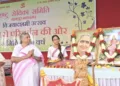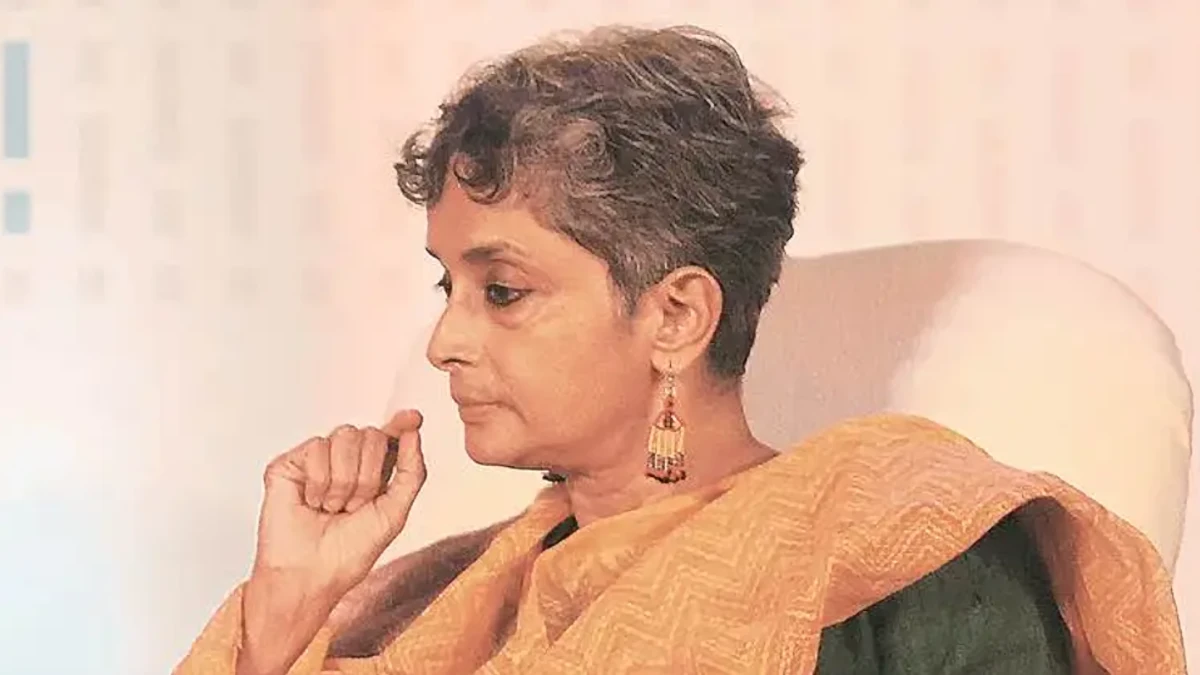
UDAIPUR: Former Jawaharlal Nehru University (JNU) professor Nivedita Menon is once again at the centre of a political and ideological controversy, this time over her proposed appearance at the Rama Mehta Memorial Lecture in Udaipur.
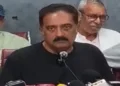
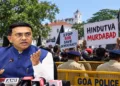
A coalition of civil society groups in the Rajasthan city has demanded that the Rama Mehta Trust withdraw Menon’s invitation to speak at the Vidya Bhavan Auditorium, citing a series of her past remarks on Kashmir, nationalism, Hindu society, the Uniform Civil Code and the functioning of India’s democratic institutions. The groups held a press conference on September 19 and questioned why Menon had been selected for the lecture.
The controversy comes shortly after remarks attributed to Menon in a recently circulated interview with journalist Mandeep Punia. While discussing the political experiences of Muslims, protest movements and the political climate of the past decade, Menon referred to India as “manhoos desh”. The remark has since become a major point of criticism against her.
Kashmir remarks put Menon in the spotlight
Menon has been at the centre of debates over nationalism and Kashmir for years.
During a lecture in 2016 amid the intense JNU nationalism controversy, she was reported as saying that India was “illegally occupying Kashmir”. Menon disputed aspects of the wording attributed to her and defended her intervention as part of an academic discussion on nationalism and Kashmir.
The controversy did not end there.
In February 2017, a seminar at Jai Narain Vyas University in Jodhpur triggered another major confrontation. University authorities filed a police complaint following allegations that Menon had made objectionable remarks about Kashmir and the Indian Army and had shown disrespect towards national symbols.
According to the university’s vice-chancellor, Menon had said Kashmir was not an integral part of India and that soldiers worked for their livelihood rather than for the nation. Menon rejected the allegations, describing the controversy as based on rumours.
Hindu society and nationalism also part of the controversy
Another contentious episode emerged from Menon’s comments on Hindu society.
A video from one of her lectures circulated after she was reported as describing Hindu society as deeply violent. The remark generated criticism from academics and activists, while supporters defended her broader argument about violence, caste, gender and social structures.
Her approach to nationalism has similarly placed her on one side of some of India’s most fiercely contested political debates.
Menon’s critics argue that her interventions go beyond conventional academic criticism and challenge established understandings of Indian nationalism and sovereignty. Her supporters, by contrast, have consistently presented her work as an academic and political critique of nationalism, majoritarianism and state power.
That ideological divide is now playing out in Udaipur.
‘A stick to beat Muslims with’: Menon on UCC
Menon’s views on the Uniform Civil Code have also generated sharp disagreement.
In a 2016 article in The Hindu, she argued that the UCC debate was being framed around gender justice while, in her view, it was also connected to attempts to politically discipline Muslims. She described the proposed Code as “a stick to beat Muslims with” and argued that aspects of Muslim personal law, including women’s property rights and marriage as a civil contract, were being inadequately addressed in the debate.
The intervention reflected Menon’s broader critique of what she sees as majoritarian politics and the use of legal reform in debates involving religious communities. Her critics, however, have viewed such arguments as ideological rather than neutral academic analysis.
‘Manhoos desh’
The latest controversy stems from an interview uploaded on journalist Mandeep Punia’s YouTube channel.
While discussing the experience of Muslims in India and the political significance of the CJP protests, Menon spoke of the movement as having provided “a little breathing room”. She then referred to India as “Manhoos Desh”.
The clip subsequently circulated widely online, prompting criticism from political opponents and commentators.
The wider context is important. Menon’s comments were part of a broader discussion about the experiences of Muslims, protest politics, government policy and the political climate of the preceding years. But the phrase has nevertheless become a focal point of the Udaipur controversy.
Menon calls CJP protests a ‘democratic victory’
The same interview contained several other politically charged observations. Menon described the CJP protests as a “democratic victory” and argued that the movement had brought the word “accountability” into everyday political discussion.
She also discussed the movement’s leadership and said that although it eventually became “organic”, such mobilisation required a centre from which the call originated. She specifically referred to Abhijit Dipke and his role in the movement.
Menon further linked the protests to earlier anti-CAA and farmers’ movements, describing them as part of a continuing political trajectory and referring to young activists including Umar Khalid.
That interpretation has itself become contentious, with critics arguing that it attempts to connect distinct protest movements into a single political narrative.
‘We are all living under the shadow of a Hindu Rashtra’
Menon’s criticism in the interview extended beyond individual government policies. Discussing India’s political trajectory, she argued that the country had effectively moved towards a Hindu Rashtra and said that people were living “under the shadow of a Hindu Rashtra”.
She also criticised the Union government’s education policy and questioned the composition and direction of a high-powered task force dealing with education.
Questions over EVMs, ECI, SIR and delimitation
Menon also raised questions about India’s electoral system. In the interview, she referred to electronic voting machines (EVMs), the Election Commission of India (ECI), Special Intensive Revision (SIR) and delimitation while arguing that the government’s conduct suggested it no longer feared losing elections.
These are serious claims about the functioning of India’s electoral institutions. They are political allegations rather than established findings, and they have become another reason critics say Menon’s public interventions invite intense scrutiny.
Udaipur groups demand answers
It is against this background that the Udaipur protest has taken shape. Representatives of the protesting civil society groups, including Dr Parmveer Singh Dulawat, have demanded that the Rama Mehta Trust cancel Menon’s proposed lecture.
The group has cited her previous statements on Kashmir, the Army, nationalism, Hindu society and her latest comments describing India as a “Manhoos Desh”.
The protesters have also questioned the institutional connections of some of the organisers. They have pointed to trustees associated with the Rama Mehta Trust who are also linked with Vidya Bhavan Society and Seva Mandir and have sought an explanation for Menon’s invitation.
The group has warned of a larger protest if the event proceeds. Available reports cited said there had been no public announcement from the Rama Mehta Trust or Vidya Bhavan Society cancelling the lecture.
This is not Menon’s first disrupted lecture
Menon has previously faced organised protests at public lectures.
In March 2024, a lecture she was delivering at Gangadhar Meher University in Odisha was disrupted by protesters who shouted slogans including “Nivedita Menon Go Back”. She left the podium and the event ended prematurely. Contemporary reporting said the protesters included students affiliated with ABVP.
Scholars at Risk recorded the incident as an interruption of an academic event and noted that while protesters have the right to express disagreement, that right does not extend to preventing others from speaking.
The JNU Teachers’ Association also condemned the disruption, arguing that academics should not be intimidated because of their views.
The 2017 Jodhpur episode similarly demonstrates how quickly Menon’s public appearances can become flashpoints when questions of Kashmir, nationalism and the Army enter the discussion.