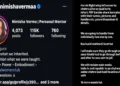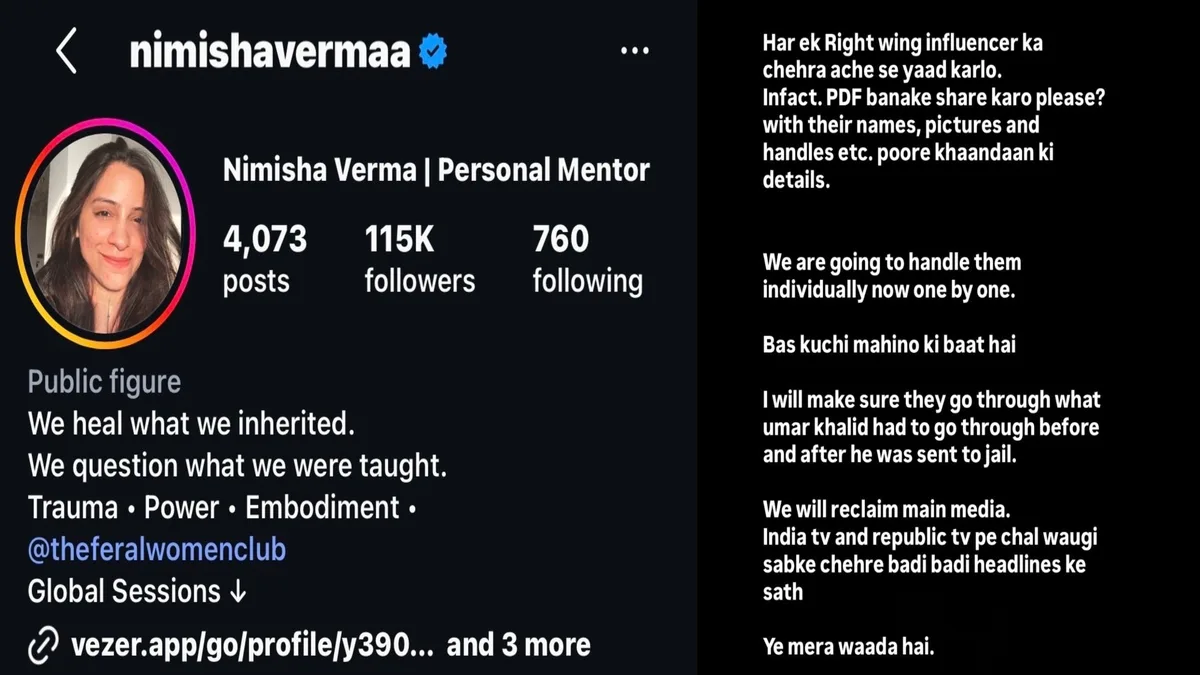
NEW DELHI: A social media controversy has erupted over a post attributed to Nimisha Verma, an influencer reportedly associated with the Cockroach Janata Party (CJP), after screenshots circulating online appeared to show her calling for a compilation of details about right-wing influencers and their families. The controversy has raised concerns about the boundaries of political opposition and the potential consequences of publicly identifying individuals on the basis of their ideological views.
Nimisha Verma, A CJP supporter influencer, is asking people to mark nationalist influencers and their families, so later they can do genocide against nationalists and their families.
This is the left ideology, where there is no space for opposition views. pic.twitter.com/bElFXivDRU
— Office Of Vijay Patel (@VijayGajeraO) October 12, 2026
According to screenshots shared on social media, Verma urged people to compile a document containing the names, photographs, social media handles and family details of right-wing influencers. The post reportedly called for dealing with these individuals individually and referred to making them undergo experiences similar to those faced by Umar Khalid.
Compiling family details raises questions about privacy and safety
Political disagreements are an integral part of a democracy. However, compiling personal information about individuals and their family members raises a different set of concerns, particularly when the stated purpose involves confronting or dealing with them individually.
The inclusion of family details is especially troubling because relatives may have no involvement in the political opinions or public activities of the individuals concerned. Publicly identifying them can expose people who have not chosen to participate in political debates to unwanted attention, intimidation or harassment. Political accountability should rest on evidence, public conduct, and open debate—not ideological labels or the personal details of family members. The controversy surrounding Nimisha Verma therefore raises an important question: can India’s political discourse defend freedom of expression while treating ideological opponents as legitimate participants in democracy?