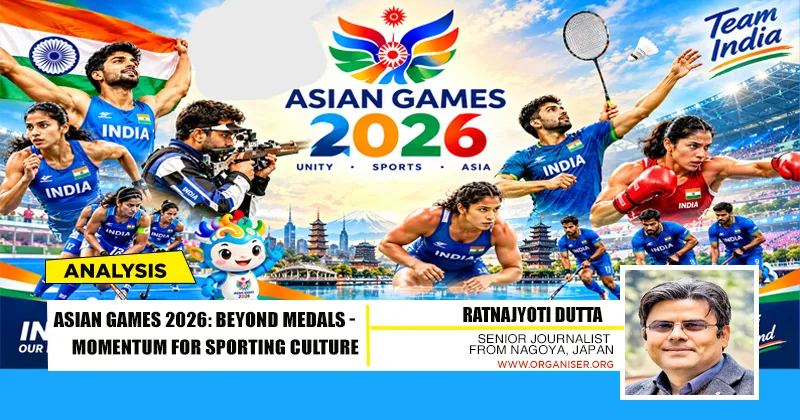
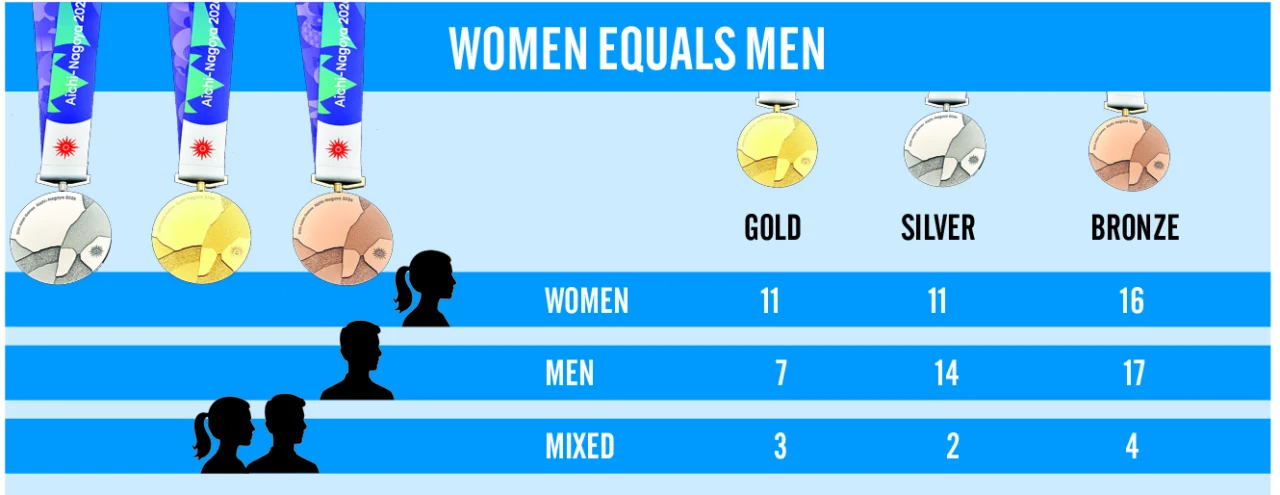
India finished fourth in the overall medal standings at the Aichi-Nagoya Asian Games with 21 gold, 27 silver and 37 bronze medals, matching its position at the previous edition but falling short of the record 106-medal haul achieved at Hangzhou in 2023.
While the overall medal count was lower than at Hangzhou, India produced several landmark performances in archery, hockey, boxing, shooting and golf, alongside the emergence of a new generation of athletes.
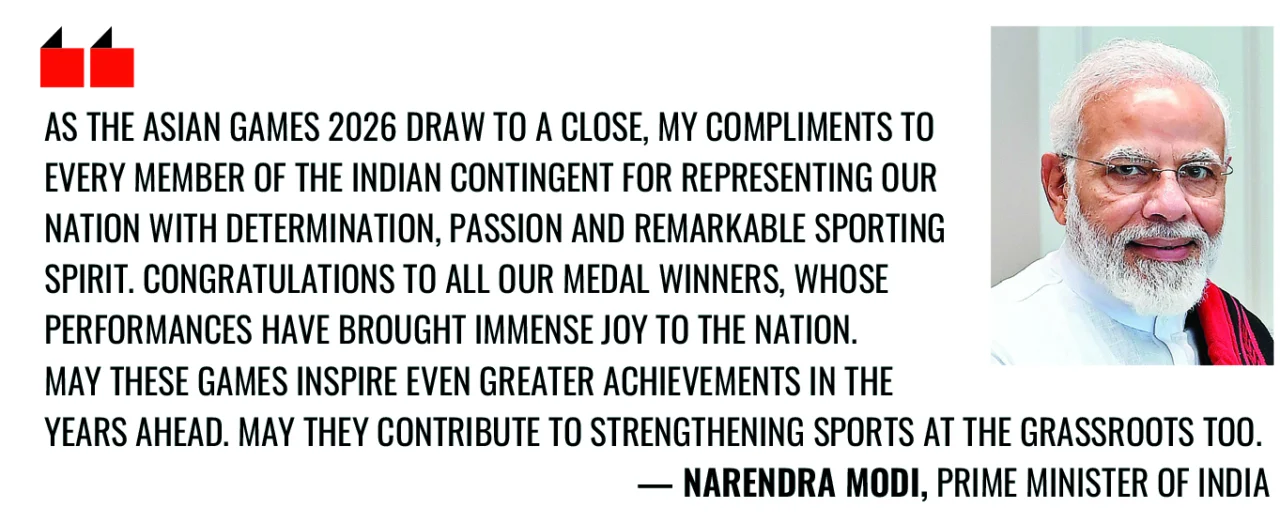
Prime Minister Narendra Modi, in his message as the Games drew to a close, congratulated the Indian contingent for representing the country with “determination, passion and remarkable sporting spirit” and expressed hope that the performance would inspire greater achievements and strengthen sport at the grassroots.
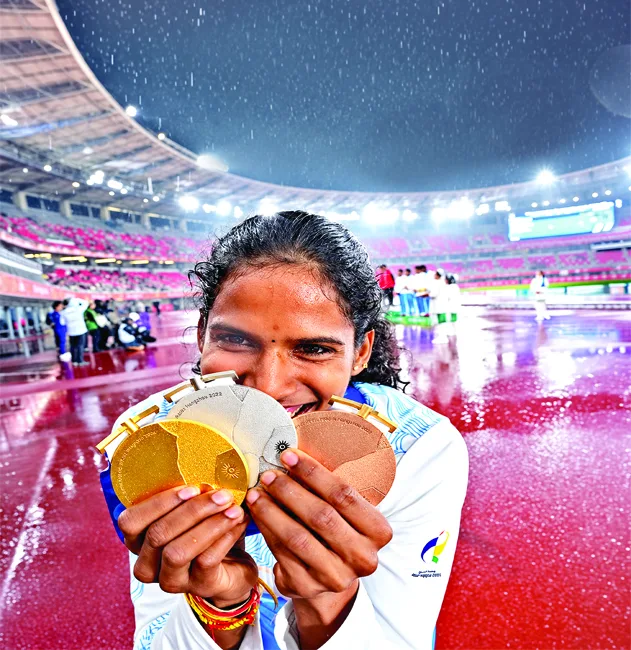
impressive medal haul at the Asian Games 2026 in Nagoya, Japan
For India, Nagoya ends with a fourth-place finish, 85 medals and a collection of landmark victories. China, host Japan and South Korea finished ahead of India. The emergence of new champions and breakthroughs across several disciplines provide a strong foundation for the next phase.
Archery’s Golden Rise
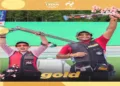
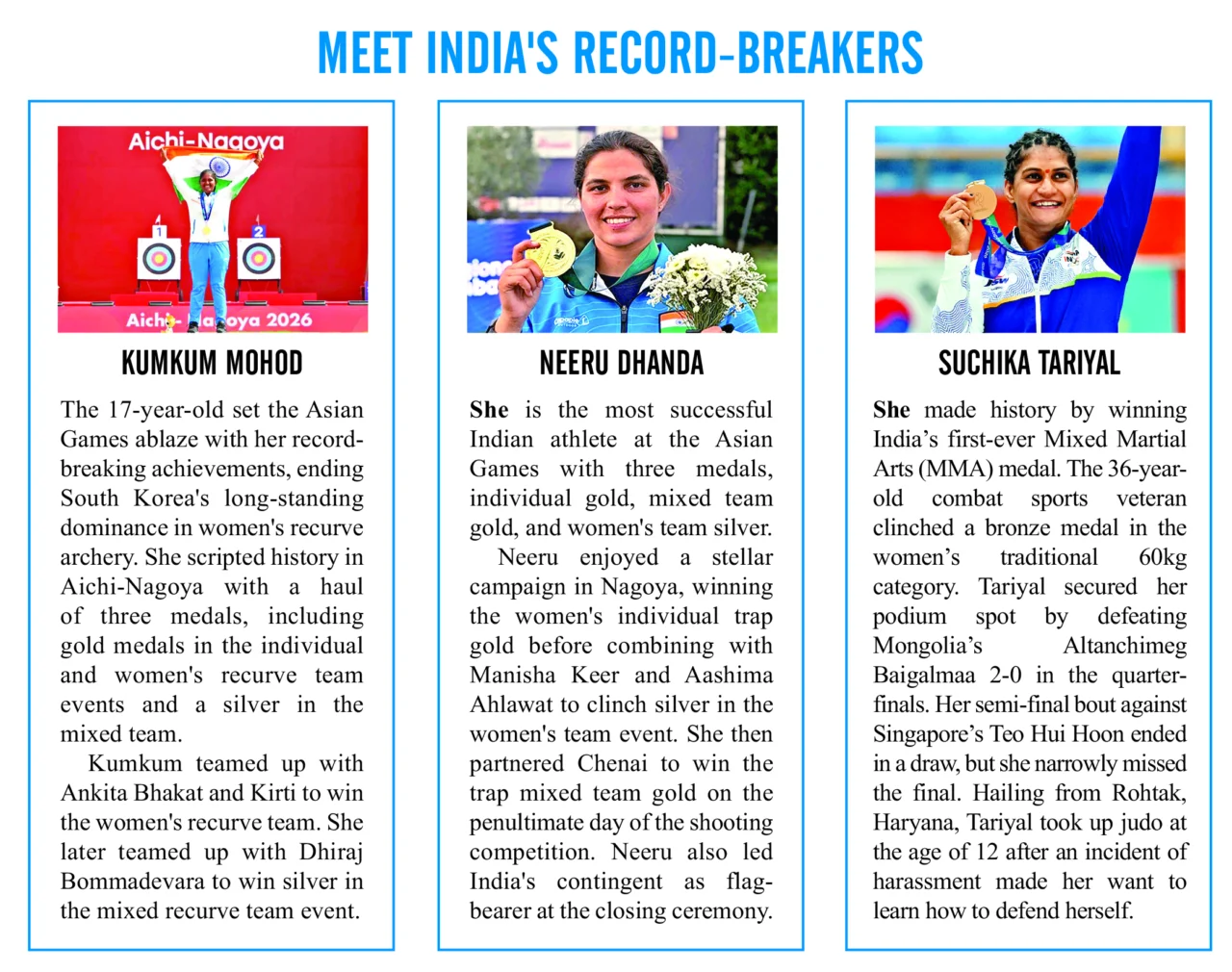
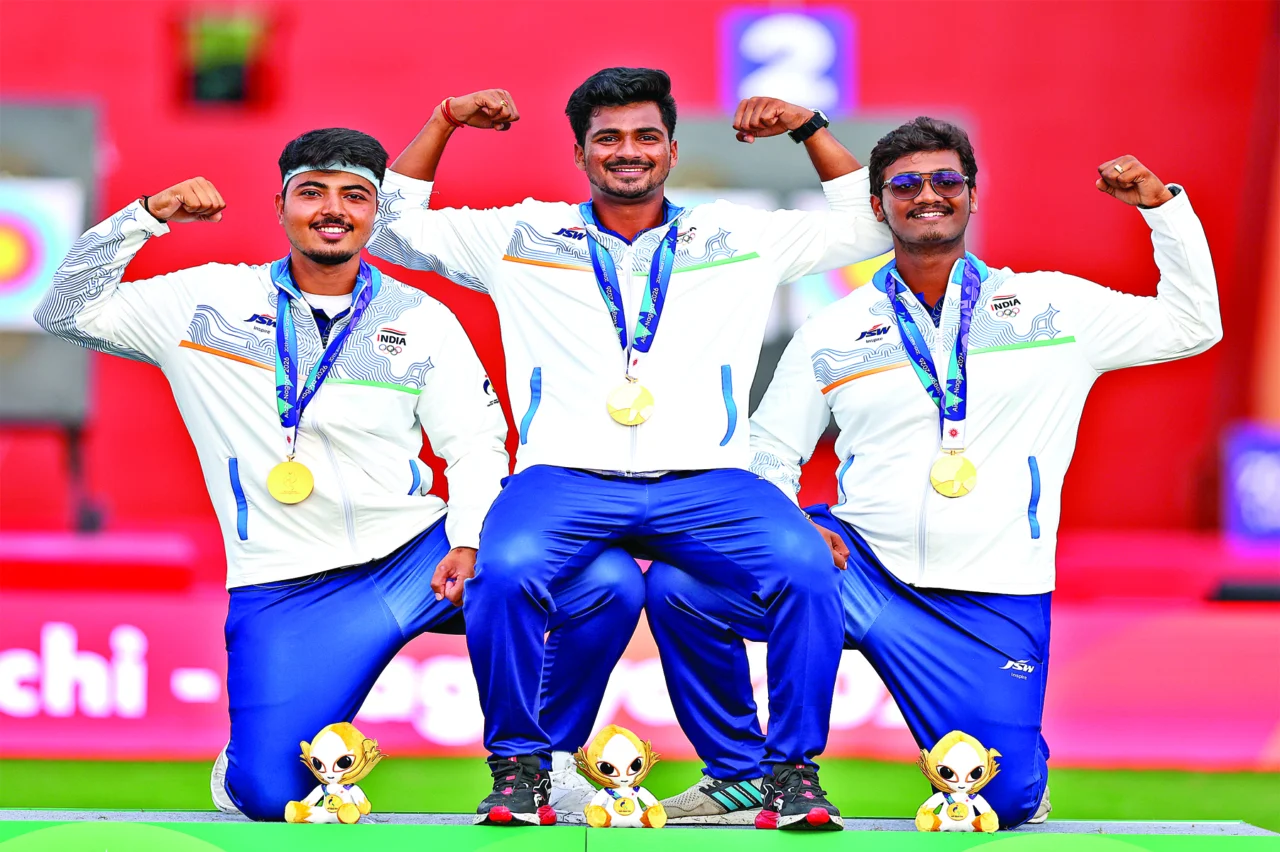
Archery emerged as one of India’s strongest disciplines, producing five gold medals among nine medals. Seventeen-year-old Kumkum Mohod was one of the revelations of the Games, winning three medals, including two golds, on her Asian Games debut. Mohod, Ankita Bhakat and Kirti won the women’s recurve team gold, ending South Korea’s seven consecutive Asian Games titles in the event dating back to 1998. Mohod then added the individual recurve gold. Her performances earned her the inaugural Jaspal Rana Award instituted by the Indian Olympic Association for the best female sportsperson of the Games.
Complimenting Mohod for her performance, IOA president PT Usha, said Mohod’s composure under pressure and ability to perform when “her back was to the wall” augured well for Indian archery. She said Indian archers had been “knocking on the door for more than a decade”, making the breakthrough particularly significant. The compound archers added further depth, making archery one of India’s most productive disciplines at Nagoya.
Shooting’s Missed Chances
Shooting remained a major contributor but also illustrated the narrow margin between a medal and a gold. Neeru Dhanda became one of India’s standout performers after winning the women’s individual trap gold, followed by gold with Kynan Chenai in the mixed team trap. The pair scored 34 points to set a Games record. Dhanda finished with two golds and a silver, while Chenai secured his first Asian Games medal.
“For me, the attitude of never thinking about losing has clicked,” Dhanda said after her individual victory. “I have been setting my mindset that I am the best in my discipline and it really helped me.” Chenai’s message was equally direct: “Never, never, never give up.”
Athletics Leads The Haul
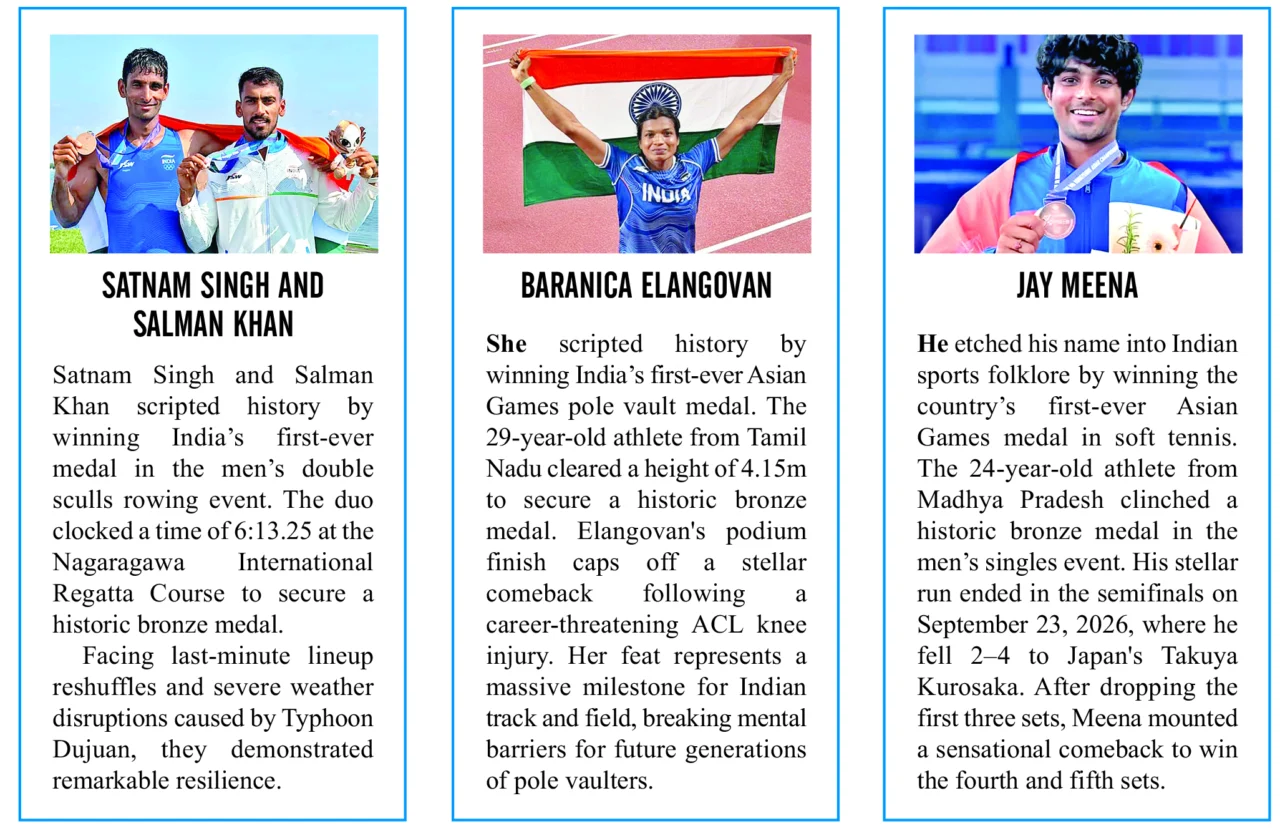
Athletics was India’s biggest contributor in terms of total medals, accounting for 24. Gulveer Singh emerged as one of the leading Indian performers with three medals, while Sarvesh Kushare ended a long wait for an Indian men’s high-jump medal. Vithya Ramraj, Ancy Sojan, Murali Sreeshankar and Parul Chaudhary were among the other significant contributors. The women’s 4x400m relay team also won gold. Yet athletics also reflected the wider pattern of India’s campaign — a substantial medal contribution but relatively fewer golds.
Wrestling Strikes Gold
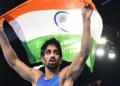
Wrestling produced six medals, including two golds, two silvers and two bronzes. Sujeet Kalkal provided one of the defining moments of the Games by winning the men’s 65kg freestyle gold. He defeated reigning Olympic champion Kotaro Kiyooka of Japan in the semi-final before producing a dramatic comeback against Abdulmazhid Kudiyev of Tajikistan in the final.
Trailing 2-9 with time running out, Kalkal fought back to win 10-9, giving India its first wrestling gold at the Asian Games in eight years. His victory also continued India’s tradition in the 65kg category after Yogeshwar Dutt and Bajrang Punia won gold in 2014 and 2018 respectively. Kalkal received the inaugural Raja Randhir Singh Award for the best male sportsperson of the Games. “Wrestling is India’s sport, and Sujeet’s performance will be spoken of for years to come,” Usha said. She added that while the gold medal would be celebrated, Kalkal’s refusal to accept defeat had earned him “a special place in the hearts of all Indians”. Usha also said she would be “rooting for him to deliver India’s first-ever Wrestling Gold medal at the Olympic Games” at Los Angeles 2028.
Boxing & Golf Shine
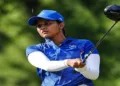
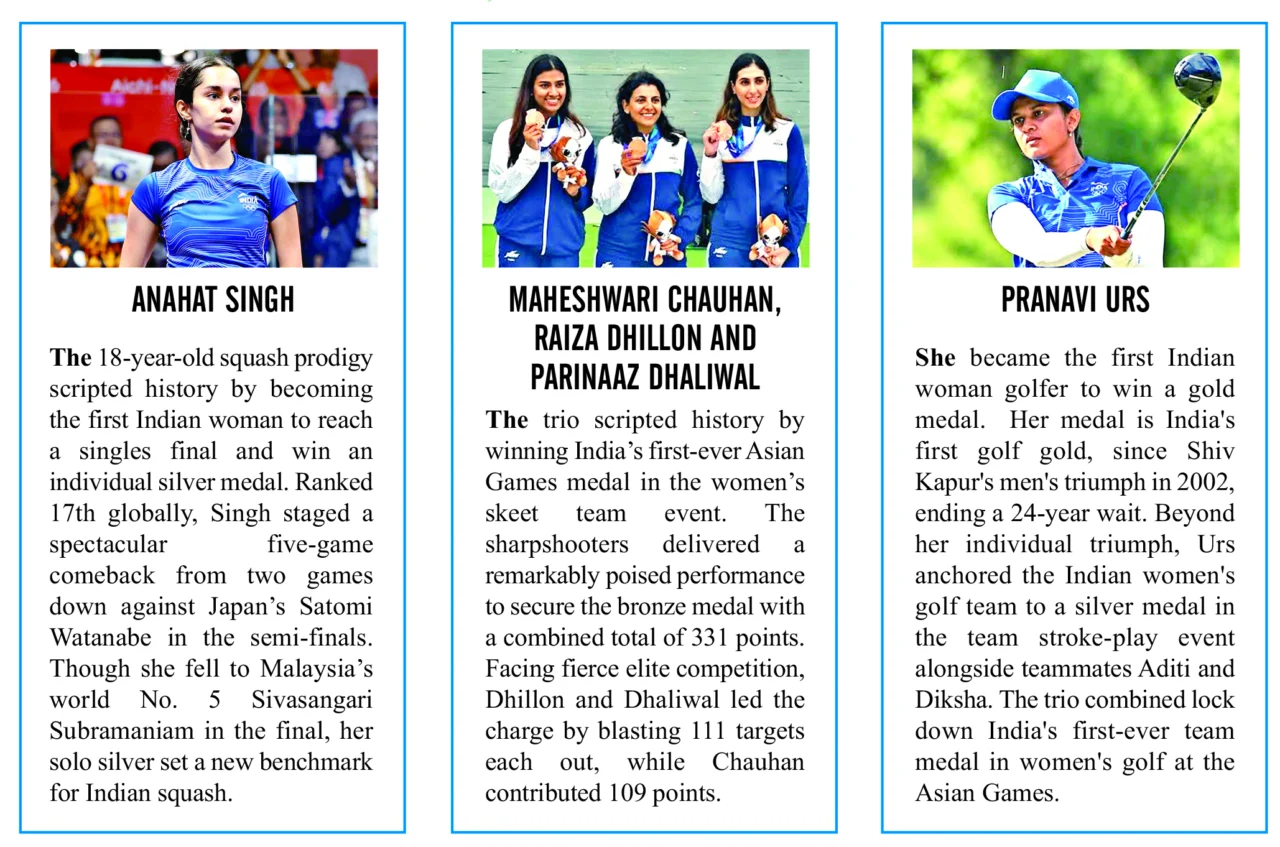
Boxing produced three golds and three bronze medals. Lovlina Borgohain added another landmark to her career by winning the women’s 75kg gold, becoming only the second Indian woman after Mary Kom to win an Asian Games boxing gold. Golf also produced a historic result, with Pranavi Urs winning India’s first individual women’s golf gold at the Asian Games. Aditi Ashok, Urs and Diksha Dagar contributed to India’s women’s golf medal haul.
Women Lead The Way
The performances of Indian women were among the defining features of Nagoya. Mohod’s archery double, Dhanda’s two golds and a silver, Borgohain’s boxing gold and the women’s hockey title were complemented by strong performances in cricket, kabaddi and golf.
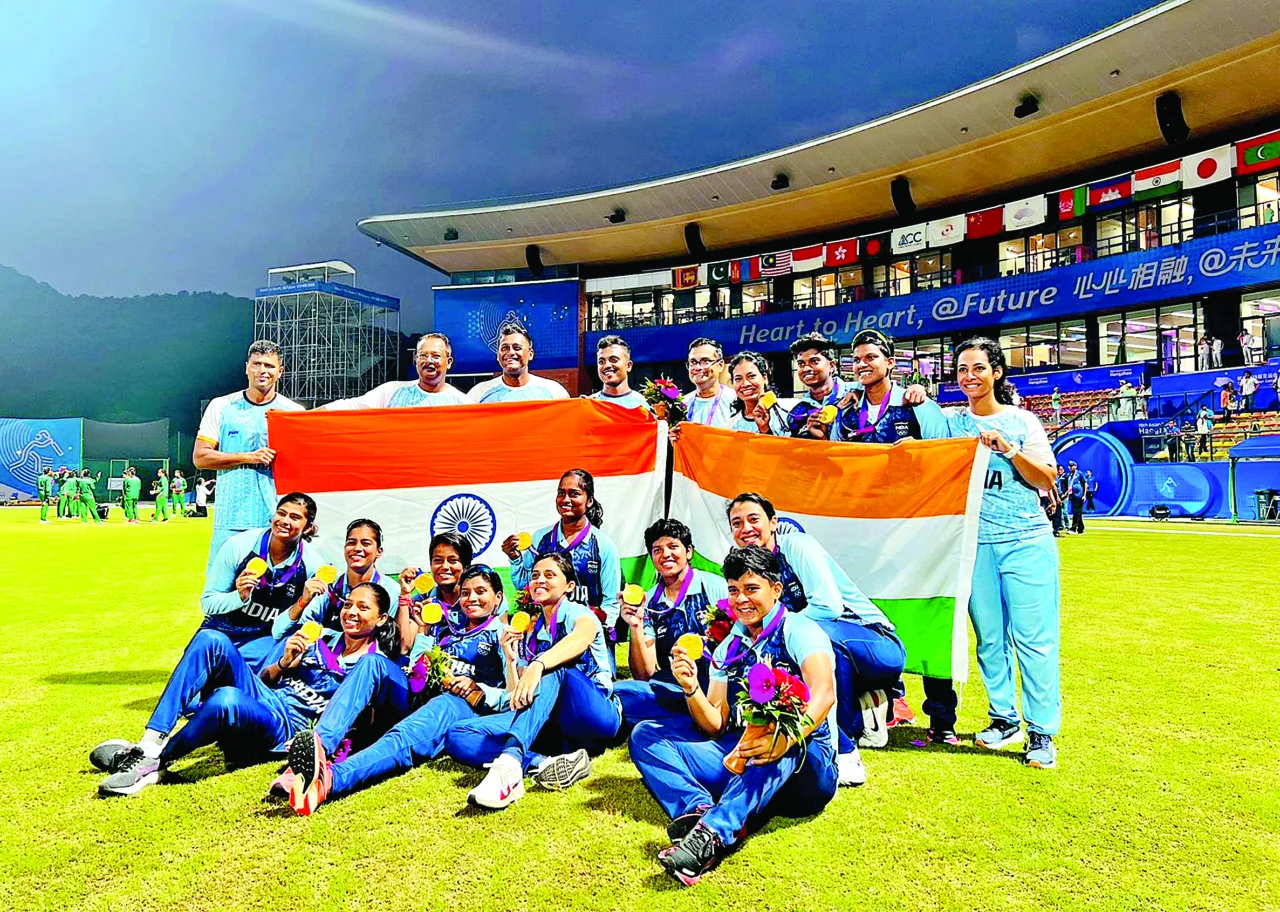
The women’s hockey team ended a 44-year wait for an Asian Games gold by defeating China 1-0 in the final. It was India’s first women’s hockey gold since 1982. The women’s cricket team retained its Asian Games title, while India continued its dominance in women’s kabaddi.
The breadth of these performances was significant because India’s medal effort was not concentrated in one or two traditional disciplines. “Dhaakad performances and historic victories by our Nari Shakti at the Asian Games 2026!”, said Mansukh Mandaviya, Union Minister for Youth Affairs & Sports, said in an X-handle post.
Hockey’s Historic double
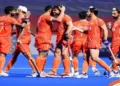
Hockey delivered one of India’s most important team-sport successes. The Indian men defeated Malaysia 5-1 in the final at Gifu Prefectural Green Stadium to successfully defend their Asian Games title. Harmanpreet Singh scored twice, while Jugraj Singh, Hardik Singh and Shilanand Lakra were also on the scoresheet.
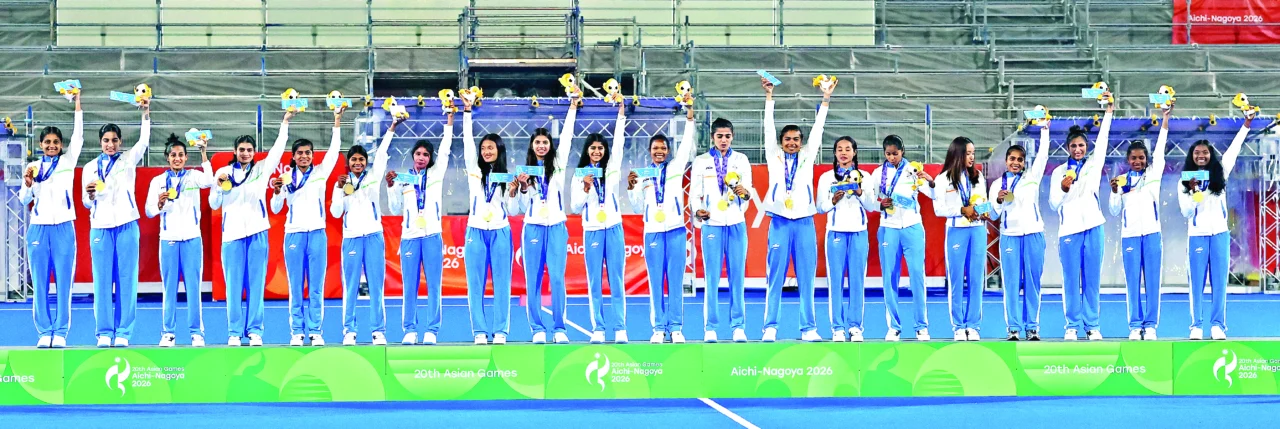
The victory gave India its fifth men’s Asian Games hockey gold and made it the first men’s hockey team to successfully defend the title. India had earlier defeated Pakistan 4-3 in the semi-final. The women’s victory over China meant that, for the first time, India’s men’s and women’s hockey teams won gold at the same Asian Games. Both teams also secured direct qualification for the 2028 Los Angeles Olympics.
Double Gold In Team Sports
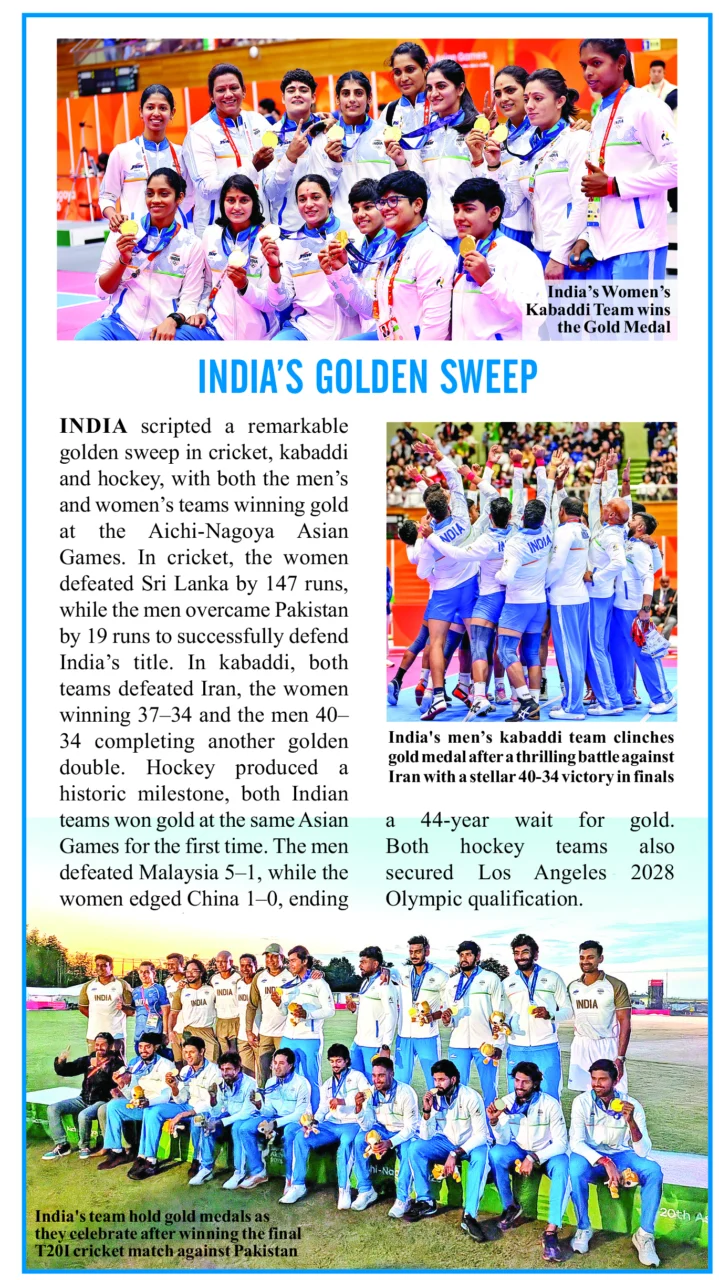
India retained both Asian Games cricket titles, with the women defeating Sri Lanka and the men beating Pakistan in their respective finals. Kabaddi also produced gold medals for both Indian teams. The women defeated Iran 37-34, while the men recovered from a deficit to beat Iran 40-34.
The clean sweep in cricket, kabaddi and hockey provided India with a strong finish and helped lift the final gold tally.
The Gold Gap
India’s 27 silver medals were both a sign of competitiveness and an indication of how close several events came to producing a different medal distribution.
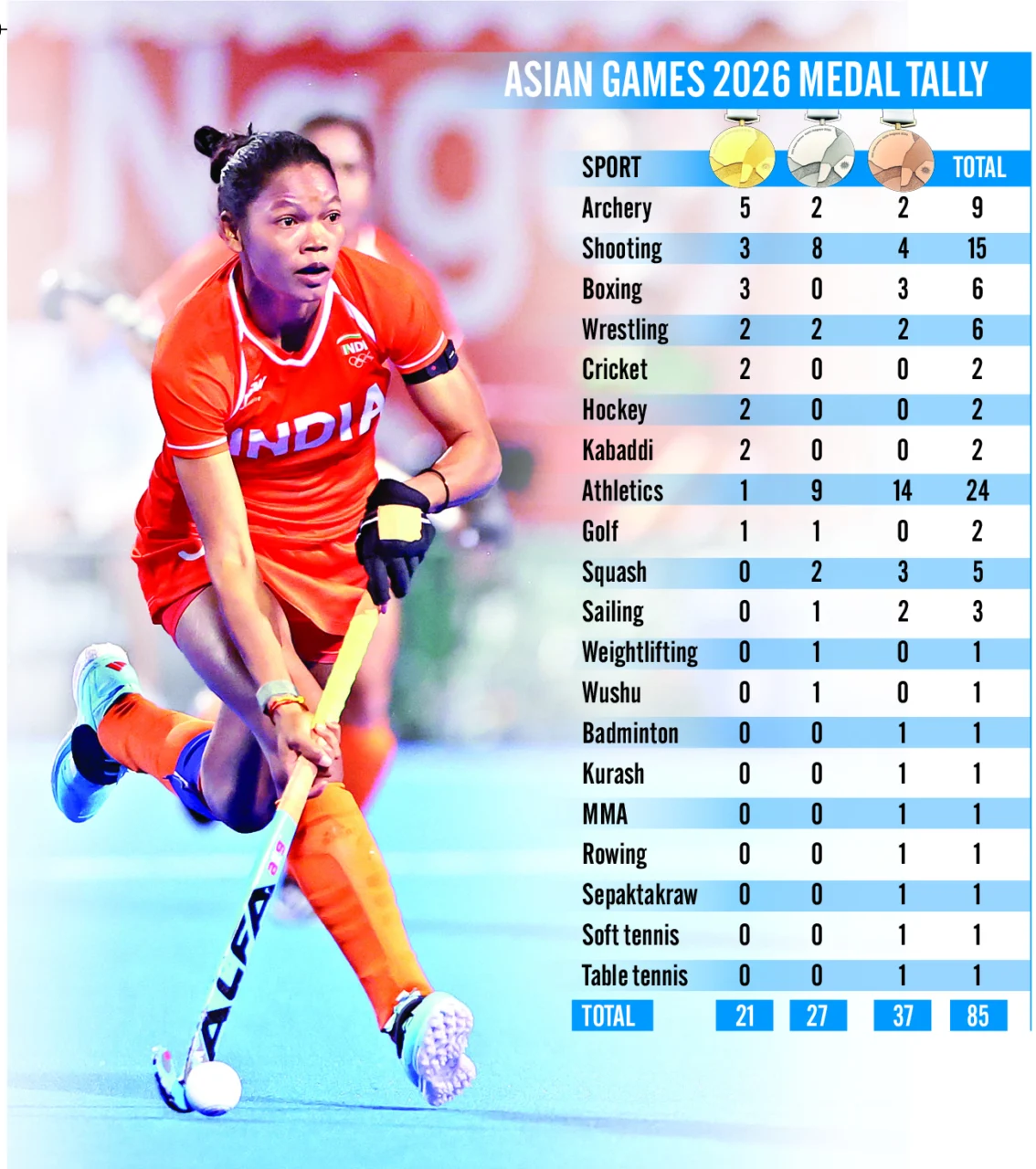
Shooting had several close finishes, while athletics produced 24 medals but only one gold. Some disciplines that had made an impact at previous editions — including badminton, tennis, equestrian sport, table tennis and fencing — produced comparatively modest returns.
The overall picture, therefore, was not one of a decline in Indian sport, but of uneven conversion of medal opportunities into gold.
Building The Next Wave
India entered the Games with a 503-member contingent, including more than 300 athletes making their first Asian Games appearance, according to the Sports Ministry. The Government had laid emphasis on athlete preparation, sports science, logistics, medical support, food and equipment. At the September send-off, Mandaviya highlighted the emergence of new talent, saying: “Of our 503 athletes, over 300 athletes are first-timers, so a lot of new talent is coming through.” That depth will be important as India moves towards the Los Angeles Olympic cycle.
The next challenge is to convert that broader base into consistent success at the highest level. India needs deeper talent pools in Olympic disciplines, more high-quality domestic competition, internationally benchmarked coaching, stronger sports science and injury management, and a system that continuously reassesses athletes rather than locking them into funding categories too early.
The Policy Push
India’s sporting ambitions are being backed by a growing policy and financial framework. Khelo Bharat Niti, the national sports policy launched on July 1, 2025, seeks to build an inclusive, grassroots-to-elite sporting system, bridge the rural-urban gap and promote greater participation of women, Janajatiya communities and Divyang persons, according to the sports ministry statement.
The Niti also links sports with school education under the National Education Policy 2020 and sets a long-term goal of sporting excellence at the 2036 Olympics, it added. The government has significantly increased financial support. The Union Budget 2026-27 allocated Rs 4,479.88 crore to the Sports Ministry, while the revamped Khelo India scheme, together with support for National Sports Federations, carries a combined outlay of Rs 36,441 crore for 2026-27 to 2030-31. According to the Sports Ministry, Khelo India has expanded grassroots infrastructure, with 1,067 Khelo India centres and 349 infrastructure projects approved. The KIRTI programme further seeks to identify sporting talent among children aged 9-18 through data-based assessment. At the elite level, the Target Olympic Podium Scheme (TOPS) provides athletes with support for international training, competitions, coaching, equipment and sports-science services, along with monthly financial assistance. The National Sports University, Fit India and other initiatives are designed to strengthen the pathway from grassroots participation to international competition.
The Road Ahead
The Aichi-Nagoya Asian Games provide a useful test of this expanding sporting ecosystem. The emergence of new champions across archery, shooting, wrestling, boxing and other disciplines suggests that the talent pipeline is widening.
The challenge now is to convert this growing depth into consistent Olympic success. For Los Angeles 2028 and the longer-term 2036 ambition, India will need to build on Nagoya through stronger coaching, sports science, injury management, high-quality domestic competition and wider talent identification. The policy framework is increasingly in place; the next test is its effective implementation and its ability to turn promising athletes into sustained global performers.