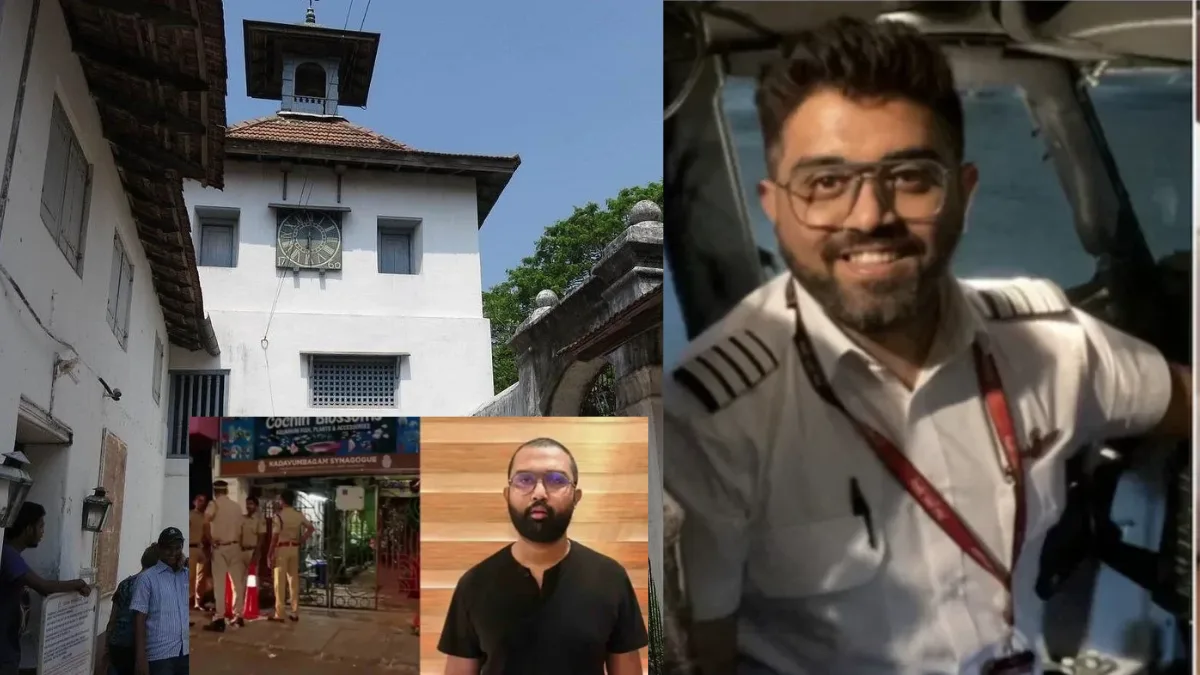
As the investigation into the attack on a synagogue in Kochi progresses, reports have emerged that accused Ebin P. Paul received ₹2 lakh in his bank account within minutes of the incident. The money was reportedly transferred by a Pakistan-based handler. Investigators are examining his financial transactions, digital communications and alleged links with individuals in Pakistan to establish the wider network behind the attack.
According to reports, Paul had earlier received Rs 5,000 after setting fire to a used-car showroom in Muvattupuzha on March 18, 2026.
It appears that the initial payment may have been intended to convince his handlers of his willingness to carry out such activities or to serve as a trial assignment before more serious operations.
The recent payment of ₹2 lakh, reportedly made shortly after the synagogue attack, raises questions about whether increasing the size of the payment was a tactic to persuade him to undertake further terror activities.
The reported foreign links have also raised questions about the possible larger motive behind the attack.
It is suspected that the attack on a synagogue could have been designed to undermine the international praise for Indian Captain Smit Machchhar for thwarting another plot compared with the 9/11 attacks on Israeli soil.
Synagogue Fire Case in Kochi: Keralam Police probe suspected Pakistani links
Reports: Surender Kumar https://t.co/FvuKqenQ29
— Organiser Weekly (@eOrganiser) October 14, 2026
It further argues that, had the synagogue attack succeeded in achieving its intended objectives, Pakistan and its proxies could have attempted to propagate a narrative through their media network that the attack was an inside job, designed to defame Hindus and, in particular, Bharat on the international stage.
Reportedly, the transactions came to light after the police examined Paul’s mobile phone. He is said to have remained in constant contact with individuals in Pakistan.
The police suspect that the accused had explored several plans for terror activities, including possible blasts in New Delhi, Amritsar and Mumbai. Investigators are now attempting to trace the links and identify the ‘boss’ who allegedly instructed Paul to carry out the attack on Indian soil.
Paul reportedly reached the synagogue by car during the early hours of October 12. After setting fire to banners and flex boards, he allegedly transmitted visuals of the incident to another person. As the CCTV cameras were reportedly not functioning, the police apprehended him with the assistance of the Cyber department. The police also seized drugs from his house.
It is also a matter of concern that leaders of both the ruling Congress-led United Democratic Front (UDF) and the Opposition CPM-led Left Democratic Front (LDF), as well as the state government, have reportedly not reacted to the targeted crime, which raises concerns about antisemitism.
Central agencies are collecting further information about the attack and the accused. Reports suggest that the agencies have questioned him in the light of previous cases involving alleged links between individuals in Kerala and Islamic terrorist organisations operating abroad.
Antisemitism is a concern associated with extremist radical movements across the world, with Jewish religious institutions among the targets of attacks. One concern raised in the present case is whether attacks on synagogues could be used to identify, recruit and radicalise individuals, draw them into extremist networks, provide them with training and eventually persuade them to participate in terror activities.
Media outlets described as sympathetic to Islamic fundamentalist positions have reportedly sought to project the incident as a minor act, emphasising that the fire was not inside the synagogue but at a nearby location.
Since October 2023, Kerala has witnessed several reported pro-Hamas activities. October 2023: Jamaat-e-Islami’s Solidarity Youth Movement hosted former Hamas chief Khaled Mashal virtually at a Malappuram rally. November 2023: Chief Minister Pinarayi Vijayan declared Left solidarity with Palestine and criticised the Centre’s pro-Israel stance. April 2025: Waqf Act protesters displayed Hamas leaders’ images. September–October 2025: ISM hosted a ‘Resistance Night’, while SIO commemorated October 7.
Critics have argued that investigations into such incidents have, at times, failed to establish the full network or bring all those responsible to justice. The Union Government banned the Popular Front of India (PFI) over allegations involving terrorist activities and links with extremist networks. Despite the ban, concerns about religious extremism in Kerala continue to be raised. The synagogue attack has renewed these concerns.