NEW DELHI: U.S. President Donald Trump barred journalists from CNN, MS NOW and Politico from entering the White House grounds on September 19, two days after announcing that the three news organisations would be excluded from the presidential complex. The decision followed Trump’s repeated accusations that the outlets publish what he describes as “fake news,” “fiction” and “lies” about his administration and the United States.
Trump announced the ban on Truth Social on September 18, saying it was effective immediately. He accused CNN, MS NOW and Politico of engaging in what he called “constant ‘reporting’ FAKE NEWS!” He said media organisations should not be able to “constantly write or report FICTION and LIES” while covering the President, the Trump administration or the United States, and warned that other media outlets could also face restrictions.
Trump later expanded on his position, saying the White House action was not an assault on the free press but an effort to confront what he described as “FAKE NEWS.” On September 21, he said such reporting had grown like a “Cancer” in the United States and described it as “corrupt, purposeful, pervasive, fully coordinated, and totally out of control.” Trump also linked what he called false and defamatory reporting to national security concerns.
On September 19, reporters from all three organisations found that their White House credentials no longer provided access. Akayla Gardner, a White House correspondent for MS NOW, said her press badge stopped working at a security checkpoint after she had already entered the grounds. According to Gardner, a security officer told her that the badge had been disabled and that the decision was “above him.”
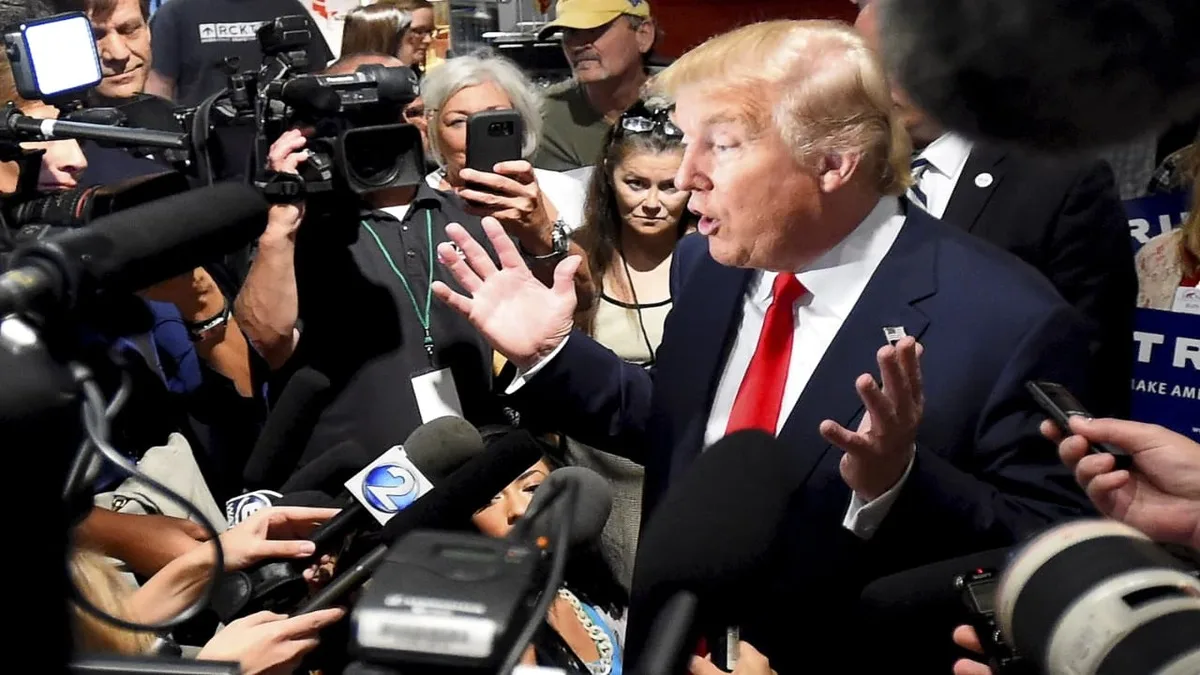
"I don't want them in my office. I don't want them here," President Trump echoed his media outlet ban aimed at CNN, MS NOW and Politico that he issued Friday while speaking to reporters in the Oval Office.
The president barred the outlets from reporting at the White House… pic.twitter.com/nkFmUG8Dot
— CBS News (@CBSNews) September 18, 2026
Gardner said both her badge and her photographer’s badge were taken by security. She added that an MS NOW producer was still permitted to enter the complex because the producer’s pass remained valid.
CNN White House correspondent Betsy Klein was also denied access and had her press credentials revoked. Politico White House reporter Cheyenne Haslett was similarly denied entry, with Politico editor-in-chief Jonathan Greenberger stating in the publication’s Playbook newsletter that the Secret Service confiscated her White House access pass.
Trump cites ‘fake News’ and reporting he says is false
Trump’s decision is part of a broader confrontation between his administration and several major U.S. media organisations. In defending the September 18 decision, Trump said he was responding to coverage he considered inaccurate and persistently hostile to his administration.
On September 19, Trump was asked about the possibility of the ban being challenged in court. He said he did not believe courts should allow “fake news” to be written repeatedly and argued that the government should be able to restrict access for organisations that, in his view, publish false stories.
Vice President JD Vance also defended the administration’s position on September 21. Vance said the administration was not preventing CNN, MS NOW or Politico from reporting on Trump because the organisations could continue to obtain public information and speak with administration officials. He characterised the dispute as one over “special access” to the White House and accused the outlets of engaging in what he called propaganda. Vance also claimed that about 92 per cent of their coverage of the president and his administration was negative.
War Secretary Pete Hegseth likewise backed Trump’s decision. In an X post on September 18, Hegseth said the Department of War supported the move and criticised CNN, MS NOW and Politico over what he described as false stories, leaks and reporting that endangered U.S. troops. He also referred to restrictions imposed on Pentagon media access in 2025, when reporters were required to sign a document concerning the disclosure of unauthorised information in the interest of national security.
The administration’s confrontation with the press has precedents from Trump’s earlier presidency. In 2018, the White House temporarily attempted to restrict CNN correspondent Jim Acosta’s access. A federal court ordered that his press credentials be restored. In 2025, the Trump administration also restricted Associated Press access after the organisation declined to change its stylebook to adopt Trump’s preferred name, “Gulf of America,” for the Gulf of Mexico.
Lawsuit filed after White House access is revoked
On September 21, CNN, MS NOW and Politico filed a lawsuit against Trump and other administration officials in the U.S. District Court for the District of Columbia. The three organisations argue that the withdrawal of their credentials violated the First Amendment and that the administration acted without notice or a formal process.
The lawsuit names Trump, White House Chief of Staff Susie Wiles, White House communications director Steven Cheung and Secret Service Director Sean M. Curran in their official capacities. The three White House reporters, Akayla Gardner, Betsy Klein and Cheyenne Haslett, are also plaintiffs. The organisations are seeking court intervention to restore their access to the White House.
JD Vance defends Trump’s decision to ban media outlets from the White House:
“If you are going to engage in what’s effectively far-left propaganda, why would a Republican White House give you special access?” pic.twitter.com/PMwTi8VF23
— Republicans against Trump (@RpsAgainstTrump) September 21, 2026
In their joint statement, CNN, MS NOW and Politico said the government had revoked their journalists’ credentials because it objected to their reporting. They argued that the First Amendment protects their ability to report on the administration.
The White House has maintained that the action concerns what Trump considers false or misleading reporting rather than a prohibition on the organisations continuing to publish. Trump reiterated that distinction after the lawsuit, saying that the White House was not attacking the free press but was acting against what he calls “FAKE NEWS.” He also criticised the outlets for what he described as consistently negative coverage and claimed that his achievements were being diminished by their reporting.
The legal dispute has now moved the confrontation from the White House press room to federal court. The case was assigned to U.S. District Judge Timothy J. Kelly, a Trump appointee who previously handled the 2018 litigation involving CNN correspondent Jim Acosta. The court will determine whether the administration’s decision to revoke the credentials of CNN, MS NOW and Politico violates constitutional or other legal protections governing access to the White House.