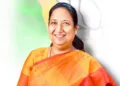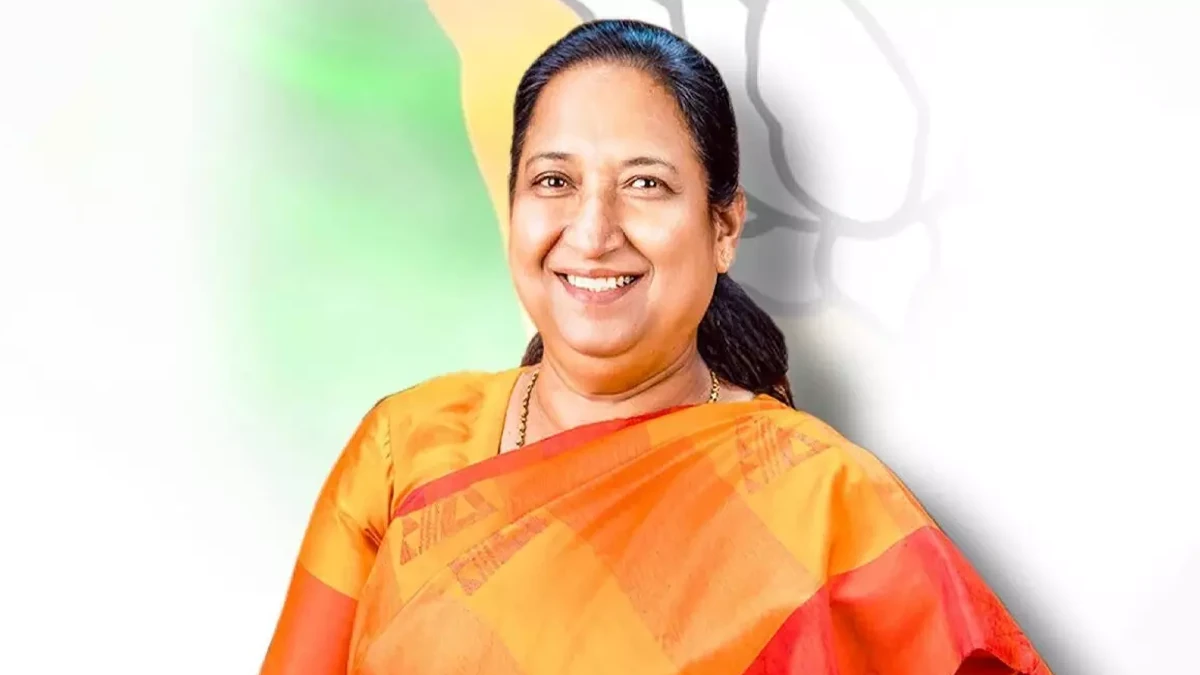
BENGALURU: Dr Sudha Yadav, a senior Bharatiya Janata Party (BJP) leader and former Member of Parliament, has been appointed the new Governor of Karnataka. President Droupadi Murmu announced her appointment on October 12, ending Thawar Chand Gehlot’s five-year tenure as the state’s Governor. Yadav’s elevation marks a significant milestone in a public career shaped by academic achievements, personal tragedy, parliamentary politics and senior responsibilities within the BJP.
Her journey from Motla Kalan village in Haryana to the constitutional office in Karnataka reflects a life that has passed through several distinct phases. She first attracted national attention following the death of her husband during the 1999 Kargil War. In the years that followed, she entered politics and developed an independent identity through electoral contests and organisational responsibilities.
Born on October 16, 1965, in Motla Kalan village in Rewari district of Haryana, Yadav pursued higher education in science. She earned a Master of Science degree and a PhD in Chemistry from the Indian Institute of Technology (IIT), Roorkee, establishing a strong academic foundation before entering public life.
Her personal life changed dramatically in 1999, when India fought Pakistan in the Kargil region. Her husband, Sukhbir Singh Yadav, was serving as a Deputy Commandant in the Border Security Force (BSF) when he was killed during the conflict. His death was a devastating personal loss that became a defining moment in her life.
After the tragedy, Yadav moved into public life and joined the BJP. She gradually emerged as a political figure in her own right, combining her personal determination with an increasing involvement in electoral and organisational politics.
Parliamentary career and electoral breakthrough
Yadav represented the Mahendragarh Lok Sabha constituency in Haryana and became a recognised political figure during the 1990s and early 2000s. According to the biographical information provided, her parliamentary career ran from 1994 to 2004.
One of the most notable moments in her political journey came during the 1999 Lok Sabha election, when she defeated Congress leader Rao Inderjit Singh in Mahendragarh. The victory drew considerable attention to her and strengthened her position within the BJP. The contest mattered because of her opponent’s political stature and the broader electoral climate at the time.
Her years in Parliament gave her experience in national politics and how the legislature functions. The period also helped her build connections within the party and understand political organisation beyond her constituency.
Although her parliamentary tenure ended in 2004, Yadav remained associated with the BJP. Rather than withdrawing from public life, she took on responsibilities in party organisation, political outreach, and engagement with different sections of society.
Senior responsibilities within the BJP
Yadav’s role within the BJP expanded over the years. In 2015, she was appointed in charge of the party’s Other Backwards Classes (OBC) Morcha, a role that involved coordinating and reaching out to OBC communities.
The BJP relies on its various organisational wings to strengthen its presence across regions and social groups. Her appointment reflected the party’s confidence in her political experience and organisational abilities.
A further milestone came in August 2022, when she was appointed to the BJP’s Parliamentary Board and Central Election Committee. These are among the party’s important decision-making bodies. The Parliamentary Board handles major organisational and political matters, while the Central Election Committee plays a key role in selecting candidates for elections.
Her inclusion in the Parliamentary Board was also notable from a gender representation perspective. Following the death of senior BJP leader Sushma Swaraj, Yadav was described as the board’s only woman member, placing her among the party’s senior leadership.
From party politics to constitutional office
Yadav’s appointment as Karnataka Governor marks a transition from active party responsibilities to a constitutional position. Unlike an elected representative or party office-bearer, a Governor serves as a state’s constitutional head. He is expected to discharge duties in accordance with the Constitution of India.
The Governor’s responsibilities include appointing the Chief Minister in accordance with constitutional conventions, summoning and proroguing the state legislature, and acting on Bills passed by the legislature as permitted under the Constitution. The office also helps maintain the constitutional framework governing relations between the state and the Union.
Yadav succeeds Thawar Chand Gehlot, who assumed office in 2021. Her appointment makes her the second woman to occupy the Governor’s office in Karnataka, marking another milestone in the state’s gubernatorial history.
Her experience in Parliament and within the BJP’s central organisational structure will shape her public profile as she assumes office. However, her new responsibilities differ substantially from those she held as a party leader, requiring constitutional impartiality and adherence to established conventions.