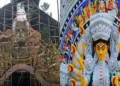
When autumn arrives in Bengal, Durga Puja becomes an occasion of devotion to Mahamaya. For Netaji Subhas Chandra Bose, Goddess Durga also represented Mahashakti—the power to break the shackles of subjugation and a metaphor of Bharat Mata. This national and revolutionary dimension of her worship was manifested in several episodes of his life.
In 1925, Bose was exiled to Mandalay Jail in Burma with revolutionaries including Satyendra Chandra Mitra, Bipin Behari Ganguly and Trailokyanath Chakravarty. When Durga Puja approached, he decided to organise it inside the prison. The budget was Rs 800, of which the prisoners collected Rs 140. An application through Jail Superintendent Major Findlay for the remaining Rs 660 was flatly rejected by the British administration.
Bose protested, pointing out that the government provided Rs 1,200 annually for Christmas celebrations for European Christian prisoners while refusing assistance for the Hindu prisoners’ major festival. He and his fellow prisoners launched a hunger strike. After news of it triggered protests in Bharat, the administration sanctioned Rs 30 per prisoner. Though the amount was nominal, it was an extraordinary moral and strategic victory for Netaji against the British Raj.The episode is recorded in HN Pandit’s Netaji Subhas Chandra Bose: From Kabul to the Battle of Imphal and the second volume of Netaji: Collected Works, edited by Dr Sisir Kumar Bose.
On Maha Ashtami, Bose wrote from Mandalay, “We are extremely fortunate that we have been able to invoke Mother even in this prison of Mandalay.” He added that when the Puja’s light dispelled the darkness of the jail, prison life no longer seemed difficult. The letter is recorded in An Indian Pilgrim, which also describes his self-realisation inquiries and the influence of Swami Vivekananda’s worship of strength.
For Bose, Durga’s ten-armed form symbolised the power required to resist British imperialism. Sugata Bose, in His Majesty’s Opponent: Subhas Chandra Bose and Bharat’s Struggle Against Empire (Harvard University Press, 2012), examines this invocation of strength to relieve the distress of shackled “Bharat Mata”. Bose called upon Bengal’s youth to become the powerful weapons in Durga’s ten hands.
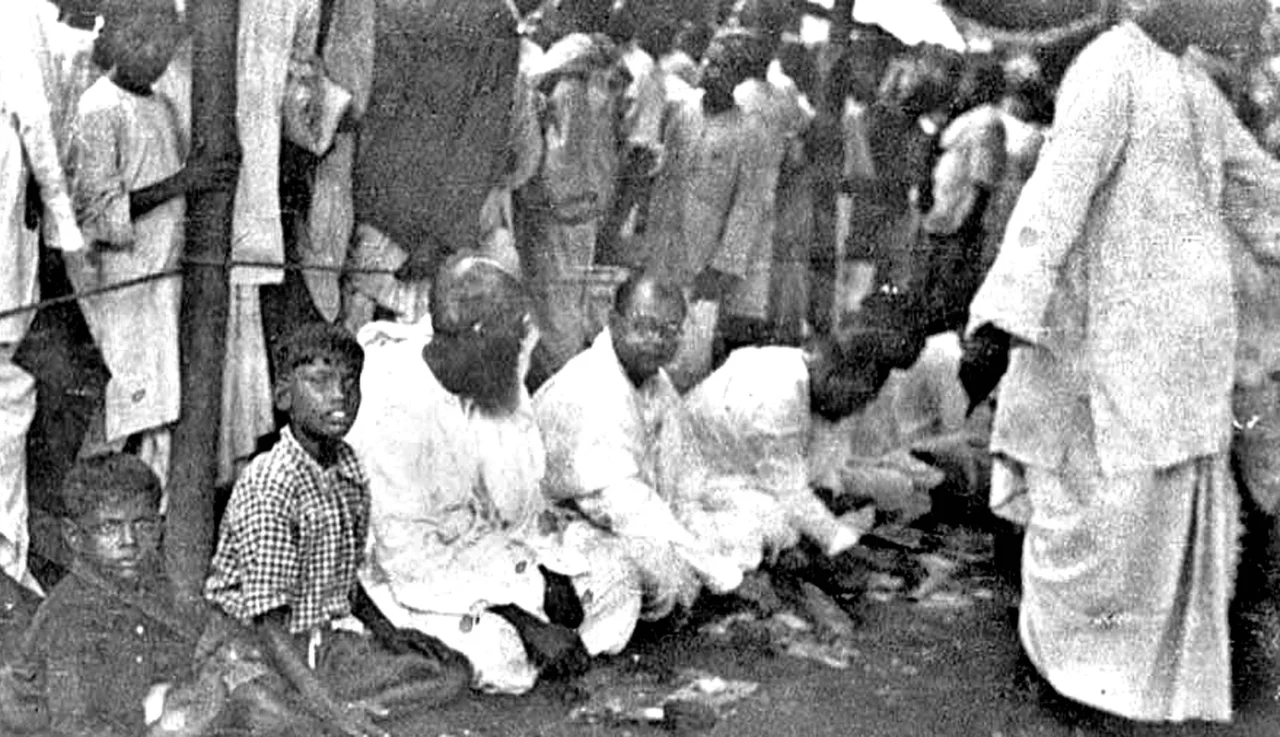
He organised Durga Puja again in Calcutta’s Presidency Jail in 1940. Historian Dr Arup Mitra has described the prison Puja as both protest and an effort to awaken national consciousness. Earlier, in 1938, while President of the Indian National Congress and of the Kumartuli Sarbojonin Durgotsav committee, a devastating fire broke out that destroyed the marquee, deity and pandal on Maha Ashtami. Bose stayed through the night with Kumartuli’s clay modellers, rebuilt them and completed the Puja on schedule.
The Roots of the Conflict
The communist opposition to Netaji was rooted in an ideological divergence dating to the formation of the Communist Party of India between 1920 and 1925 in Tashkent and Kanpur. Arun Shourie’s The Only Fatherland: Communists, ‘Quit India,’ and the Soviet Union, drawing on British Home Department documents, argues that the CPI remained guided by Moscow’s Comintern and placed proletarian internationalism and Soviet interests above Bharat’s freedom struggle.
The conflict became explicit in December 1930 when the Comintern’s Inprecor published the CPI’s Draft Platform of Action. It attacked the Left wing of the Congress and named Bose and Jawaharlal Nehru among the “greatest and most dangerous” obstacles to Bharat’s revolution and path to freedom, calling them bourgeois nationalist reformists. Bose was also termed a “sham Left national reformist” and a “fake Leftist agent”. In The Indian Struggle, first published in London in 1935 and later banned in Bharat, Bose criticised Bharatiya communists for their detachment from Bharat’s realities. While Bharatiyas faced British batons and bullets, he wrote, communists mocked the national movement as a struggle of “bourgeois landlords”.
Tripuri and the Broken Alliance
As the Second World War approached, the Comintern adopted a “United Front” strategy. After Bose became Congress President at Haripura in 1938, the communist journal National Front advocated his re-election, as Hiren Mukherjee records in Bow of Burning Gold: A Study of Subhas Chandra Bose. The communists saw Bose’s socialist image as an opportunity to expand their influence within the Congress.
The alliance collapsed at the 1939 Tripuri Congress. Bose defeated Gandhi’s nominee, Pattabhi Sitaramayya, but the right-wing faction obstructed his Working Committee. Bose sought a Left Consolidation Committee of socialists, communists and Royists, but the communists withdrew their support. He resigned as Congress President and formed the Forward Bloc in May 1939.
In The Indian Struggle, Bose wrote that while the communists publicly advocated Left unity, National Front portrayed the Forward Bloc as a “counter-revolutionary organisation”. In a March 28, 1939 letter to Nehru, Bose also expressed anger over what he regarded as Nehru’s personal animosity towards him and failure to oppose the unethical activities of his opponents. Although Nehru admitted to their personal differences in his reply on April 3, this opportunistic betrayal by Bharat’s Left movement deeply wounded Bose’s heart.
From “Imperialist War” to “People’s War”
When the Second World War began in September 1939, the Soviet-German Molotov-Ribbentrop Pact was in force. Following Moscow, Bharatiya communists called it an “Imperialist War” and advocated for total opposition to British participation.
After Hitler invaded the Soviet Union on June 22, 1941, Moscow directed communist parties to stop all anti-British movements and provide all-out assistance to the British war efforts. The Bharatiya communists consequently reclassified the war as a “People’s War”. Shourie’s book The Only Fatherland shows with the help of unassailable facts and documents how the communists considered Russia their fatherland over Bharat, and documents the shift as evidence of the CPI’s subordination to Soviet interests.
When Gandhi launched Quit India in August 1942, the communists opposed the movement and supported the British war effort. At the same time, Bose was organising the Azad Hind Fauj in the far East and advancing towards Bharat’s borders.
The Joshi-Maxwell Pact
The communist position extended beyond political criticism into association with the British. The CPI, banned since 1934, was granted legal status by the British government on July 22, 1942, fifteen days before the Quit India resolution. Historian KK Chaudhari, in Quit India Revolution: The Ethos of Its Central Direction, cites PC Joshi’s reports representing an ultimate betrayal of Bharat’s Independence and the confidential agreement between British Home Member Sir Reginald Maxwell and CPI General Secretary PC Joshi, known as the “Joshi-Maxwell Pact”.
Under this pact, Communist leaders including BT Ranadive, RS Nimbkar and Sajjad Zaheer were released from prison so they could sabotage the national movement from the outside. SS Batliwala, a former Communist Central Committee member who later left the party, testified that Joshi exchanged confidential correspondence with Maxwell and submitted “performance reports” to the British Home Department and military intelligence, claiming that communists were identifying and handing over freedom fighters and Forward Bloc revolutionaries to the CID. However, the most sensational and sensitive aspect of this conspiracy was the espionage conducted by the Soviet Union from within Netaji’s own network. Bhagat Ram Talwar, who helped Bose escape through Kabul, was believed by Netaji to be a revolutionary but was later identified in declassified documents as a Soviet intelligence agent, code-named “Silver”. Romain Hayes’s Bose in Nazi Germany and Mihir Bose’s The Indian Spy examine his links with the NKVD. According to these accounts, Talwar leaked highly confidential details to Moscow about Bose’s plans for a guerrilla war on Bharat’s borders with Soviet assistance.
The Campaign in People’s War
During the war, the CPI’s People’s War conducted a sustained vulgar campaign against Netaji. The language used against him in this newspaper was extremely offensive. Sita Ram Goel’s Netaji and the CPI documents descriptions including “running dog of Japanese fascism”, “Tojo’s tout”, “Tojo’s pet dwarf or puppet” and the “advance party of Tojo and Hitler”. On September 13, 1942, SG Sardesai accused Bose of abandoning mass organisation for “cheap power politics” and becoming an Axis puppet. On December 6, BT Ranadive called him a “bandit of Japanese imperialism” and the INA a mercenary force of “looters, murderers, and dacoits”. People’s War also circulated a purported Beijing Radio report claiming that Bose lived in a Rangoon palace on Axis money and stole workers’ rations. The vile campaign used caricatures as well. Goel records a July 19, 1942 cartoon showing Bose as a donkey whipped by Japanese Prime Minister General Tojo; a September 13 cartoon showing Nazi Propaganda Minister Joseph Goebbels holding a kitten with Bose’s face; and an August 8 cartoon portraying Bose as a mask concealing a Japanese war monster. November 21 cartoon depicted Bose as a Japanese bomb falling on famine-stricken Bengal and September 26, 1943 cartoon showing him as a dwarf on Tojo’s lap inspecting INA soldiers.
Kerala, Bengal and the INA
The campaign spread through regional communist organisations. In Kerala, CPI Secretary P Krishna Pillai wrote in Deshabhimani on October 4, 1942, calling Netaji a “drain worm” and a “despicable traitor sold out to the Japanese”. On August 8, 1943, communist poet Cherukad published in Deshabhimani Weekly the poem “That Sinner is Not Our Leader: He is Tojo’s Boot-Licking Slave”. Historian E Balakrishnan documents this smear campaign in History of the Communist Movement in Kerala.
When Gandhi launched Quit India in August 1942, the communists opposed the movement and supported the British war effort. At the same time, Bose was organising the Azad Hind Fauj in the far East and advancing towards Bharat’s borders
The distortion continued after Independence. A Class IV history teacher’s guide issued by the education department of a CPI(M)-led Kerala government reportedly described Bose’s escape to Germany as having “fled” out of fear of the British. Former Chairman of the Indian Council of Historical Research (ICHR), MGS Narayanan, protested this treatment.
During the Bengal famine of 1943, in which nearly three million people died, the communists shifted blame towards “black marketeers” and Japanese aggression while avoiding criticism of British wartime policies. People’s War had already depicted Bose as a Japanese bomb falling on famine-stricken Bengal, despite the claim that he had offered rice from Singapore for Bengal’s relief. When the Azad Hind Fauj entered Bharatiya territory in 1944, advanced towards Imphal and Kohima and hoisted the tricolour at Moirang, communist publications continued to call the INA a gang of dacoits and its soldiers “murderers” and a “mercenary army of looters”.
Although he sought Axis assistance, he did not endorse Hitler’s racist or fascist ideology. The INA was organised as a secular force without distinctions of caste, religion or creed, while communist propaganda portrayed Bose as slave of Hitler and Tojo.
The Red Fort Reckoning
After reports of Bose’s death in a plane crash at Taipei on August 18, 1945, support for the INA surged. On August 27, CPI General Secretary PC Joshi issued a sympathetic statement and supported the release of INA prisoners. According to confidential communist correspondence cited by Goel, however, the party leadership instructed cadres to stop openly attacking the INA and use popular sympathy for it to attract the revolutionary masses.
The Red Fort trials of Colonel Prem Kumar Sahgal, Colonel Gurbaksh Singh Dhillon and Major General Shah Nawaz Khan, held from November 1945 to May 1946, triggered widespread protests. The Royal Indian Navy Mutiny in February 1946 further shook British authority. RC Majumdar’s Jeevaner Smritideep reproduces a letter by Phani Bhushan Chakrabartti, then Acting Governor of West Bengal and Chief Justice of the Calcutta High Court, describing his 1956 conversation with former British Prime Minister Clement Attlee. The account attributes Britain’s decision to leave Bharat primarily to the INA and the naval mutiny rather than Gandhi’s movements.
Jawaharlal Nehru, Bhulabhai Desai and Tej Bahadur Sapru defended the INA officers through the INA Defence Committee. The communists also joined the movement in a highly calculated pretence to cover up their past sins. Declassified US State Department documents in FRUS, 1946 reportedly record that angry crowds in Bombay and Calcutta attacked communist offices and presses, shouting “Netaji Subhas Chandra Bose Ki Jai” and demanding strict punishment for the communists’ treason.
Late Apologies
For decades after Independence, the Bharatiya communists remained silent about their wartime opposition to Netaji. On January 23, 2002, veteran Marxist leader and former West Bengal Chief Minister Jyoti Basu admitted that the communists had made “a grave mistake” in assessing Netaji’s patriotism and heroism, attributing it to wartime geopolitical equations.
On January 23, 2003, Chief Minister Buddhadeb Bhattacharjee apologised for the communist movement’s character assassination of Netaji, calling the questioning of his patriotism and sacrifice “a historical mistake” and expressing regret over the description “Tojo’s running dog”.
For decades, communists remained silent about their wartime opposition to Netaji. On January 23, 2002, Jyoti Basu admitted that the communists had made “a grave mistake” in assessing Netaji’s patriotism
On April 5, 2010, CPI General Secretary AB Bardhan acknowledged that calling Netaji an “imperialist agent” had been a “grave moral crime and historical blunder” and offered an unconditional apology. However, these apologies did not address the wider record of communist’s association with the British under the Joshi-Maxwell Pact and sabotaging the national movement from within. To add to this, the Congress and communist intellectual circles contributed to reducing the historical prominence of the INA. General VK Singh, in Bose: An Indian Samurai: Netaji and the INA: A Military Assessment, argues that Netaji’s military achievements were chopped off from Bharatiya history textbooks to build a favourable account that independence was achieved solely through non-violent movements.
In April 2022, the All India Forward Bloc, founded by Netaji, decided to remove the communist hammer-and-sickle symbol from its party flag, abandoning the slogans of socialism and return to “Subhasism”.
History’s Verdict
The record of the Second World War presents a sharp contrast between Netaji’s armed struggle against British rule and the position adopted by Bharatiya communists in accordance with Soviet policy. While Bose organised the Azad Hind Fauj and sought to advance Bharat’s independence, communist publications supported the British war effort, attacked the INA and vilified Netaji.
The pamphlets, newspaper articles and caricatures remain part of the historical record. The later apologies of Jyoti Basu, Buddhadeb Bhattacharjee and AB Bardhan acknowledge aspects of the communist movement’s earlier error but cannot erase that record. Subhas Chandra Bose, whose patriotism drew strength from the worship of Mother Durga, will always remain a central figure in Bharat’s struggle for independence.