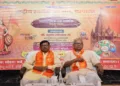
Ninth edition of the National Security Strategies Conference-2026 (NSSC-2026) was held in New Delhi on August 24 and 25. NSSC is India’s top-most security meet organised under the aegis of MHA (IB organised the conference this time) since the year 2021. It is organised in the hybrid format and this time, more than 850 participants representing MHA, NSCS, NIA, heads of all CAPF, DGPs of all states/UTs, domain experts and field officers attended the deliberations.
The inaugural address was given by Home Minister Amit Shah on August 24. The conference deliberated on counter-terrorism, intelligence coordination, narcotics control, illegal migration, cybercrime and Pakistan-sponsored terrorism. This was the first major deliberation after PRAHAAR was articulated in February this year and the deliberations set the tone for a paradigm shift in India’s internal security strategy.
PRAHAAR is MHA’s first publicly articulated national counter-terrorism policy and strategy. This policy has designed an intelligence-based, whole of government approach and whole of society framework to prevent terrorist attacks, swift counter-terrorist response and build resilience at every level. The strategy is built around seven pillars: prevention, swift and proportionate response, aggregation of capacities, rule of law and human-rights compliance, radicalisation, international cooperation and recovery/resilience.
Essentially, the new policy is a major shift from the reactive posture to a more proactive counter-terrorism doctrine. It also signals that India now treats counter-terrorism as a multi-domain challenge involving security forces, intelligence operations, local policing, technology, law, diplomacy etc. The agenda for the first day of the conference had four main themes. First theme was Counter-terrorism and radicalisation. Home Minister Amit Shah stressed stronger implementation of PRAHAAR on ground, faster trials, bringing back fugitives and integrated investigation of UAPA cases.
The second theme was Intelligence modernisation, with focus on better fusion, analysis, exploiting AI tools and operationalisation of intelligence with the Multi-Agency Centre (MAC). The third theme was Border and Migration security. This has been the main focus of Amit Shah in the recent months, with clear directions on illegal migration, detection and deportation measures. The fourth theme was Organised crime and cyber threats. This theme also discussed narcotics control in view of the impetus given to Nasha Mukt Bharat Abhiyaan.
The second day’s agenda of the NSSC-2026 also had four themes. The first theme discussed Sub-aerial systems like drones and similar low-altitude threats and their counter-measures. It is pertinent to note that drones have been used by Pakistan to drop drugs and war-like stores in Punjab and Jammu & Kashmir. The second theme was ‘Blue economy security’, with focus on protection of maritime economic interests and associated infrastructure.
The blockade of Strait of Hormuz and safety of Indian ships and seafarers must have been discussed. The third theme was Information warfare and its implications for national security. There is a pattern to the negative narratives that continue to emerge from the social media and these have to be countered effectively. The fourth theme was Bio-security framework to build a more comprehensive response to biological threats from the internal security perspective.
The two-day agenda shows that India has moved beyond conventional policing and routine counter-terrorism operations to countering emerging hybrid threats with focus on multi-agency coordination and smart policing. It is also evident that our MAC is more empowered now, with best AI tools being used.
Amit Shah as the Home Minister is not a classical office-bound minister. He believes in touring the various states, particularly the border areas. He takes first-hand account of the field operatives and gives on the spot directions. He interacts with CAPF and police personnel and raises their morale. The achievement of eliminating the menace of Naxalism from India is largely credited to the resolve of Amit Shah. It is heartening to notice that due attention is now being paid to counter the threat from the urban Naxals.
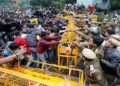
The challenges to the conventional policing have also increased in the recent times. It is amazing to see that small protests in India can suddenly turn into mass mobilisation of unruly crowds, leading to mob violence. Many of these protests have the unpredictability factor (for example, presence of hundreds of criminals and history sheeters during the 20 July protests) which makes the task of controlling the mob violence with the use of minimum force extremely challenging.
More such orchestrated protests to disturb the law-and-order situation are likely to happen. The state police also have to be modernised quickly and very comprehensive SOPs for policing have to be framed as well. In short, NSSC-2026 was a paradigm shift to align classical internal security with the emerging multi-domain threats in Bharat.