British chemical tests on Indian Army soldiers during colonial era
October 17, 2026
  • Read Ecopy
  • Circulation
  • Advertise
  • Careers
  • About Us
  • Contact Us
Android AppiPhone AppArattai
Organiser
  • ‌
  • Bharat
    • Assam
    • Bihar
    • Chhattisgarh
    • Jharkhand
    • Maharashtra
    • View All States
  • World
    • Asia
    • Europe
    • North America
    • South America
    • Africa
    • Australia
  • Editorial
  • International
  • Opinion
  • RSS @ 100
  • More
    • World Hindu Congress 2026
    • Op Sindoor
    • Analysis
    • Sports
    • Defence
    • Politics
    • Business
    • Economy
    • Culture
    • Special Report
    • Sci & Tech
    • Entertainment
    • G20
    • Azadi Ka Amrit Mahotsav
    • Vocal4Local
    • Web Stories
    • Education
    • Employment
    • Books
    • Interviews
    • Travel
    • Law
    • Health
    • Obituary
  • Subscribe
    • Subscribe Print Copy
    • Subscribe & Read Ecopy
  • ‌
  • Bharat
    • Assam
    • Bihar
    • Chhattisgarh
    • Jharkhand
    • Maharashtra
    • View All States
  • World
    • Asia
    • Europe
    • North America
    • South America
    • Africa
    • Australia
  • Editorial
  • International
  • Opinion
  • RSS @ 100
  • More
    • World Hindu Congress 2026
    • Op Sindoor
    • Analysis
    • Sports
    • Defence
    • Politics
    • Business
    • Economy
    • Culture
    • Special Report
    • Sci & Tech
    • Entertainment
    • G20
    • Azadi Ka Amrit Mahotsav
    • Vocal4Local
    • Web Stories
    • Education
    • Employment
    • Books
    • Interviews
    • Travel
    • Law
    • Health
    • Obituary
  • Subscribe
    • Subscribe Print Copy
    • Subscribe & Read Ecopy
Organiser
  • Home
  • Bharat
  • World
  • Operation Sindoor
  • Editorial
  • Analysis
  • Opinion
  • Culture
  • Defence
  • International Edition
  • RSS @ 100
  • Magazine
  • Read Ecopy
Home Bharat

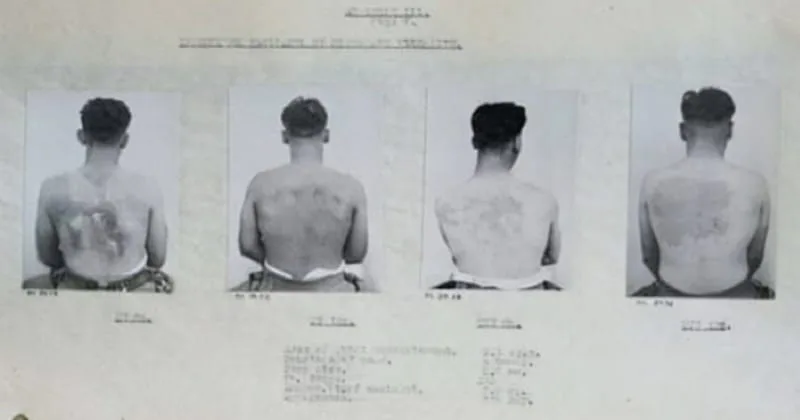
Beyond the Battlefield: How British laboratories conducted chemical experiments on Indian Army troops in colonial India

In the colonial era, British military chemical warfare research involved controlled experiments that have raised serious ethical questions about the treatment of Indian soldiers. While real incidents exist, many viral claims around mass deaths and “gas chambers” are not supported by verified historical records

WEBDESKWEBDESK
Jul 4, 2026, 06:30 pm IST
inBharat
British chemical warfare experiments involving Indian Army soldiers remain a debated part of colonial history

British chemical warfare experiments involving Indian Army soldiers remain a debated part of colonial history

Facebook
Twitter
WhatsAppTelegramEmail

In recent years, social media has circulated emotionally charged claims describing a so-called “Indian Holocaust,” alleging that thousands of Indian Army soldiers were killed in British gas chamber experiments during the 1930s–40s. These posts often reference Rawalpindi and the British chemical weapons facility at Porton Down. While there is a real historical backdrop involving chemical warfare research under the British Empire, many of the viral claims significantly exaggerate or misrepresent what is actually documented in historical records.

The Indian Holocaust- This must go viral

Hitler did not come to India – Then who put 20000 Indian Army Soldiers in Gas Chambers??

The Britishers did- 1930 British Holocaust on Indians for 10 years suspected to have killed over 20000 soldiers

This story won’t give you… https://t.co/kVbCwCyj2T pic.twitter.com/f8AgbnxKJy

— Comman Man (@CommanMan777589) July 1, 2026

British Chemical Weapons Research and Indian Soldiers

During the early and mid-20th century, the British military actively researched chemical warfare as part of preparations for future conflicts, especially after the large-scale use of such weapons in World War I. A key centre for this research was the chemical defence establishment at Porton Down, where scientists studied the effects of toxic agents and tested protective equipment like respirators and gas masks. Within this broader military framework, personnel from across the British Empire, including soldiers from the British Indian Army, were sometimes involved in controlled exposure trials and training exercises. These activities were primarily intended to understand battlefield effects and improve defensive measures, although the ethical standards and consent procedures of that era were far different from modern expectations.

What Happened at Rawalpindi?

Claims about “gas chambers in Rawalpindi” refer to military research and training facilities in colonial India where chemical defence preparations were conducted. Historical evidence suggests that some controlled exposure experiments or demonstrations involving chemical agents like mustard gas may have taken place to evaluate their physiological impact and to train troops in protective responses. However, these were not extermination facilities or mass execution chambers, but rather military testing environments operating under wartime research programs. Importantly, while these experiments likely caused discomfort and possibly injury to some participants, there is no verified archival evidence supporting claims of mass fatalities or tens of thousands of deaths in such settings.

Also Read: Historic Homecoming: Netherlands returns 11th-century Leiden Copper Plates to India, preserving legacy of Chola Empire

The most significant concern surrounding these experiments is not exaggerated casualty figures, but the ethical reality of how colonial military systems functioned. Soldiers in the British Indian Army operated within a strict hierarchical structure where genuine informed consent was often limited or ambiguous by modern standards. Even when participation was recorded as voluntary, the power imbalance between colonial authorities and Indian troops raises serious questions about coercion, awareness of risks, and the ability to refuse participation without consequence. This makes the issue ethically troubling, even if the scale of harm is far smaller than viral narratives suggest.

Most established historical research agrees that the British military conducted chemical weapons research during World War II and that colonial troops, including Indians, were sometimes involved in controlled testing or training environments. However, historians also consistently note that there is no credible documentation supporting claims of “20,000 deaths in gas chambers” or systematic mass killings in such experiments. While injuries and suffering may have occurred due to exposure trials, the scale described in viral posts is not supported by verifiable military archives or peer-reviewed historical studies.

Such narratives tend to spread rapidly online because they combine elements of real historical injustice with emotionally powerful framing. Colonial-era exploitation, secrecy around military research, and limited public knowledge of such experiments create fertile ground for simplified and dramatic reinterpretations. Social media often amplifies these accounts without rigorous sourcing, turning complex historical realities into viral but distorted stories that prioritise emotional impact over factual accuracy.

The history of British chemical warfare research and the involvement of colonial troops is undeniably a subject that raises important ethical and historical questions. It reflects a period when military science, empire, and limited human rights protections intersected in troubling ways. However, responsible historical understanding requires careful separation of documented evidence from exaggerated or unverified claims. Acknowledging real colonial injustices is important, but it is equally important to avoid inflating or distorting facts, so that history remains accurate, credible, and meaningful.


Topics: Porton DownMilitary ExperimentsWorld War EraIndian ArmyBritish IndiaRawalpindiColonial HistoryChemical Warfare
Share
Tweet
SendShareSend
✮ Subscribe Organiser YouTube Channel. ✮
✮ Join Organiser's WhatsApp channel for Nationalist views beyond the news. ✮
Previous News

Ancient Shivling discovered at bottom of historic Amrit Kund at Trimbakeshwar Mandir in Nashik during ASI conservation

Next News

MANAS: How India’s digital anti-drug platform is empowering citizens against substance abuse and trafficking

Related News

Representative Image

Poonch Infiltration Bid Foiled: LeT Commander Mohammad Faizan & 3 other terrorists killed in mine blast

Chinmaya Amrit Yatra meets Param Vir Chakra awardee Captain Bana Singh, highlighting his courage, simplicity and love for Bharat

Chinmaya Amrit Yatra: Captain Bana Singh recalls Siachen battle, his love for Jammu and message to youth

Indian Army conducts drill on national highway near Pakistan border

National Highway turns military runway in Pakistan border; Indian Army’s Rudra, Dhruv & Chetak sends strategic message

A decade after the Surgical Strikes, India’s counter-terror response has evolved from Uri and Balakot to Operation Sindoor

10 years of surgical strikes: From Uri to Balakot and Operation Sindoor, how India’s counter-terror response evolved

The Indian Army has launched AASHVAST to detect hidden software and electronic vulnerabilities in military drones

Indian Army strengthens drone security with AASHVAST lab to detect software vulnerabilities & Chinese components

The Communist armed struggle continued after the Nizam’s surrender, raising questions over its objectives and fight against the Indian Army

Hyderabad Liberation: Why the communists continued their armed struggle against the Indian Army after Nizam’s surrender

Load More

Latest News

ABVP Demands Action Over Anti-Govt Agitprop in Guna School: MP Child Rights Panel Vows Strict Probe

Guna School Fancy Dress Political Stunt: MP Child Rights Commission probes anti-democratic act; ABVP slams school

ABVP organises ‘Stop Anarchy, Embrace Democracy’ protests at Himachal Pradesh University and Varanasi campus

‘Stop Anarchy, Embrace Democracy’: ABVP leads campus rallies in Himachal & Varanasi against anarchist tactics

The Graham Act of US, Russian Oil & Tariff Waiver for Bharat: A thaw where strategic autonomy holds the line

Dr Krishna Gopal Ji, Sah-Sarkaryavah of the RSS, was the key speaker at Spiritual and Religious Leadership Dialogue

Service, good conduct, compassion and self-discipline are at the core of Sanatan: RSS Sah Sarkaryavah Dr Krishna Gopal

Congress Leader and Former Union Minister P. Chidambaram

Fact Check: Congress leader P Chidambaram claims ECI abandoned SIR in 17 states, but the facts tell a different story

Odisha CM Mohan Charan Majhi at the felicitation ceremony honouring India’s gold-winning men’s and women’s hockey teams at the 2026 Asian Games

Odisha Honours Asian Games Hockey Champions; CM Majhi presents Rs 5.61 crore reward for both gold-winning teams

PM Modi speaking at a rally in Meerut in February 2026, video of which is now in circulation with false claim, Image: The Federal

Fact Check: Old video of PM Modi calling Congress a ‘Burden on the country’ goes viral amid SIR protests

Shastra Pujan and Path Sanchalan at the local Narsingh Baba Temple premises in Motihari

Sangh’s founding objective is to organise the entire society: RSS Sah Sarkaryavah Dr Krishna Gopal Ji

Karnataka govt departments owe ESCOMs Rs 12,463 crore in unpaid power bills, deepening the utilities’ financial strain

Karnataka: Government departments owe ESCOMs Rs 12,463 crore in unpaid electricity bills, raising tariff hike concerns

Dr Sunil Mohanty, Assam Kshetra Prachar Pramukh, addressed a Yuva Sammelan organised by the RSS in Assam’s Karbi Anglong district as part of its centenary celebrations

Assam: RSS organises grand Yuva Sammelan in Karbi Anglong; Pays tribute to unsung vanvasi freedom fighters

Load More
  • Privacy
  • Terms
  • Cookie Policy
  • Refund and Cancellation
  • Delivery and Shipping

© Bharat Prakashan (Delhi) Limited.
Tech-enabled by Ananthapuri Technologies

  • Home
  • Search Organiser
  • Bharat
    • Assam
    • Bihar
    • Chhattisgarh
    • Jharkhand
    • Maharashtra
    • View All States
  • World
    • Asia
    • Africa
    • North America
    • South America
    • Europe
    • Australia
  • Editorial
  • Operation Sindoor
  • Opinion
  • Analysis
  • Defence
  • Culture
  • Sports
  • Business
  • RSS @ 100
  • Entertainment
  • More ..
    • Sci & Tech
    • Vocal4Local
    • Special Report
    • Education
    • Employment
    • Books
    • Interviews
    • Travel
    • Health
    • Politics
    • Law
    • Economy
    • Obituary
  • Subscribe Magazine
  • Read Ecopy
  • Advertise
  • Circulation
  • Careers
  • About Us
  • Contact Us
  • Policies & Terms
    • Privacy Policy
    • Cookie Policy
    • Refund and Cancellation
    • Terms of Use

© Bharat Prakashan (Delhi) Limited.
Tech-enabled by Ananthapuri Technologies