British chemical tests on Indian Army soldiers during colonial era
July 4, 2026
  • Read Ecopy
  • Circulation
  • Advertise
  • Careers
  • About Us
  • Contact Us
Android AppiPhone AppArattai
Organiser
  • ‌
  • Bharat
    • Assam
    • Bihar
    • Chhattisgarh
    • Jharkhand
    • Maharashtra
    • View All States
  • World
    • Asia
    • Europe
    • North America
    • South America
    • Africa
    • Australia
  • Editorial
  • International
  • Opinion
  • RSS @ 100
  • More
    • Op Sindoor
    • Analysis
    • Sports
    • Defence
    • Politics
    • Business
    • Economy
    • Culture
    • Special Report
    • Sci & Tech
    • Entertainment
    • G20
    • Azadi Ka Amrit Mahotsav
    • Vocal4Local
    • Web Stories
    • Education
    • Employment
    • Books
    • Interviews
    • Travel
    • Law
    • Health
    • Obituary
  • Subscribe
    • Subscribe Print Edition
    • Subscribe Ecopy
    • Read Ecopy
  • ‌
  • Bharat
    • Assam
    • Bihar
    • Chhattisgarh
    • Jharkhand
    • Maharashtra
    • View All States
  • World
    • Asia
    • Europe
    • North America
    • South America
    • Africa
    • Australia
  • Editorial
  • International
  • Opinion
  • RSS @ 100
  • More
    • Op Sindoor
    • Analysis
    • Sports
    • Defence
    • Politics
    • Business
    • Economy
    • Culture
    • Special Report
    • Sci & Tech
    • Entertainment
    • G20
    • Azadi Ka Amrit Mahotsav
    • Vocal4Local
    • Web Stories
    • Education
    • Employment
    • Books
    • Interviews
    • Travel
    • Law
    • Health
    • Obituary
  • Subscribe
    • Subscribe Print Edition
    • Subscribe Ecopy
    • Read Ecopy
Organiser
  • Home
  • Bharat
  • World
  • Operation Sindoor
  • Editorial
  • Analysis
  • Opinion
  • Culture
  • Defence
  • International Edition
  • RSS @ 100
  • Magazine
  • Read Ecopy
Home Bharat

Beyond the Battlefield: How British laboratories conducted chemical experiments on Indian Army troops in colonial India

In the colonial era, British military chemical warfare research involved controlled experiments that have raised serious ethical questions about the treatment of Indian soldiers. While real incidents exist, many viral claims around mass deaths and “gas chambers” are not supported by verified historical records

WEBDESKWEBDESK
Jul 4, 2026, 06:30 pm IST
in Bharat
Follow on Google News
British chemical warfare experiments involving Indian Army soldiers remain a debated part of colonial history

British chemical warfare experiments involving Indian Army soldiers remain a debated part of colonial history

FacebookTwitterWhatsAppTelegramEmail

In recent years, social media has circulated emotionally charged claims describing a so-called “Indian Holocaust,” alleging that thousands of Indian Army soldiers were killed in British gas chamber experiments during the 1930s–40s. These posts often reference Rawalpindi and the British chemical weapons facility at Porton Down. While there is a real historical backdrop involving chemical warfare research under the British Empire, many of the viral claims significantly exaggerate or misrepresent what is actually documented in historical records.

The Indian Holocaust- This must go viral

Hitler did not come to India – Then who put 20000 Indian Army Soldiers in Gas Chambers??

The Britishers did- 1930 British Holocaust on Indians for 10 years suspected to have killed over 20000 soldiers

This story won’t give you… https://t.co/kVbCwCyj2T pic.twitter.com/f8AgbnxKJy

— Comman Man (@CommanMan777589) July 1, 2026

British Chemical Weapons Research and Indian Soldiers

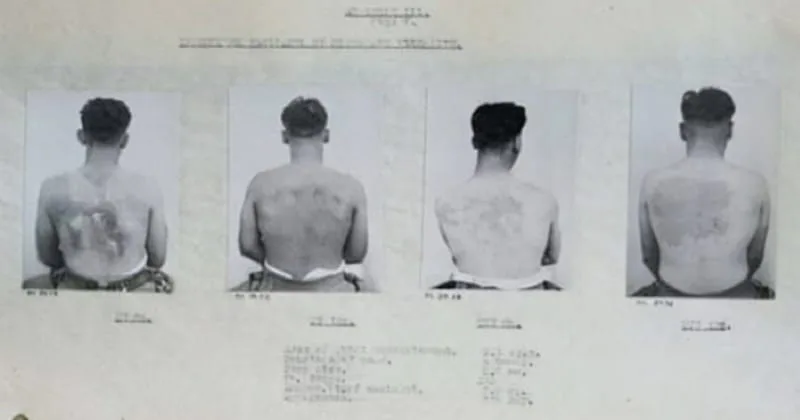
During the early and mid-20th century, the British military actively researched chemical warfare as part of preparations for future conflicts, especially after the large-scale use of such weapons in World War I. A key centre for this research was the chemical defence establishment at Porton Down, where scientists studied the effects of toxic agents and tested protective equipment like respirators and gas masks. Within this broader military framework, personnel from across the British Empire, including soldiers from the British Indian Army, were sometimes involved in controlled exposure trials and training exercises. These activities were primarily intended to understand battlefield effects and improve defensive measures, although the ethical standards and consent procedures of that era were far different from modern expectations.

What Happened at Rawalpindi?

Claims about “gas chambers in Rawalpindi” refer to military research and training facilities in colonial India where chemical defence preparations were conducted. Historical evidence suggests that some controlled exposure experiments or demonstrations involving chemical agents like mustard gas may have taken place to evaluate their physiological impact and to train troops in protective responses. However, these were not extermination facilities or mass execution chambers, but rather military testing environments operating under wartime research programs. Importantly, while these experiments likely caused discomfort and possibly injury to some participants, there is no verified archival evidence supporting claims of mass fatalities or tens of thousands of deaths in such settings.

Also Read: Historic Homecoming: Netherlands returns 11th-century Leiden Copper Plates to India, preserving legacy of Chola Empire

The most significant concern surrounding these experiments is not exaggerated casualty figures, but the ethical reality of how colonial military systems functioned. Soldiers in the British Indian Army operated within a strict hierarchical structure where genuine informed consent was often limited or ambiguous by modern standards. Even when participation was recorded as voluntary, the power imbalance between colonial authorities and Indian troops raises serious questions about coercion, awareness of risks, and the ability to refuse participation without consequence. This makes the issue ethically troubling, even if the scale of harm is far smaller than viral narratives suggest.

Most established historical research agrees that the British military conducted chemical weapons research during World War II and that colonial troops, including Indians, were sometimes involved in controlled testing or training environments. However, historians also consistently note that there is no credible documentation supporting claims of “20,000 deaths in gas chambers” or systematic mass killings in such experiments. While injuries and suffering may have occurred due to exposure trials, the scale described in viral posts is not supported by verifiable military archives or peer-reviewed historical studies.

Such narratives tend to spread rapidly online because they combine elements of real historical injustice with emotionally powerful framing. Colonial-era exploitation, secrecy around military research, and limited public knowledge of such experiments create fertile ground for simplified and dramatic reinterpretations. Social media often amplifies these accounts without rigorous sourcing, turning complex historical realities into viral but distorted stories that prioritise emotional impact over factual accuracy.

The history of British chemical warfare research and the involvement of colonial troops is undeniably a subject that raises important ethical and historical questions. It reflects a period when military science, empire, and limited human rights protections intersected in troubling ways. However, responsible historical understanding requires careful separation of documented evidence from exaggerated or unverified claims. Acknowledging real colonial injustices is important, but it is equally important to avoid inflating or distorting facts, so that history remains accurate, credible, and meaningful.


Topics: Military ExperimentsWorld War EraIndian ArmyBritish IndiaRawalpindiColonial HistoryChemical WarfarePorton Down
ShareTweetSendShareSend
✮ Subscribe Organiser YouTube Channel. ✮
✮ Join Organiser's WhatsApp channel for Nationalist views beyond the news. ✮
Previous News

Ancient Shivling discovered at bottom of historic Amrit Kund at Trimbakeshwar Mandir in Nashik during ASI conservation

Next News

MANAS: How India’s digital anti-drug platform is empowering citizens against substance abuse and trafficking

Related News

Operation Amistad: Earthquake-hit Venezuela thanks PM Modi for humanitarian aid; Hails it as “sample of brotherhood”

General Dhiraj Seth assumes charge as the 31st Chief of the Indian Army; Succeeds General Upendra Dwivedi

Army Field Hospital Deployed in Earthquake-hit Venezuela

Operation Amistad: India intensifies relief efforts in quake-hit Venezuela; Army hospital deployed as death toll spikes

Security personnel along with the miscreants and arma and ammunitions that have been seized in assam

Manipur: Huge cache of arms and ammunitions recovered: Security forces intensify operations

PM Modi attended the National Day celebrations marking the 50th anniversary of Seychelles’ Independence as the Guest of Honour

PM Modi in Seychelles 50th National Day as Guest of Honour; Indian Army marches, reflecting stronger security ties

The article published in The Wire

Exposing The Wire’s propaganda against Indian Army & its Hindu hate; Targeting nationalist spirit cloaked as secularism

Load More

Latest News

India's MANAS platform enables anonymous drug reporting and access to counselling and rehabilitation

MANAS: How India’s digital anti-drug platform is empowering citizens against substance abuse and trafficking

British chemical warfare experiments involving Indian Army soldiers remain a debated part of colonial history

Beyond the Battlefield: How British laboratories conducted chemical experiments on Indian Army troops in colonial India

Ancient Shivling found in Trimbakeshwar Mandir's Amrit Kund

Ancient Shivling discovered at bottom of historic Amrit Kund at Trimbakeshwar Mandir in Nashik during ASI conservation

Sugathan’s arrest, custodial harassment; CPM attack on BJP councillors aimed at toppling Thiruvananthapuram Corporation

IIT Delhi hosts national workshop on Swadeshi Energy and Fertiliser self-reliance through biogas

‘Swadeshi Energy and Fertiliser Self-Reliance’ campaign gains momentum at national workshop hosted by IIT Delhi

History researcher M Narendra (Left) and Epigraphist K Dhanpal (Right) with the newly discovered 1750 inscription at Dibburu village in Hesaraghatta Hobli

Ancient inscription unearthed in Karnataka reveals Immadi Krishnaraja Wadiyar’s village grant to Srirangapatna Mandir

Recovered arms and ammunition from a Maoist dump in Koraput district

Odisha: Huge maoist arms cache recovered in Koraput; Security forces intensify crackdown on red terror network

NIT Rourkela develops revolutionary smart bandage that reduces pain, prevents infections and speeds up healing

NIT Rourkela develops advanced smart bandage that protects against infection while promoting faster healing

Operation Amistad: Earthquake-hit Venezuela thanks PM Modi for humanitarian aid; Hails it as “sample of brotherhood”

Former Devaswom Minister Katakampalli Surendran meeting with Home Minister Ramesh Chennithala

Keralam: Sabarimala gold loot case at crucial stage; Katakampalli’s meeting with HM sparks speculation

Load More
  • Privacy
  • Terms
  • Cookie Policy
  • Refund and Cancellation
  • Delivery and Shipping

© Bharat Prakashan (Delhi) Limited.
Tech-enabled by Ananthapuri Technologies

  • Home
  • Search Organiser
  • Bharat
    • Assam
    • Bihar
    • Chhattisgarh
    • Jharkhand
    • Maharashtra
    • View All States
  • World
    • Asia
    • Africa
    • North America
    • South America
    • Europe
    • Australia
  • Editorial
  • Operation Sindoor
  • Opinion
  • Analysis
  • Defence
  • Culture
  • Sports
  • Business
  • RSS @ 100
  • Entertainment
  • More ..
    • Sci & Tech
    • Vocal4Local
    • Special Report
    • Education
    • Employment
    • Books
    • Interviews
    • Travel
    • Health
    • Politics
    • Law
    • Economy
    • Obituary
  • Subscribe Magazine
  • Read Ecopy
  • Advertise
  • Circulation
  • Careers
  • About Us
  • Contact Us
  • Policies & Terms
    • Privacy Policy
    • Cookie Policy
    • Refund and Cancellation
    • Terms of Use

© Bharat Prakashan (Delhi) Limited.
Tech-enabled by Ananthapuri Technologies