“Those who rise upon the shoulders of time and shape the path of the future do more than govern; they create history. When a leader’s vision is rooted in national interest and public welfare, governance transforms into nation-building”.
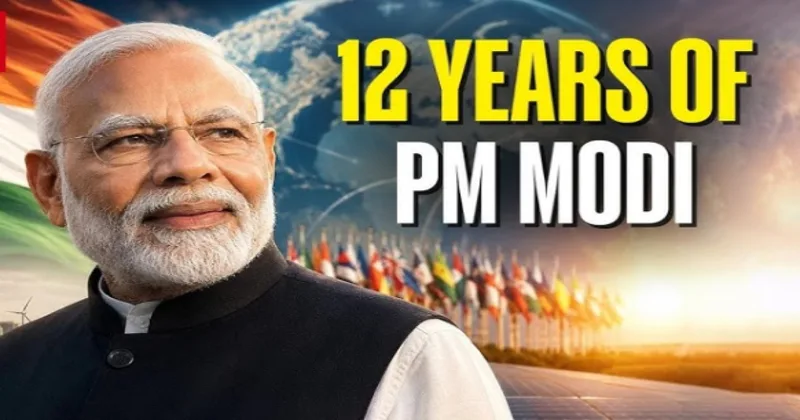
The history of Indian democracy is marked by certain periods that are remembered not merely for political change but for reshaping the national psyche, governance culture and global standing of the country. The era that began in 2014 under the leadership of Prime Minister Narendra Modi is one such period. As his government completes twelve years at the helm of India’s governance, it becomes important to assess the significance of this phase and the impact it has had on India’s domestic transformation and international stature.
In politics, twelve years is a considerable period. Leaders rise and fall, parties emerge and disappear, and political narratives change repeatedly. Yet one fact has remained constant throughout this period: Narendra Modi has remained at the center of Indian politics. Whether supporters or critics, nearly every political strategy in contemporary India has, in some way, been shaped in response to his leadership.
Narendra Modi’s political journey is not merely a story of electoral victories; it is a story of a leadership model that sought to integrate development, governance, nationalism, cultural confidence, and global diplomacy. Winning three consecutive general elections in the world’s largest democracy is an extraordinary achievement. It reflects not only organizational strength but also a sustained connection with the aspirations of millions of citizens.
Over the past twelve years, India has witnessed significant transformations across multiple sectors. The Pradhan Mantri Jan Dhan Yojana brought millions into the formal banking system. Direct Benefit Transfers enhanced transparency and reduced leakages. Digital India accelerated technological inclusion, while the Swachh Bharat Mission transformed cleanliness into a nationwide movement. Schemes such as Ujjwala Yojana and Ayushman Bharat expanded access to essential services for millions of households.
Economically, India has emerged as one of the world’s leading economies. The success of digital payments, the Unified Payments Interface (UPI), the growth of the startup ecosystem, and the expansion of digital public infrastructure have positioned India as a global model for technological innovation and financial inclusion. Today, many countries study India’s digital governance framework as an example of scalable public service delivery.
In the sphere of foreign policy, India’s role has become increasingly influential. Under Modi’s leadership, India has strengthened ties with major global powers, including the United States, Russia, France, Japan, Australia, and nations across the Middle East and Africa. India’s presidency of the G20 demonstrated its ability to articulate the concerns and aspirations of the Global South while simultaneously engaging with the world’s leading economies.
Today, India is viewed not merely as a developing nation but as an emerging global power with a decisive voice in international affairs. Whether in discussions surrounding geopolitical conflicts, economic stability, climate action, or technological cooperation, India’s position carries growing weight. It is for this reason that many strategic thinkers and international observers increasingly regard India as one of the defining powers of the twenty-first century.
One of Narendra Modi’s distinguishing political characteristics has been his patience and long-term perspective. While many political opponents have often relied on short-term movements and immediate narratives, Modi has consistently focused on direct engagement with citizens, organizational expansion, and governance-driven political legitimacy. This approach has enabled him to maintain political relevance and public support despite sustained criticism, controversies, and organized opposition campaigns.
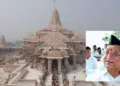
The past twelve years have also witnessed a renewed emphasis on India’s civilizational identity and cultural heritage. Projects such as the redevelopment of Kashi Vishwanath Dham, Mahakal Lok, the construction of the Ram Mandir in Ayodhya, and the inauguration of the new Parliament building have symbolized a broader effort to reconnect modern India with its historical and cultural foundations.
Like every democratic government, the Modi administration has faced criticism, debate, and policy disagreements. Such discussions are an integral part of a healthy democracy. However, the most significant democratic reality remains that the Indian electorate has repeatedly expressed its judgment through the ballot box. Ultimately, the legitimacy of leadership in a democracy is determined by the will of the people.
After twelve years, it would not be an exaggeration to say that Narendra Modi is not merely the leader of a political party but one of the most influential political figures in contemporary India. One may agree or disagree with his policies, but it is difficult to deny the scale of his impact on governance, politics, and India’s global image.
History ultimately remembers leaders not for the offices they hold, but for the influence they leave behind. When future generations look back at India’s transformation in the early decades of the twenty-first century, Narendra Modi will undoubtedly be remembered as a leader who sought to place India at the center of global discourse and who worked to translate the vision of a stronger, more confident, and globally respected India into reality.
Twelve years later, Narendra Modi remains at the centre of elections, national debates and political calculations alike. This is not a coincidence—it is the defining political reality of our times and a reflection of his enduring influence on India’s democratic journey and its growing role in the world.