Pakistan’s attempt to simultaneously position itself as Saudi Arabia’s security partner and a diplomatic intermediary between the United States and Iran has run into a serious strategic dilemma after Yemen’s Iran-backed Houthi Shia terrorists resumed missile attacks on Saudi Arabia, threatening to pull Islamabad into a conflict it has sought to avoid.
The developments have revived remarks made by India’s External Affairs Minister S. Jaishankar during an all-party meeting in March 2026, when he reportedly said India was “not a dalaal nation like Pakistan”, referring to Islamabad’s mediation role in the US-Iran conflict. Weeks later, Pakistan finds itself confronting precisely the contradictions associated with that dual role.
Islamabad had spent recent months quietly facilitating communication between Washington and Tehran, reportedly helping broker an interim understanding while urging both sides to resolve differences through dialogue. At the same time, however, Pakistan remains bound by the Strategic Mutual Defence Agreement signed with Saudi Arabia in 2025, making the Kingdom one of its closest military partners.
Thousands of Pakistani troops are stationed in Saudi Arabia, while Pakistani fighter aircraft are also deployed there. This military presence has dramatically narrowed Islamabad’s room for diplomatic manoeuvre as regional tensions escalate.
Defence commitments narrow Islamabad’s options
The immediate trigger came after Yemen’s Houthi movement fired missiles at Saudi Arabia following accusations that Riyadh had bombed an airport under Houthi control. The missile strikes, launched earlier this week, effectively shattered the informal truce that had existed since March 2022, marking the first claimed Houthi attacks against Saudi Arabia since the ceasefire.
Saudi Arabia confirmed intercepting missiles launched towards its southern region, while Houthi military spokesperson Yahya Saree said the target was Abha International Airport, located in the Kingdom’s southern province bordering Yemen.
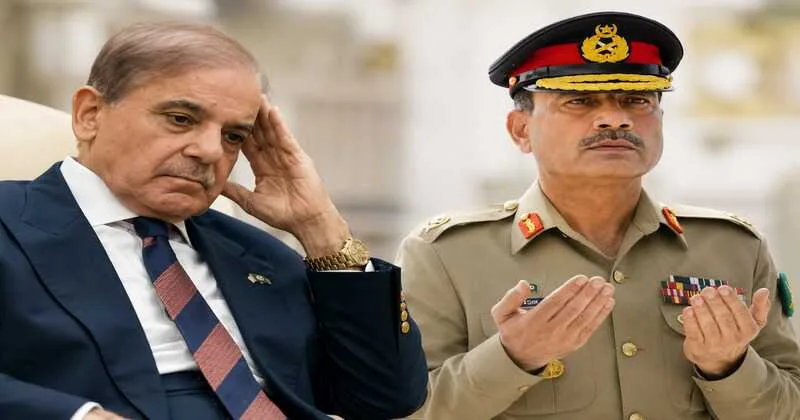
Pakistan reacted swiftly. Prime Minister Shehbaz Sharif condemned the attacks as “reprehensible actions” capable of undermining regional peace and stability, reaffirming Pakistan’s unwavering support for Saudi Arabia’s security and declaring complete solidarity with the Kingdom.
Behind the official statements, Pakistan’s security establishment conveyed an even stronger message. A senior Pakistani official told Reuters that the country’s civil and military leadership had informed Iran “at the highest level” that attacks on Saudi Arabia would be treated as attacks on Pakistan itself. “It is our red line,” the official said.
Thousands of supporters of Yemen's Houthis rallied in the capital, Sanaa, chanting slogans against Saudi Arabia.
Concerns over an escalation in fighting between Saudi Arabia and the Houthis have grown after an attack on Sanaa International Airport, followed by Houthi attacks on… pic.twitter.com/GceNVVG5QO
— TOLOnews English (@TOLONewsEnglish) July 17, 2026
The statement reflects Islamabad’s growing strategic vulnerability. Any prolonged Houthi campaign against Saudi Arabia could activate obligations under the 2025 defence pact, leaving Pakistan with little room to preserve its self-appointed role as a neutral mediator between Tehran and Washington.
Security concerns are heightened by the deployment of Pakistani troops near Saudi Arabia’s southern frontier, close to Yemen, placing them much nearer to any potential escalation than during previous rounds of regional tensions.
Pakistani security analyst Muhammad Amir Rana observed that Islamabad had not anticipated such a rapid escalation. Retired Lieutenant General Ghulam Mustafa said Pakistan’s leadership was still attempting to “appease all stakeholders” but warned that the situation could deteriorate rapidly if the Houthis expanded the radius of their attacks inside Saudi Arabia.
Mediation efforts deepen Pakistan’s strategic trap
Pakistan’s attempt to project itself as a mediator in the US-Iran engagement is increasingly colliding with its long-standing military commitments to Saudi Arabia. Rather than enhancing Islamabad’s diplomatic stature, the latest regional crisis has exposed the contradictions in trying to satisfy competing strategic partners.
The renewed Houthi missile attacks have also revived fears of disruptions in the Red Sea, particularly if commercial shipping becomes a target once again. Combined with previous instability around the Strait of Hormuz, such a scenario would place additional pressure on Pakistan’s fragile economy, which remains heavily dependent on fuel and essential imports from the Gulf. The government has already introduced emergency measures, including early business closures, to conserve fuel supplies amid earlier regional disruptions.
Pakistani officials are also watching developments inside Iran with growing unease. According to the reports, Islamabad believes differences between Iran’s civilian leadership and the Islamic Revolutionary Guard Corps (IRGC) have increased uncertainty over Tehran’s decision-making, making it harder for Pakistan to predict or influence regional developments despite its mediation claims.
An Iranian delegation led by Interior Minister Eskandar Momeni arrived in Islamabad this week after delaying the visit by two days because of the deteriorating security situation. While discussions are expected to cover regional security and the future of US-Iran engagement, the visit also reflects Pakistan’s struggle to preserve diplomatic channels at a time when its security commitments increasingly constrain its options.
Pakistan has continued to publicly advocate restraint. Foreign Ministry spokesperson Tahir Andrabi called on “all parties to exercise maximum restraint” and maintained that “there is no alternative to sustained engagement, dialogue, and diplomacy.” At the same time, however, Islamabad has unequivocally backed Saudi Arabia following the Houthi strikes.
That position was reinforced at the United Nations Security Council, where Pakistan’s Deputy Permanent Representative Ambassador Usman Jadoon strongly condemned the Houthis’ ballistic missile attacks and reaffirmed Islamabad’s full support for Saudi Arabia’s security, sovereignty and territorial integrity. While reiterating support for Yemen’s sovereignty and calling for a UN-facilitated Yemeni-led political process, he also demanded the immediate release of detained UN personnel, humanitarian workers and diplomatic staff, warning that further escalation would deepen Yemen’s humanitarian crisis.
Pakistan said on Thursday it would encourage the United States and Iran to end the violence and resume talks under a memorandum of understanding (MoU) it helped mediate last month. pic.twitter.com/acftrP1BFx
— Middle East Eye (@MiddleEastEye) July 16, 2026
Despite continuing to present itself as a supporter of dialogue, Pakistani officials privately acknowledge that their room for manoeuvre is shrinking. Reports indicate that Pakistan invested considerable diplomatic capital in its mediation efforts.
However, the 2025 Strategic Mutual Defence Agreement with Saudi Arabia significantly constrains Islamabad’s strategic options. If Riyadh were to invoke the pact in response to a wider conflict, Pakistan would face mounting pressure to honour its military commitments, further narrowing its room for diplomatic manoeuvre.
The contradiction has become increasingly evident. Pakistan cannot simultaneously act as Iran’s trusted interlocutor, Washington’s intermediary and Saudi Arabia’s treaty-bound security partner without facing competing obligations. The renewed Houthi attacks have exposed the limits of Islamabad’s balancing strategy, placing it in a serious diplomatic and strategic trap where every option carries significant political, military and economic costs.