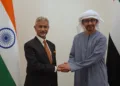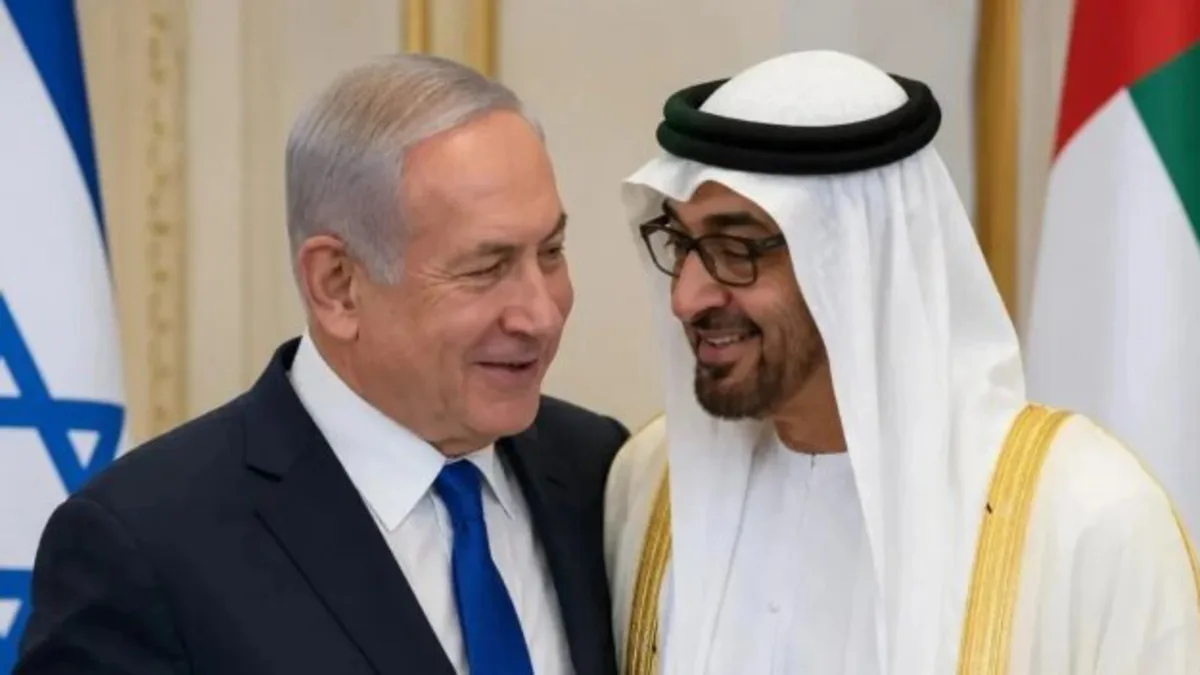
TEL AVIV/ABU DHABI: Israel Prime Minister Benjamin Netanyahu flew to United Arab Emirates and held an hourlong meeting with Sheikh Mohamed bin Zayed on September 27, Sunday. No cameras, no posters no big announcements, no diplomatic spotlight and no bilateral statements, it was indeed a surprise & secret meeting. The Prime Minister office of Israel acknowledged the visit and issued an official statement only on September 29, Tuesday.
The statement read, “Prime Minister Benjamin Netanyahu and his wife visited the United Arab Emirates yesterday at the invitation of the UAE President, Sheikh Mohamed bin Zayed. The visit focused on strengthening relations between the two countries and on regional challenges. The Prime Minister was accompanied by the head of the National Security Council, the head of the Mossad, the military secretary and the foreign policy adviser”.
The Prime Minister’s Office:
Prime Minister Benjamin Netanyahu and his wife visited the United Arab Emirates yesterday at the invitation of the UAE President, Sheikh Mohamed bin Zayed.The visit focused on strengthening relations between the two countries and on regional…
— Prime Minister of Israel (@IsraeliPM) September 28, 2026
PM Netanyahu makes secret Abu Dhabi trip, meets Sheikh Mohamed
PM Netanyahu travelled to Abu Dhabi on aboard a private aircraft and spent around four hours in the UAE. The Israeli delegation included several senior security officials, among them Mossad Director Roman Gofman, National Security Council head Shmuel Ben-Ezra, Netanyahu’s military secretary Maj. Gen. Guy Markizeno and the head of the Shin Bet Security Division. Netanyahu’s wife, Sara Netanyahu, also accompanied him.
Israeli reporting has indicated that Iran was among the issues discussed, particularly against the backdrop of heightened regional tensions. However, the UAE has not publicly provided a detailed agenda for the meeting.
Visit comes weeks before Israel’s parliamentary election
The timing of Netanyahu’s UAE visit has added another political dimension. Israel’s parliamentary election is scheduled for October 27 and opposition figures have made accountability for the failures preceding the October 7 attack a major campaign issue. The outcomes of the polls on October 27 and the domestic political dynamics will determine the future of geopolitical conflicts & the regional security apparatus. In this backdrop as well, Netanyahu’s UAE visit gained focus.
Security concerns erupts over disclosure of the trip
Netanyahu’s office said that a complaint was filed with Israel’s military censor after Channel 12 disclosed the trip before the Prime Minister and his delegation had returned to Israel. According to the Prime Minister’s Office, the report appeared roughly an hour before Netanyahu’s aircraft landed back in Israel and potentially exposed the Prime Minister, senior officials and personnel involved in the operation to a security risk.
Channel 12 had reported that Netanyahu’s meeting with Sheikh Mohamed took place at the airport. Israeli broadcaster Kan also reported that several aircraft linked to the West Asia governments arrived in Abu Dhabi around the same time, including planes from Libya, Morocco and Qatar, although the details were subject to military censorship.
Strategic stakes of the meeting amid West Asia conflict
It is said that Prime Minister Netanyahu flew down to Abu Dhabi on a private aircraft, probably to not make much headlines or keep the high-stakes meeting away from the spotlight. The closed-door bilateral talks has been highly discussed and has gained huge attention among the geopolitical landscape, as regional security crisis soars in West Asia, Israel-US conflict with Iran escalates with no sign of concrete peace. .
Most imprortantly, third anniversary of the October 7 Hamas attack is nearing. Three years, since the Israel-Hamas conflict broke out, there has been no end to the confrontation or a stable solution has not been sealed. Amidst these regional security dynamics and upheavals, Prime Minister Netanyahu’s visit to the UAE is gaining significance. Is it to strengthen the regional security architecture, increase Tel Aviv’s strategic stakes in the war or a routine meeting to monumentalise on the trade, business, diplomacy and other facets of bilateral partnership, which was opened in 2020, following the Abraham Accords?
Iran and the UAE have maintained a consistent and stable relations, despite the war. As a spill-over effect of the Israel/US & Iran war, attacks have been launched on various cities of West Asia including Abu Dhabi. The weapon systems of Tehran have attacked commercial buildings, airports, industies and energy facilities in the UAE.
Despite, bearing severe damage to the critical infrastructure, civilian safety and the economic momentum of the country, Abu Dhabi has maintained sustained relations with Israel and has not abondoned the Abraham Accords. This relation, thus sends a deep strategic signal & messgae about the evolving UAE-Israel ties, especially amidst a war and major security crisis. Will Abu Dhabi and Tel Aviv redefine the security architecture & the dynamics of strategic alliances in West Asia? The answer is awaited!
Israel-UAE ties remain active amid regional tensions
The meeting comes against the backdrop of a complex but continuing Israel-UAE relationship amid saoring regional conflict, steep security crisis and fractured partnerships.
Israel and the UAE established diplomatic relations under the Abraham Accords in 2020. Since then, the two countries have developed political, economic and security links, although the Gaza war and wider regional instability have placed those ties under considerable pressure.
During the current regional conflict as well, the Israeli and Emirati security cooperation has reportedly expanded. Israel has also been reported to have deployed an Iron Dome missile-defence system to the UAE, as Abu Dhabi has come under multiple attacks due to Iranian strikes. Against this backdrop, the Netanyahu-Sheikh Mohamed meeting publicly signals the continuation of high-level engagement between the two countries, despite roadblocks.