



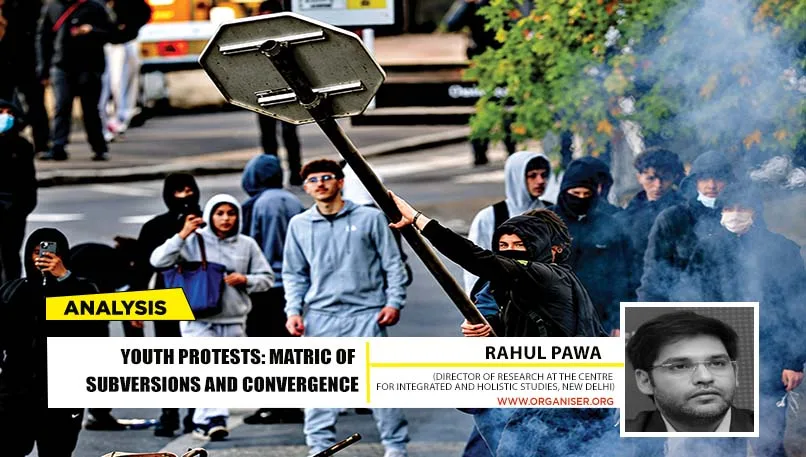
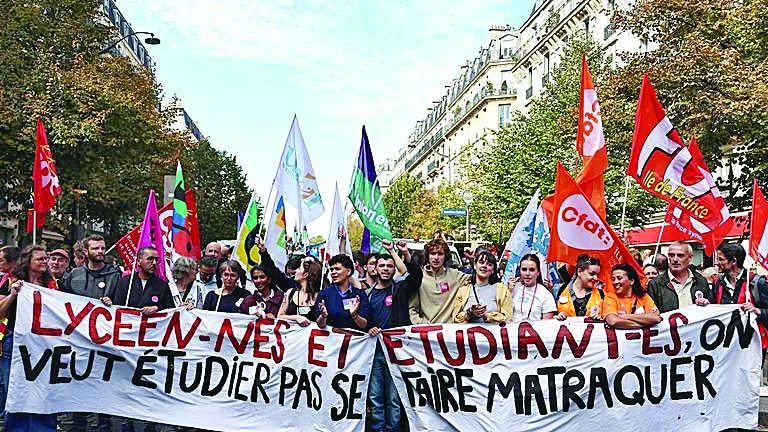
Europe is witnessing violence due to the ongoing student protests in the name of education, with demonstrations, campus occupations & clashes with police reported in several countries. From France and Belgium to Greece and Italy and Ireland, the spread of these protests raises questions about the role of Left-wing political groups & activist networks in shaping student mobilisation to subvert democracies. Bharat, too, is facing the onslaught of student protests. While youth have every right to protest & demand a change, concerns arise when genuine grievances become a means of advancing broader political agendas against elected Governments. The key question is whether such movements strengthen democratic debate or encourage a culture of belligerent agitation that weakens democratic institutions & challenges elected Government through disruption.
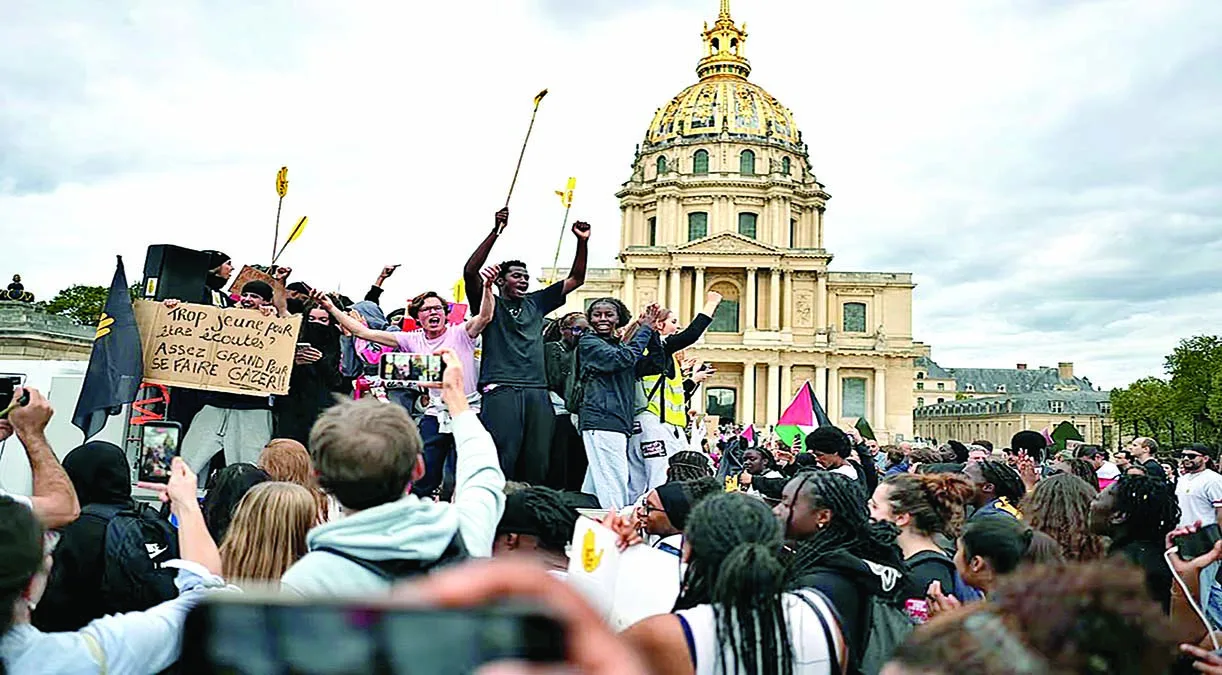
The ongoing so-called youth protest story in India began when remarks by the Chief Justice of India on fraudulent qualifications, particularly fake law degrees, were taken out of context and attributed to students in general. Abhijeet Dipke, who volunteered on social media for the Aam Aadmi Party (AAP) and advised it on digital outreach, brought both party experience and communications training from a US university to the episode. By casting the “cockroach” label as an affront to students, he turned a specific, context-bound courtroom exchange into a rhetorical narrative of humiliation aimed at an entire generation. India’s educated public largely let this reframing pass unexamined, even as it handed the movement a collective identity around which later grievances could be organised.
The original context matters. Chief Justice Surya Kant clarified that his remarks concerned individuals using fake degrees, not young Indians in general. Yet it was the broader interpretation that gained political traction. Antonio Gramsci’s concept of cultural hegemony explains why this mattered. For the Italian Marxist theorist, political struggle extends beyond institutions and formal authority to the power to shape public consciousness, define injustice and establish the legitimacy of resistance. By recasting a narrow concern about fraudulent qualifications as a story of collective humiliation, this protest laid the symbolic foundation for wider subversive mobilisation.
From the outset, the episode was hyped online. The youth protest was launched on May 16, 2026, when its handler posted a viral message on X asking, “What if all cockroaches come together?” The post sparked a satirical platform, an official website, and online membership forms. Within its first week, Instagram presence of this youth movement had accumulated millions of followers, several million of them reportedly bots or diverted accounts from foreign soil, along with hundreds of thousands of digital sign-ups. As the Italian Marxist ideologue Antonio Gramsci theorised, political power is sustained not only through institutions but also through shaping public consciousness and defining legitimacy. This protest’s rhetoric and campaign activity sought to transform a contextual and specific courtroom exchange between a lawyer and a judge into a wider crisis of governmental legitimacy. This can be observed through Robert Agnew’s General StrainTheory, which explains how perceived injustice and blocked aspirations can generate collective frustration, while a shared narrative of humiliation can turn individual grievances into a collective youth identity.
Deriving Inspiration from Commies
The confrontational dimension of recent mobilisation in Delhi aligns closely with Marxist theories of alienation, Leninist vanguardism, Resource Mobilisation Theory, ideological interpellation, collective-action framing and political spectacle. Marx’s theory of alienation resonates in the campaign’s channelling of youth frustration, blocked opportunities and examination-related grievances into a wider indictment of political and economic structures. This protest’s shift from demanding examination reform to campaigning for Pradhan’s resignation marks the transformation of a specific administrative grievance into a broader political confrontation.
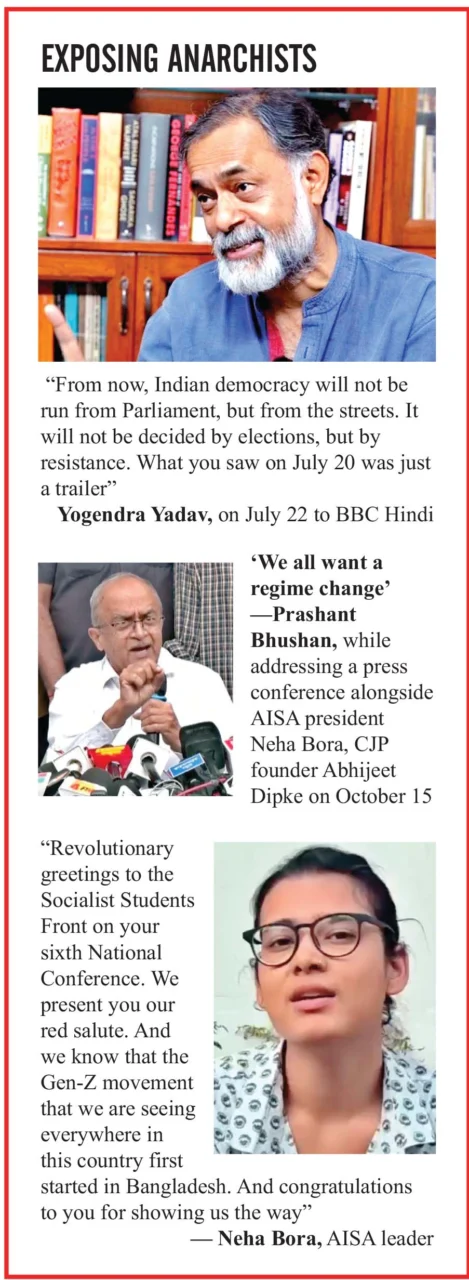
Lenin’s concept of vanguardism is reflected in this protest leader’s central role in directing and sustaining the mobilisation, channelling student discontent towards a defined political objective. The movement’s expanding political network was on display at Jantar Mantar in July 2026. AAP national convenor Arvind Kejriwal backed its demands; CPI (Marxist) leader Brinda Karat and figures such as Yogendra Yadav expressed solidarity; and individuals associated with the All India Students Association (AISA), the student wing of the CPI (Marxist-Leninist) Liberation, took part in the hunger strike. These connections placed this youth movement within a wider ecosystem of Marxist-Leninist politics and organised subversive activism.
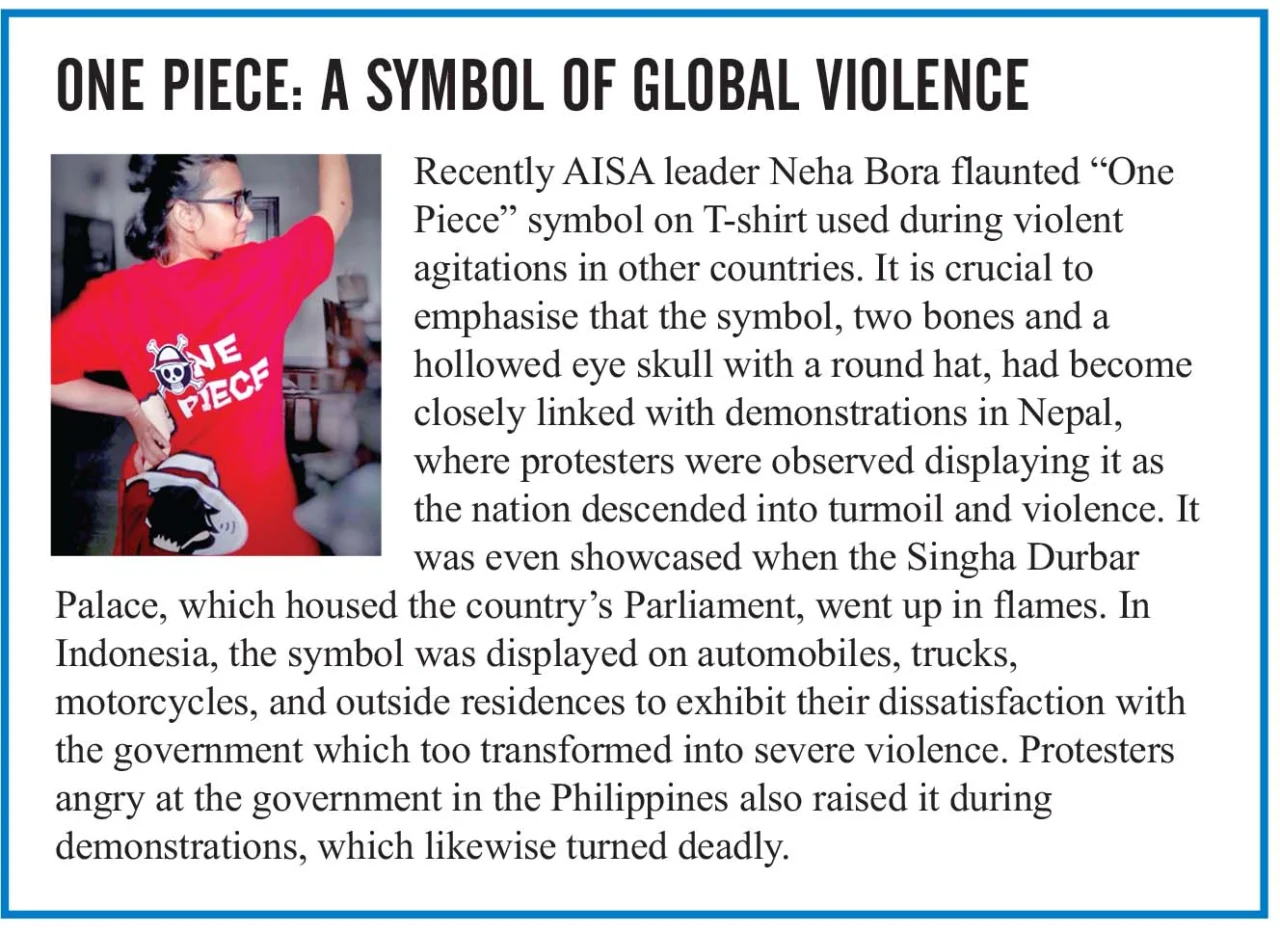
John McCarthy and Mayer Zald’s Resource Mobilisation Theory explains why these networks mattered strategically: sustained sit-ins, hunger strikes, communications activity, leadership visibility and access to political platforms supplied the organisational resources that turned student grievances into a nationally visible campaign. This convergence with opposition figures and Left-aligned student activism gave this protest a reach and political resonance well beyond its original demands.
Meanwhile, the concept of propaganda by the deed, associated with Paul Brousse and the wider anarchist tradition, illuminates the political significance of dramatic public action designed to attract attention and communicate defiance. The July mobilisation involved reported attempts to breach barricades, stone-pelting, clashes, damage to vehicles and attacks on police. These incidents intensified the confrontation and shifted public attention from administrative remedies to the spectacle of a direct political showdown. That spectacle also had a digital dimension.
Convergence on Objectives
This ongoing youth protest campaign expanded from education grievances to allegations concerning electoral rolls and demands targeting the Election Commission. On September 25, 2026, its leader threatened nationwide protests if Chief Election Commissioner Gyanesh Kumar did not resign. The “Election Commission Thik Karo” campaign drew on unproven and dismissed allegations of voter-list manipulation, also advanced by Congress leader Rahul Gandhi and AAP convenor Arvind Kejriwal, bringing this protest into the wider opposition drive against the Election Commission, a long-standing agenda of the INDI bloc, the opposition alliance against the Government-led by Prime Minister Modi.
Changing Goalposts
The October escalation brought ideology, confrontation, enforcement and opposition opportunities into sharper focus. On October 10, orchestrators of this anarchist protest were detained ahead of the announced Jantar Mantar agitation, which carried a fresh demand for Gyanesh Kumar’s resignation. The July protests had already involved violence:breached barricades, stone-pelting, damage to vehicles and attacks on police personnel. It was here that the opposition’s political involvement became increasingly explicit.
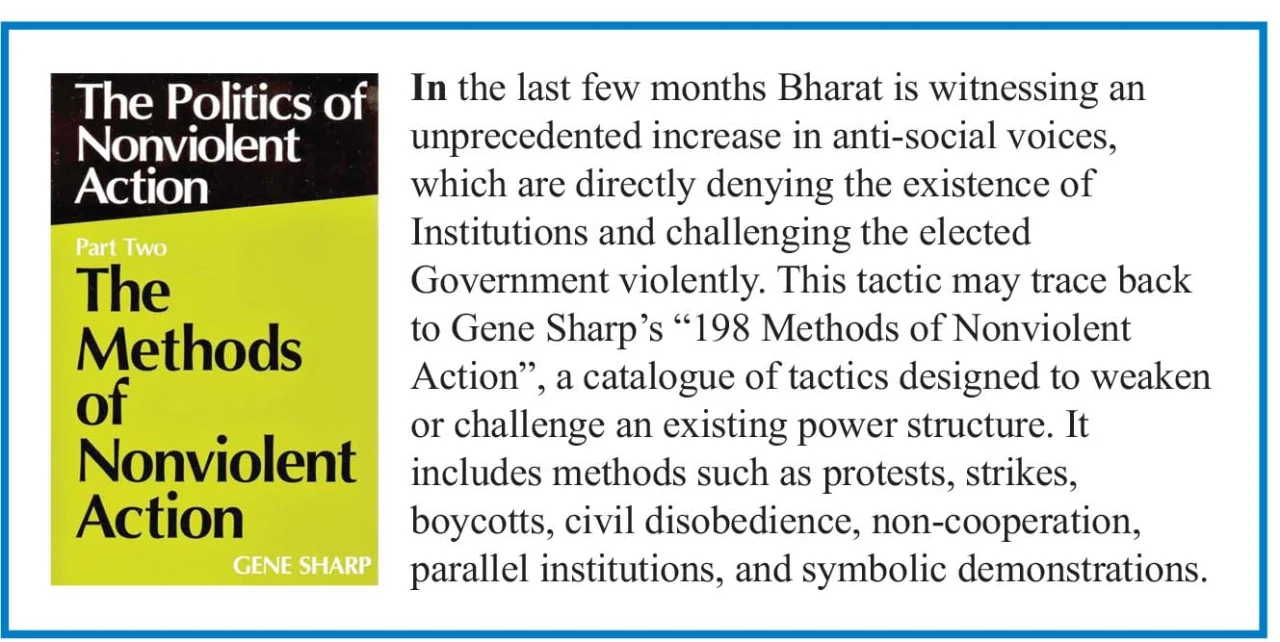
Gene Sharp’s concept of Pillars of Support explains how movements can target institutions and constituencies that sustain political authority. Doug McAdam and Sidney Tarrow’s work on political opportunity structures illuminates how campaigns expand their demands as new agendas emerge. Progression from demanding Education Minister Dharmendra Pradhan’s resignation to demanding that of Chief Election Commissioner Gyanesh Kumar illustrates this expansion from education administration to electoral oversight. Ernesto Laclau’s theory of populist articulation explains how these distinct grievances can be linked through a common narrative of “the people” confronting an allegedly unresponsive establishment. Here one may recall background of this protest’s founder as a mobiliser with AAP, and that most of his team was drawn from AAP’s cadres, trained in Left-identified ecosystems in Europe and America.
The ideological dimension becomes particularly significant when this Delhi youth protest’s mobilisation is considered alongside its convergence with Marxist-Leninist thought and Left-associated organisations. Vladimir Lenin’s concept of vanguardism explains the role of centralised leadership in directing popular discontent towards broader political objectives. Marxist theories of alienation show how immediate grievances over examinations, employment and institutional accountability can be framed as symptoms of systemic failure. The participation of AISA in the hunger-strike mobilisation, the support of CPI(M) leadership and the wider opposition solidarity surrounding this protest demonstrate points of political convergence. These connections place this protest’s mobilisation within a wider ideological and political landscape in which distinct grievances can be channelled towards a common challenge to the incumbent political order. The cumulative pattern is one of expanding institutional targets, confrontational protest tactics, digital political spectacle, opposition alliances and alignment with Left-associated networks. This protest’s trajectory extends beyond examination reform into a sustained campaign challenging the legitimacy of senior political officeholders and constitutional institutions. It reflects a convergence of Marxist-Leninist political objectives, institutional delegitimisation and expanding opposition mobilisation, transforming student grievances into a broader supervision to India’s political and constitutional order.
Historical Precedents & Risks of Subversive Expansion
History records a recurring pattern in which student grievances are subverted by organised ideological formations and expanded far beyond their original demands. But it was its subversion by an organised ideological formation that determined how far it travelled.From Europe to Asia, we are witnessing the same pattern of violent agitation to subvert democracy. In Bangladesh, demonstrations over public-sector job quotas expanded into a radical uprising amid accumulated grievances, culminating in democratically elected Sheikh Hasina’s departure from office. In Nepal, protests triggered by a social-media ban broadened into anger over corruption, privilege and political accountability, followed by Prime Minister K. P. Sharma Oli’s resignation. Neither case can be reduced to a single cause; their relevance lies in subversive expansion. Once separate demands are connected through a common narrative of political illegitimacy, mobilisation moves beyond the original dispute and places the survival of the incumbent political order at the centre of the confrontation. Delhi’s youth protest progression from a judicial remark to education protests and then to a campaign against the Election Commission must be examined against this background.
India possesses constitutional, electoral, judicial and administrative safeguards that differ substantially from those of Bangladesh and Nepal. Competitive elections, federal structures, constitutional remedies and established mechanisms of political contestation provide avenues for resolving disputes without institutional breakdown. These safeguards are not infallible, and they should not be used to dismiss genuine grievances; their strength lies in their capacity to absorb dissent, correct failures and preserve constitutional continuity.
The decisive distinction is between challenging a particular institutional decision and systematically portraying the institutional order as incapable of legitimate action. The former is indispensable to democratic accountability. The latter is the hallmark of subversive expansion.
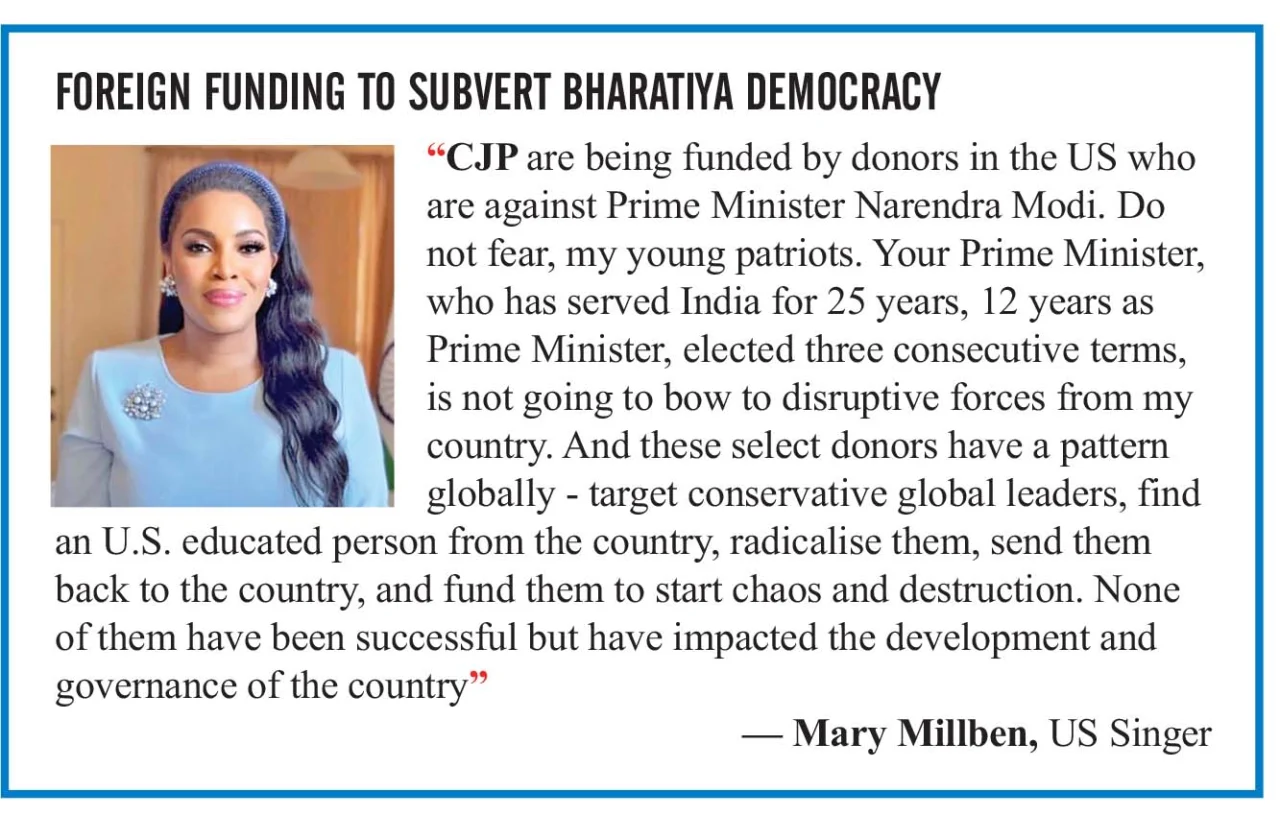
The fact is that the young Indians have every right to demand fair examinations, employment opportunities and accountable government. But they must also scrutinise movements claiming to represent them, particularly when genuine grievances become vehicles for wider ideological and political objectives. The ongoing youth protest’s trajectory in India illustrates this transformation. Remarks by the Chief Justice of India on fraudulent qualifications, particularly fake law degrees, were taken out of context and attributed to students in general, and this misattribution developed into protests and demands for ministerial resignations. The July mobilisation brought this youth protest alongside AAP leaders, Yogendra Yadav, Brinda Karat and members associated with AISA. By September, the campaign had expanded to target the Election Commission, demanding Chief Election Commissioner Gyanesh Kumar’s resignation. The ideological convergence is central to understanding this progression. Marxist theories of alienation, Leninist vanguardism and populist mobilisation help explain how specific grievances can be channelled into broader political objectives. This protest’s mobilisation, Left-associated connections, opposition support and expanding institutional targets illustrate how motivated and political actors can converge around shared objectives. Ideological currents, organisational resources and political interests can reinforce one another, transforming issue-based mobilisation into a wider subversion to institutional legitimacy.
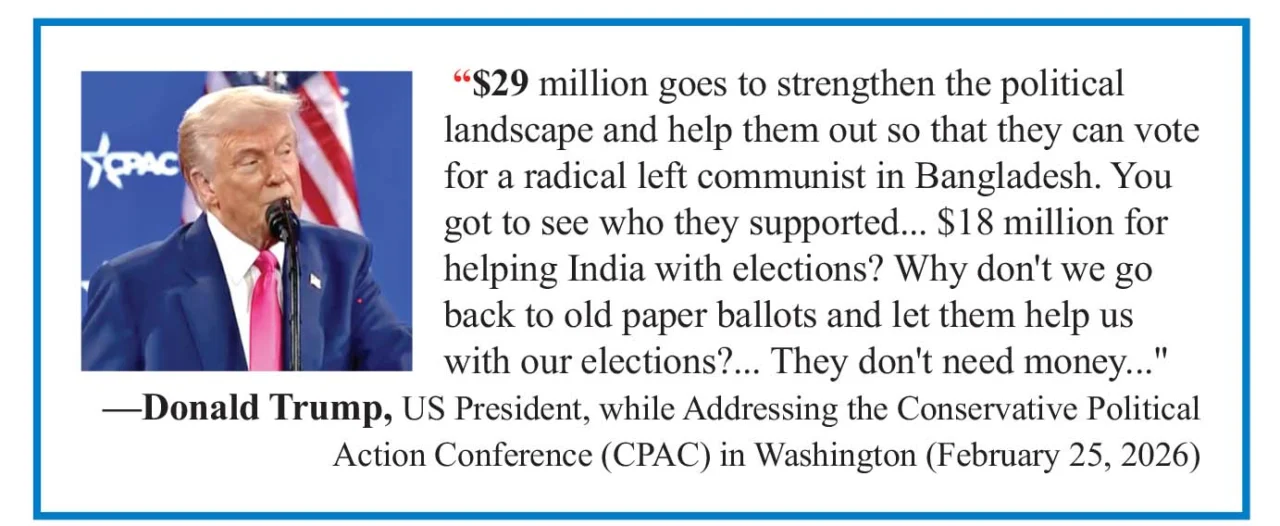
Bangladesh in 2024 and Nepal in 2025 demonstrate how protests rooted in specific grievances can expand into broader challenges to democratic legitimacy and the authority of established institutions. Digital platforms compound this process, using algorithmic acceleration to amplify provocative statements, emotionally charged narratives and confrontational imagery. The tactics adopted by the ongoing protest in India like use of protest spectacle, viral messaging and combative political rhetoric illustrates how these methods can extend a movement’s reach beyond its original constituency by reinforcing the same message repeatedly and with escalating intensity.
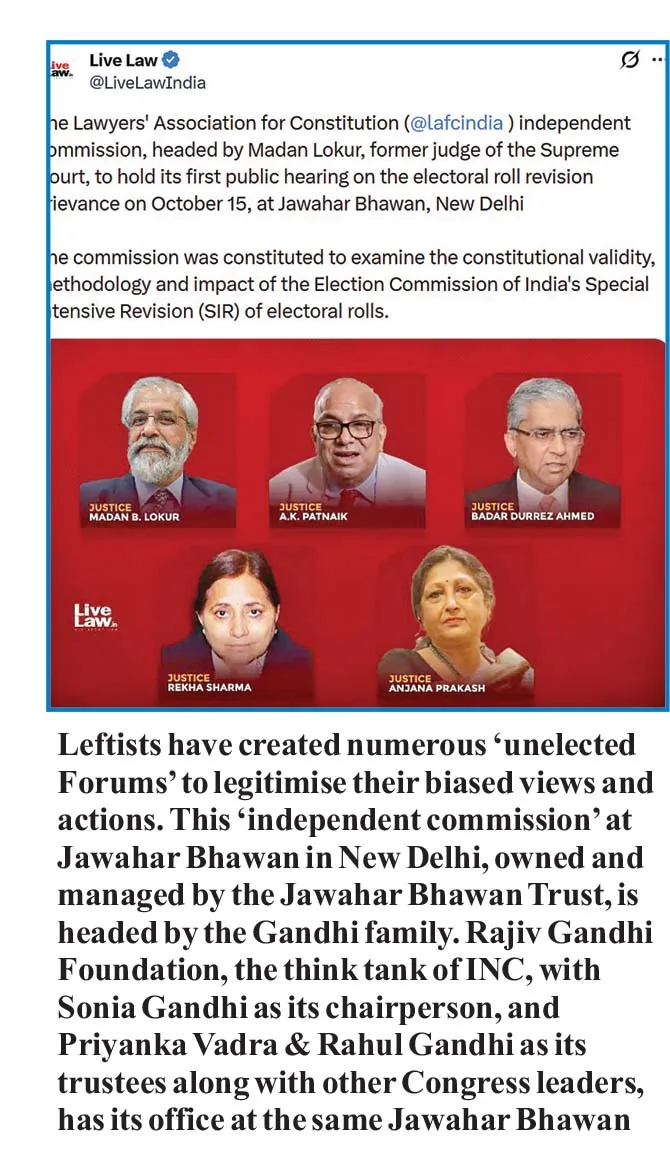
This is the matrix Gen Z must scrutinise: how ideological currents, political networks and mobilisation strategies combine to transform specific grievances into broader political campaigns. Subversive movements do not require every participant to share a single ideology or operate under one command structure. Different actors can converge around common political objectives, reinforce a shared narrative and contribute to the same subvert existing political order.
This is not an argument against dissent or against genuine grievances that remain unaddressed. It is an argument for political literacy. Young Indians must look beyond slogans to examine who directs a movement, how its objectives evolve, which ideological currents shape its messaging and where its political alliances lead. They must distinguish demands for institutional reform from campaigns that seek to delegitimise democratic institutions as a whole.
Genuine grievances deserve justice, not unquestioning allegiance. Youth must scrutinise not merely what a movement demands but how ideological convergence and political mobilisation can turn those demands into a broader subversive project.