



In a democracy, the right to express dissent, register protest and ask questions is one of the strongest constitutional safeguards available to citizens. Criticising government policies with reasoned arguments, demanding accountability for failures and organising protest movements on issues of public interest are natural features of a democratic system.
However, when constructive opposition gives way to persistent and unwarranted pressure on an elected government, questioning the valour and operational actions of the armed forces, demanding resignations over every political disagreement, and casting doubts on the credibility of constitutional institutions, it becomes necessary to reflect on the limits of dissent in a democracy. This naturally raises a fundamental question: should the country be governed through political pressure or in accordance with the spirit and dignity of the Constitution?
There is no denying that preventing any government from becoming authoritarian is an important responsibility of the opposition. If government decisions contain errors, administrative negligence comes to light or public interests are adversely affected, both the opposition and non-political organisations have every right to raise questions and demand accountability.
Demanding answers from the then Education Minister, Dharmendra Pradhan, and calling for his resignation over transparency in examinations and alleged irregularities in competitive examinations such as the National Eligibility-cum-Entrance Test (NEET) were part of this democratic discourse. In matters affecting the future of millions of students, it is essential to establish government accountability. However, demands for accountability must be based on facts, evidence and an impartial assessment of responsibility, rather than merely on political gains, pressure generated by public sentiment or unverified claims.
The problem arises when the focus of protest shifts from reviewing a policy or decision to targeting individuals and constitutional institutions. Questioning the impartiality of the Election Commission after an electoral defeat, demanding the resignation of its chief or seeking the resignation of individuals holding high constitutional offices merely because of political dissatisfaction does not, in itself, substantiate any allegation. Raising questions is not inappropriate, but such questions must be grounded in credible evidence and established constitutional procedures. There is a clear distinction in a democracy between ensuring the accountability of a public office-holder and exerting political pressure on an institution.
Political parties that fail to secure a popular mandate in elections must also engage in introspection. They should analyse shortcomings in their policies, leadership, organisation and public outreach. The Trinamool Congress in West Bengal, the Aam Aadmi Party in Delhi and Punjab and the Congress and its allies in various states have all attained power through the democratic electoral process. Therefore, the credibility of the electoral process must be assessed not on the basis of which party wins or loses, but through uniform standards, evidence, and impartial investigation. If genuine irregularities occur in the electoral process, their investigation and the necessary corrective measures are essential. However, declaring the entire system untrustworthy merely because of an electoral defeat is equally unjustified.
It must also be remembered that constitutional institutions are not beyond criticism. Whether it is the Election Commission, the judiciary, or any other public institution, its functioning can be questioned through reasoned arguments. At the same time, safeguarding the independence and impartiality of these institutions is equally important. The strength of democracy does not lie in ensuring that institutions are never questioned; rather, it lies in ensuring that questions are addressed through transparency, the rule of law, and impartial procedures. Neither the government nor the opposition is above the Constitution, and no institution is exempt from accountability.
In this context, the role of young people is particularly significant. India has a large young population, and today’s youth enjoy extensive access to information. However, access to information and the ability to distinguish truth are two different things. Young people must learn to differentiate between political slogans, unverified claims, and established facts, and verify the authenticity of information before reaching a conclusion.
Transparency must be ensured in the revision of electoral rolls; no eligible citizen’s name should be removed improperly, and any ineligible entries must be dealt with in accordance with the law. Similarly, the issue of illegal immigration is connected with national security and the rule of law. However, it is unjust to regard anyone as suspicious solely on the basis of language, attire, or identity.
Every action must be supported by evidence and undertaken through due legal process. Young people should support such lawful actions from the perspective of national interest and constitutional responsibility. At the same time, their energy should be channelled towards addressing genuine concerns such as unemployment, quality education, skill development, transparency in the examination system, and effective action against corruption.
Questioning the government is a citizen’s right, and peaceful protest is a source of democratic strength. However, the objective of the opposition should be to seek solutions and improve the system, not merely to create political instability or obstruct the country’s progress. The size of a crowd does not establish the truth of an allegation, nor does the intensity of a demand automatically prove its legitimacy. The validity of any demand must be determined by its justification, supporting evidence and consistency with constitutional principles.
India needs a political culture in which the popular mandate is respected, the government is held accountable, the opposition plays a constructive role, and the independence of constitutional institutions is protected. Demanding a resignation may, under certain circumstances, be an appropriate means of establishing accountability, but treating it as the sole solution to every problem narrows the scope of democratic discourse. Issues such as unemployment, education, inflation, and development cannot be resolved through slogans or pressure alone. They require clear policies, effective implementation, and sustained public participation.
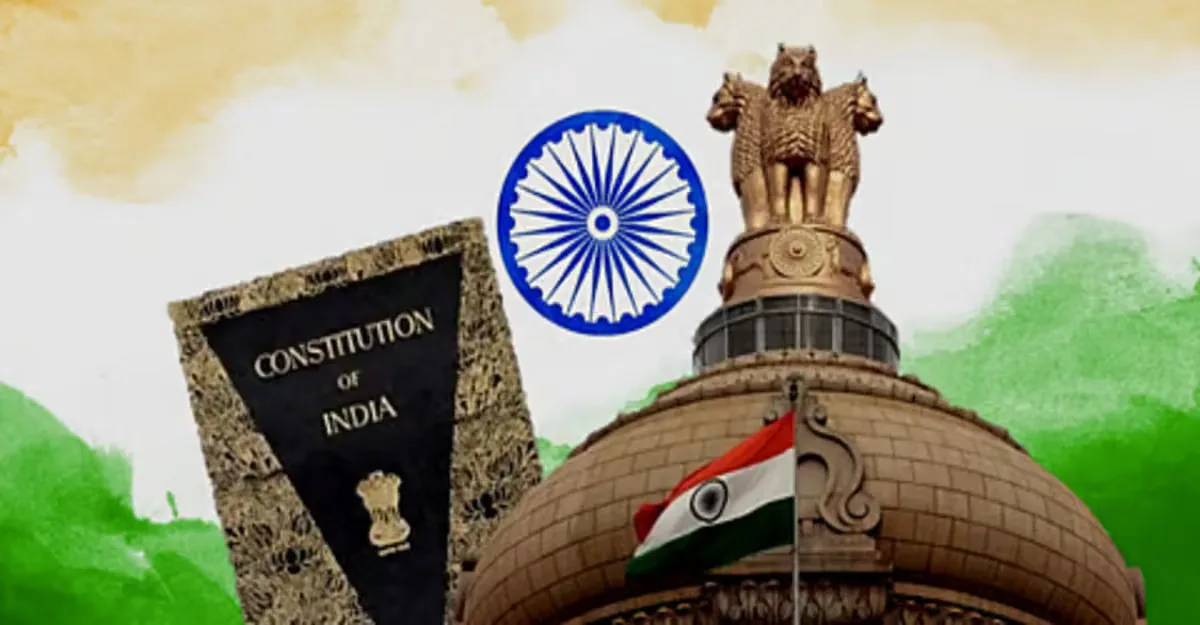
Ultimately, the true strength of democracy lies neither solely in those in power, nor in the opposition, nor in the crowds that gather in the streets. It resides in the collective faith of citizens in the Constitution, the rule of law, independent institutions, and an informed and vigilant citizenry.
Political opposition is the soul of democracy, but constitutional restraint is its foundation. Democracy can be strengthened only when opposition is based on facts and reason and those in power do not evade accountability. The country must be governed neither according to the political convenience of any party nor under the pressure of crowds, but in accordance with the dignity of the Constitution, democratic values and due legal procedures.