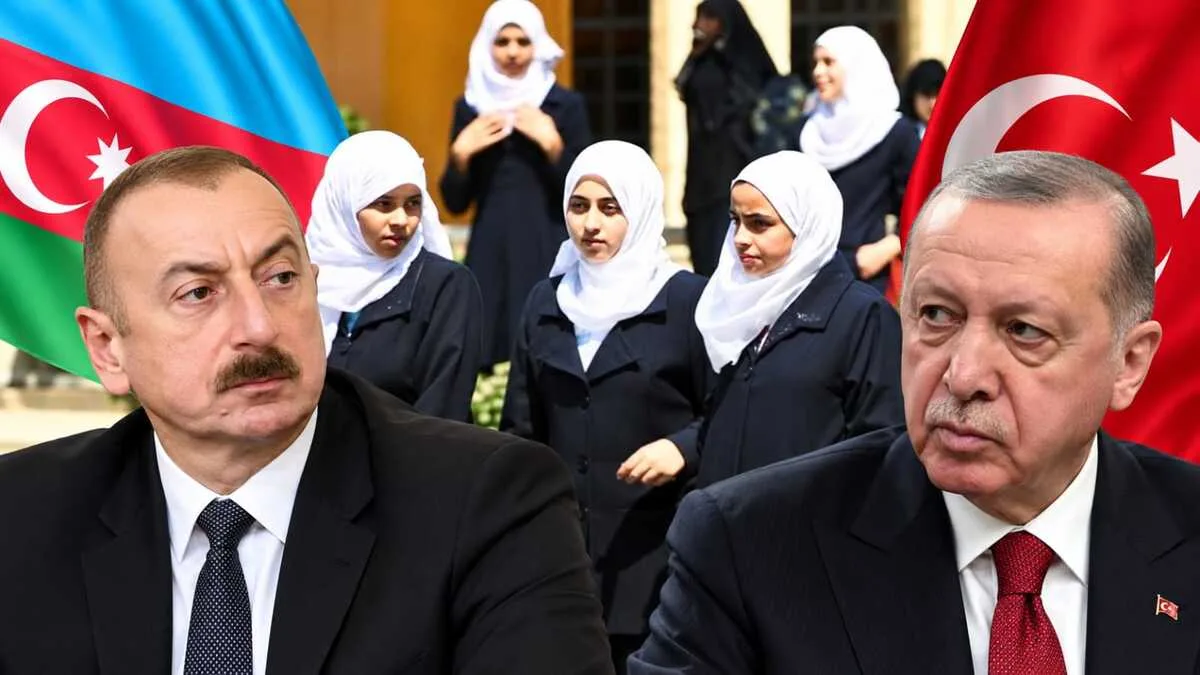
Azerbaijan has rejected criticism from Turkish officials over its school uniform regulations restricting Hijab, warning Ankara against interfering in Baku’s domestic affairs as protests over the rules threaten to strain ties between the two close allies.
The governing Yeni Azerbaijan Party (YAP) criticised statements by officials from Turkey’s ruling Justice and Development Party (AK Party) and an adviser to President Recep Tayyip Erdogan, defending the regulations as consistent with secularism, equality and the rule of law.
The dispute intensified after Azerbaijan introduced new school uniform rules in September, prohibiting pupils from wearing clothing that deviates from the official uniform or conflicts with the secular character of state education.
Although the regulations do not explicitly name the hijab, reports that some students and teachers wearing Islamic headscarves were denied entry to schools triggered protests in several areas.
Azerbaijan’s Interior Ministry said on October 12 that 37 people had been detained for disrupting public order while opposing enforcement of the rules.
Baku rejects Ankara’s intervention
The diplomatic dispute escalated after Oktay Saral, an adviser to Turkish President Erdogan, criticised the restrictions in a post on X on October 13. Saral described denying education to students wearing Hijab as unacceptable and urged Azerbaijan to reverse what he called a mistake, arguing that the hijab was an expression of religious belief.
YAP condemned Saral’s intervention as “populist and irresponsible”, warning that such statements could damage relations between the two countries. The party maintained that Azerbaijan’s school regulations were founded on equality, secularism and the rule of law.
It also pointed out that Turkey’s constitution establishes a secular state, cautioning Ankara against turning Azerbaijan’s education policies into an instrument of political debate.
Invoking the principle of “one nation, two states”, which reflects the close historical, cultural and political relationship between the countries, YAP said their partnership did not authorise either side to interfere in the other’s domestic affairs or impose political and ideological positions.
The party also defended Azerbaijan’s close relations with Israel, rejecting criticism of those ties and stating that they were based on international law and mutual interests.
Secularism at the centre of the dispute
Azerbaijan is a predominantly Muslim former Soviet republic whose constitution separates religion from the state and guarantees freedom of religion.
The government’s latest education regulations have brought the practical application of secularism into focus, particularly over the relationship between religious expression and state-school policies.
The controversy presents a diplomatic challenge for Baku, which maintains close strategic and cultural ties with Ankara while insisting that its domestic policies remain under its own authority.
The disagreement over Hijab and school uniforms have consequently extended beyond education, exposing tensions over religious expression, secular governance and the limits of political intervention between two countries that frequently describe their relationship as a special partnership.