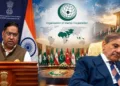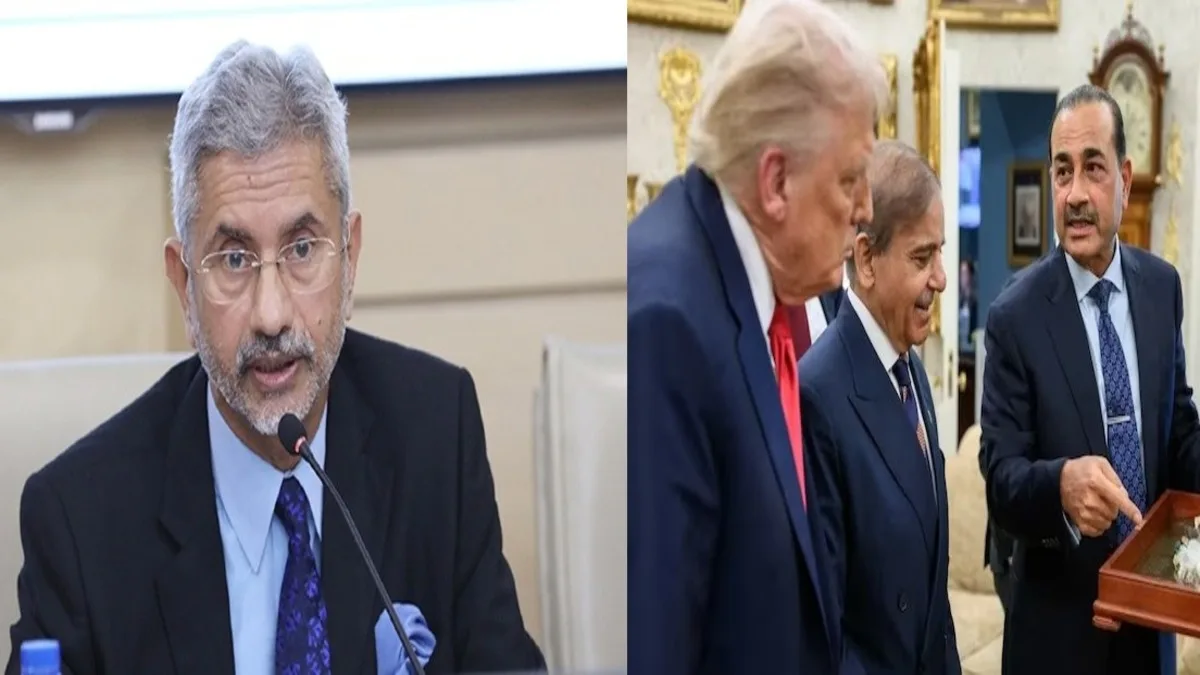
NEW YORK: External Affairs Minister Dr. S. Jaishankar highlighted the growing complexity of India’s external environment and the impediments to the cordial bilateral ties with the United States. Speaking at an Asia Society event, EAM Jaishankar described that Washington’s lack of empathy and unwillingness to understand India’s security priorities due to the cross-border terrorism orchestrated by Pakistan, the relations with New Delhi is affected.
He also said that the world is increasingly shaped by geopolitical competition, weaponised interdependence, fragile supply chains and a visibly more multipolar distribution of power. Speaking about India-China relations, he said that they have improved as the border situation returns towards normalcy. The EAM further asserted that the state of the Indo-China border determines the state of the comprehensive bilateral ties.
Glad to speak at @AsiaSociety at the end of the #UNHighLevelWeek. Thank @dannyrrussel for the conversation. Highlighted the following points:
✅ The difficult state of the world, with multiple conflicts and the 4F (food, fuel, fertiliser & finance) crisis.
✅ The paradox of… pic.twitter.com/KBiGHPwf1e
— Dr. S. Jaishankar (@DrSJaishankar) September 29, 2026
“If my primary concern is not fully appreciated, it impacts the relationship”: Jaishankar
Addressing India’s ties with the United States, EAM Jaishankar identified security concerns, alongside trade-related complications, as important factors shaping the relationship. Directly pointing to Pakistan and its cross-border terrorism, the External Affairs Minister referred to India’s prolonged experience with terrorism emanating from a neighbouring country and stressed that national security remains particularly important for New Delhi.
“Perhaps there are very few countries which have been subjected to the kind of terrorism that we have from a neighbour as part of a deliberate conscious policy over many, many decades”, EAM Jaishankar said. He underlined that when a partner does not sufficiently understand or appreciate an issue that is of fundamental importance to India, it inevitably has an effect on bilateral relations.
Jaishankar calls out 'lack of empathy' by US over India's decades-long terrorism ordeal
"If something which matters so deeply to us, there isn't enough understanding or appreciation or empathy of that, I think that creates a problem too," he said. pic.twitter.com/4prjdWelG2
— Sputnik India (@Sputnik_India) September 29, 2026
“If one of my primary concerns is not fully appreciated by my partner, then clearly there is an impact on that on the relationship”, he said. His comments come against the backdrop of India’s longstanding concerns over cross-border terrorism and Pakistan’s role in supporting terrorist groups targeting India.
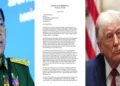
Under Trump’s presidency, the bonhomie between the US and Pakistan is elevating, thus adding fuel to India’s concerns.
Normalcy at border is the prerequisite to Sino-India relations
On India-China relations, EAM Jaishankar said that the bilateral relationship is in a better position than it was in previous years, particularly following efforts to stabilise the border situation. “If you asked me, compared to where you were in 2025, is the relationship better today? I would say yes. Compared to 2024, even more so”, he said.
EAM Jaishankar, however, cautioned against viewing the improvement as a fundamental structural transformation. Instead, he linked it to the gradual normalisation of relations after the prolonged military standoff that followed the 2020 border crisis.
A "stand off" between India, China wont help "either of us, 3rd party will take advantage of it", says EAM Jaishankar; Points to "improvement" in ties.
Vdo source: Asia Society pic.twitter.com/C5hQP4fYc6
— Sidhant Sibal (@sidhant) September 29, 2026
He recalled that normal contacts between India and China had been severely disrupted, with official exchanges, visa issuance and direct flights affected. According to EAM Jaishankar, once the border situation was stabilised, the restoration of broader diplomatic engagement was a natural consequence.
India had consistently conveyed to Beijing that continuing border friction served neither country’s interests. EAM Jaishankar described this as an elementary principle of statecraft: “don’t get locked into a problem which benefits others”.
He further articulated the principle guiding the relationship as: “the state of the border determines the state of the relationship”. “You can’t have tensions on the border and say that the relationship should be normal”, he said, adding that movement towards normalcy along the border creates conditions for the broader relationship to improve.
A world moving towards greater multipolarity
Moving beyond bilateral relationships, EAM Jaishankar said that the international system is undergoing a visible transition towards greater multipolarity. He observed that the United States, which historically acted as a major stabilising force and “shaper of the system”, is now witnessing changes in its alliances and a greater tendency towards acting independently.
Referring to interactions between Washington and Beijing, EAM Jaishankar said that while the two major powers could find areas of convergence, their overall relationship remained competitive. “There are limits to what the two of them can agree upon vis-a-vis the rest of the world”, he said, pointing to the need for other countries to adjust to a changing global environment.
For India and other nations, this means diversifying partnerships, reducing vulnerabilities and seeking “optimal solutions” rather than becoming excessively dependent on any single relationship. “How do we de-risk? How do we diversify? Which are the new partners? Where do we get more value out of an existing partnership?” EAM Jaishankar asked.
“Interdependence is the reality, competition is the sentiment”: EAM Jaishankar
The Minister also described the present international environment as one marked by wars, economic pressures, fragile supply chains and the growing use of economic relationships as instruments of strategic leverage. He pointed to ongoing conflicts, instability in West Asia, fighting in parts of Africa and pressures on developing countries, while highlighting vulnerabilities involving food, fuel, fertilisers and finance.
“The paradox of our times” was that countries remained deeply interconnected while simultaneously becoming more willing to weaponise those connections. “The interdependence is the reality, the competition is the sentiment”, EAM Jaishankar said.
He cited strategic chokepoints such as shipping routes, sanctions, travel restrictions and market access, noting that countries with influence over such gateways increasingly possess tools that can be deployed against rivals.
Energy disruptions and technological advances have further complicated strategic calculations, he added, with new military capabilities potentially encouraging states to take greater risks. Against this backdrop, EAM Jaishankar described diplomacy as an “extreme sport”, requiring governments to manage immediate crises while retaining the patience necessary to resolve longer-term disputes.