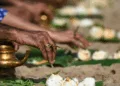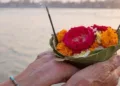
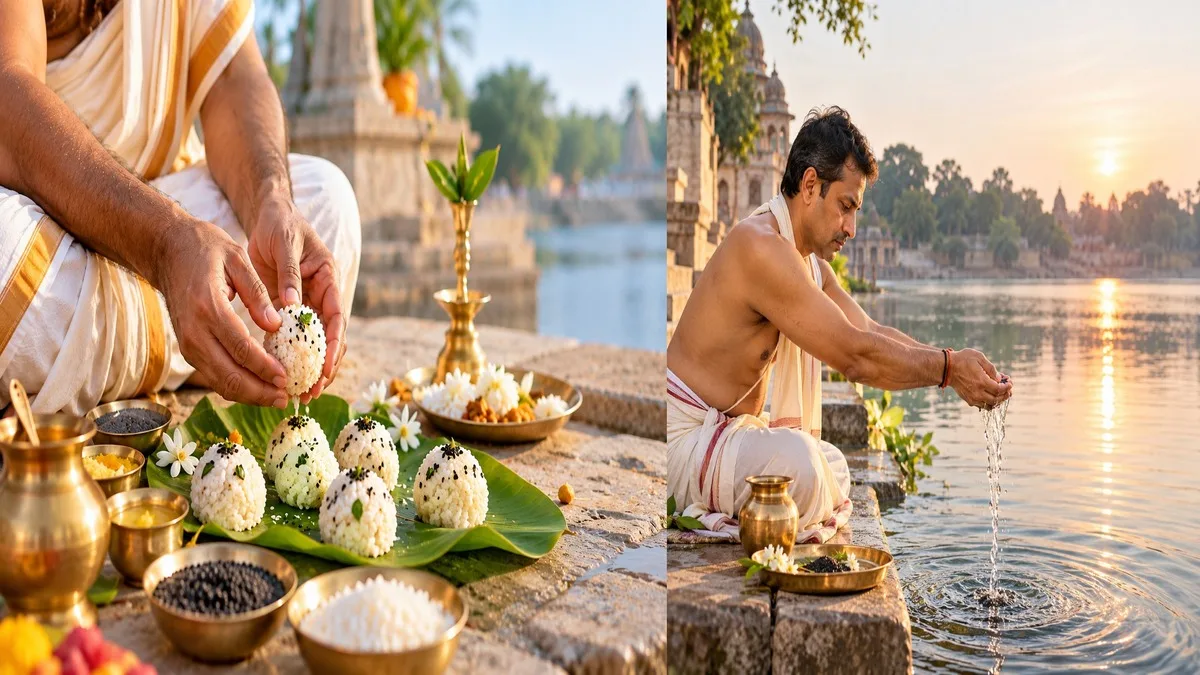
For generations, Pitru Paksha has been a time to remember ancestors through Shraddha, Tarpana, Pinda Dāna, food, charity and acts of service. Beyond its religious observance, it reflects a profound Indian understanding of nourishment, gratitude, grief, family continuity and our relationship with those who came before us.
Some traditions endure for centuries because they carry meaning far deeper than the ritual itself. Pitru Paksha, the period traditionally dedicated to remembering ancestors, is one such tradition.
Families observe this period through different practices according to regional and community traditions. These may include Shraddha: the ritual of ancestral remembrance and offering; Tarpana: the offering of water; Pinda Dāna: the traditional ancestral food offering; charity; and feeding others.
At the heart of it lies a simple recognition: Our lives do not begin with us.
We inherit a body, a family, a culture, language, values, traditions and countless visible and invisible influences from those who came before us. Shraddha creates a designated space to acknowledge that inheritance with reverence and gratitude.
Shraddha: When Remembrance Becomes an Offering
Shraddha is traditionally associated with shraddha or faith, reverence and sincerity. Hindu traditions prescribe various forms of ancestral rites and offerings, with practices differing across regions and communities.
The Garuda Purana, particularly its sections concerning death, the departed and post-death rites, gives an important place to Shraddha and related offerings. Within its own metaphysical framework, it describes a relationship between offerings made by descendants and the departed.
Whether approached literally, spiritually or symbolically, one idea remains compelling:
An offering made in memory of the departed transforms remembrance into an act of nourishment and gratitude.
The Story of Karna: When Gold Could Not Replace Food
A popular traditional story associated with Pitru Paksha brings this idea vividly to life.
Karna, renowned for his generosity, is said to have given away immense wealth during his lifetime. Yet, according to the traditional narrative, when he reached the next world, the food placed before him turned to gold.
He was told that although he had generously given wealth to others, he had not offered food and water in remembrance of his ancestors. He was therefore permitted to return to Earth and perform Shraddha and offer food to his ancestors. The story is popularly associated with the origin of Pitru Paksha.
Its message is simple: Wealth can be given away, but nourishment has a different meaning.
Food is immediate, intimate and life-sustaining. This is one reason anna-dāna, the giving of food, occupies such an important place in the Indian ethos of charity.
Why Is Food So Central to Shraddha?
Few concepts are as fundamental to Indian thought as anna, or food.
In Ayurveda, food is far more than fuel. Appropriate āhāra supports nourishment, strength and vitality and contributes to the balance of body and mind.
This understanding resonates naturally with Shraddha.
Rice, sesame, milk, ghee and other foods appear in different forms of ancestral offerings according to regional traditions. The deeper principle is that food prepared and offered with intention becomes an expression of gratitude.
Pitru Paksha therefore transforms an everyday act of preparing and sharing food into an act of remembrance.
Pinda Dāna: Food Shaped into Remembrance
Among the most recognisable ancestral rites is Pinda Dāna, the traditional offering of food, commonly prepared as small rice-based balls.
Within the ritual framework, the pinda represents nourishment, remembrance and the continuing bond between generations. It also illustrates a characteristic feature of Indian ritual thought: abstract ideas are given physical form.
Gratitude becomes food.
Remembrance becomes an offering.
Continuity becomes tangible.
Pinda Dāna therefore brings together food, memory and ritual in a single symbolic act.
Gaya in Bihar is one of India’s most important centres associated with Pinda Dāna and ancestral rites. Traditional accounts also associate Gaya with the performance of Pinda Dāna by Bhagwan Rama for his father, Dasharatha.
Tila: The Quiet Significance of Sesame
Black sesame, or tila, has an important place in ancestral rituals, particularly Tarpana.
Interestingly, sesame also occupies an important place in Ayurveda. Classical Ayurvedic literature describes it as nourishing and unctuous and associates it with strength and Vata-related qualities.
This does not mean that Shraddha rituals were created from Ayurvedic pharmacology; the ritual and medical traditions have their own histories. Yet their shared appreciation of sesame is an interesting meeting point between two streams of Indian knowledge.
The Garuda Purana also associates sesame with ancestral offerings and Tarpana, giving this humble seed a significant ritual place.
Tarpana: The Symbolism of Water
Tarpana, the traditional water offering, conveys the idea of satisfying, refreshing or nourishing.
Water sustains life. Offering water to the ancestors can therefore be understood symbolically as an acknowledgement of the continuity of life from one generation to another.
The simplicity of the substances used in many ancestral rites like water, grain, sesame and food is itself significant. Some of life’s deepest ideas are expressed through the simplest elements.
When Remembrance Becomes Giving
One of the most meaningful aspects of Shraddha is that remembrance is translated into feeding and giving.
Depending on regional tradition, food may be offered to Brahmins, guests, the needy, cows, birds and other beings. The crow, in particular, has a longstanding symbolic association with ancestors in several Hindu traditions.
The movement is simple and powerful: Someone who has passed away is remembered, and that remembrance becomes nourishment for someone who is still alive.
The departed become the reason for feeding the living.
Is There an Ayurvedic Dimension to Pitru Paksha?
Pitru Paksha is fundamentally a religious and cultural observance, not an Ayurvedic treatment or therapy. However, some of the values surrounding it can be viewed through an Ayurvedic lens.
Ayurveda places importance on wholesome conduct, mental discipline and qualities associated with Sattva. The classical concept of Achara Rasayana includes truthfulness, calmness, compassion, charity, respect and self-restraint. These qualities resonate naturally with the reflective character of ancestral remembrance.
The association with Vata is more interpretive. Bereavement can bring restlessness, disturbed sleep, changes in appetite and emotional irregularity, experiences that can be viewed through an Ayurvedic Vata framework. Simple food, routine, family presence, reflection and generosity may provide a sense of grounding during such a period.
This should be understood as an Ayurvedic interpretation of the practices, not a classical prescription that Pitru Paksha is intended to balance Vata.
Ancestral Healing: A Contemporary Interpretation
The modern expression “ancestral healing” is often associated with intergenerational trauma and inherited family patterns. This is not the same framework as traditional Hindu Pitru rites.
Yet there is a meaningful point of reflection.
Every family carries stories, values, patterns and memories; some celebrated, some painful, and some never spoken about.
Remembering our ancestors does not automatically resolve these patterns. But it can create a conscious space for acknowledging the past.
The traditional message is: Remember where you came from.
A contemporary reflection might add: Choose consciously what you carry forward.
Pitru Rina: The Debt to Those Who Came Before
Indian philosophical traditions speak of Rina, or obligations, including Pitru Rina, the debt owed to one’s ancestors.
At a deeper level, it acknowledges that life is received before it is passed forward.
We receive from previous generations; we become responsible for what we transmit to the next.
Seen in this light, Shraddha is not simply about looking backwards. It is also about understanding our place in the continuing chain of generations.
Beyond Ritual: A Culture of Gratitude
Perhaps this is why Pitru Paksha continues to hold meaning in a rapidly changing world.
It asks us to pause in a culture that rarely pauses.
To remember in an age of forgetting.
To share food rather than merely consume it.
To give rather than accumulate.
To acknowledge that our lives are connected to those who came before us.
The Garuda Purana provides the traditional metaphysical framework; Hindu ancestral traditions provide the ritual form; Ayurveda offers another vocabulary through which nourishment, conduct and mental balance can be understood.
Together, they point to something larger than ritual alone.
The dead are remembered.
The living are nourished.
Food becomes an offering.
Giving becomes gratitude.
Memory becomes a bridge between generations.
Perhaps that is the enduring wisdom of Shraddha.
We inherit more than a name or a family history. We inherit a story.
Pitru Paksha reminds us to remember that story, honour those who shaped it, and consciously decide what we will carry forward.
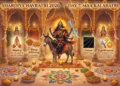
And as Pitru Paksha concludes with Sarva Pitru Amavasya, traditionally also associated with Mahalaya Amavasya, the cultural rhythm turns towards Devi Paksha. Having paused to remember those who came before us, life turns once again towards renewal.