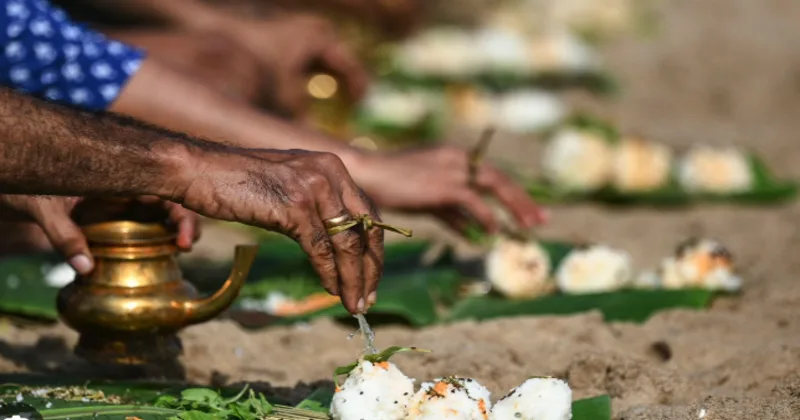
The essence of Shraddha lies in acknowledging that our existence is not an isolated journey. We are the outcome of countless generations who nurtured us through their sacrifices, knowledge, and values. Performing Shraddha symbolizes gratitude for this lineage and ensures the continuity of familial and cultural traditions. The offering of food, water, and prayers is less about the material act and more about the inner discipline of remembering, respecting, and reconnecting with our roots.
Social and Ethical Dimensions
Pitru Paksha is not limited to private remembrance. It encourages values of sharing, service, and social equality. During Shraddha, it is customary to feed Brahmins, saints, and the needy. This practice instills the spirit of daan (charity) and reminds us that honoring ancestors is incomplete without compassion toward the living. By integrating remembrance with service, the tradition becomes a medium to strengthen social harmony and collective responsibility.
Scientific and Psychological Perspective
From a modern standpoint, Shraddha can be understood through the lens of psychology and behavioral science. Remembering and honoring one’s ancestors fosters a sense of identity, belonging, and emotional stability. It strengthens intergenerational bonds and provides a moral compass, especially for the younger generation. The act of performing rituals at specific times and in disciplined ways develops mindfulness, focus, and self-control, which are scientifically proven to enhance mental well-being.
Ecological Awareness in Rituals
Pitru Paksha also has a strong ecological dimension. The offerings to ancestors are traditionally made with natural elements like water, sesame seeds, kusha grass, rice, and milk—each having symbolic as well as ecological significance. These rituals reflect the ancient Indian understanding that human life is interconnected with nature. By maintaining purity of rivers, soils, and natural surroundings during these observances, communities emphasized environmental respect as part of spiritual duty.
Strengthening Society through Tradition
The tradition of Pitru Paksha subtly binds together family, society, and environment. It teaches that respecting the past is essential for building the future. By integrating gratitude with service, faith with science, and remembrance with ecological consciousness, Pitru Paksha emerges as a timeless tradition that nurtures both inner values and social solidarity.
Pitru Paksha, therefore, is not merely a religious observance; it is a cultural institution that keeps alive the memory of our ancestors while nurturing social responsibility and ecological wisdom. In remembering them, we not only honor our lineage but also strengthen the very fabric of society.