Thirty-five years ago, Rudrapur witnessed one of the deadliest terrorist attacks in the Terai region. On the night of October 16, 1991, during the Dussehra celebrations, a large crowd had gathered to watch Ramlila. What began as a religious and cultural gathering ended in tragedy when a bomb exploded beneath the stage.
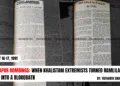
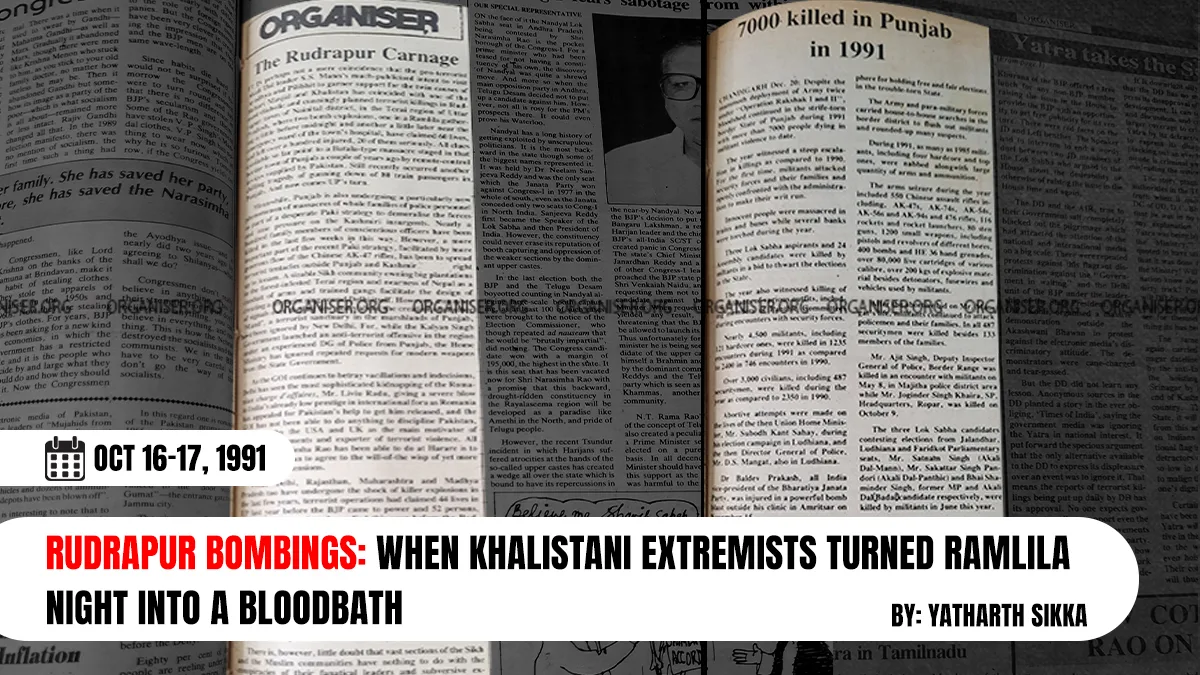
According to a contemporary report published in Organiser, around 3,000 people had gathered to watch the performance. The explosion killed actors and spectators, while many others suffered injuries. Women and children were among those killed and wounded. The blast struck people who had come together to enjoy the Ramlila, leaving families searching for their loved ones amid the chaos.
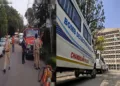
The attack was not limited to the Ramlila ground. A second explosion followed as injured people were being taken to the nearby Jawaharlal Nehru Hospital. The second bomb exploded outside the hospital’s emergency ward, where people injured in the first blast were arriving for treatment. Those who had rushed to help the wounded and those seeking medical attention were exposed to another explosion.
The contemporary Organiser report stated that the second explosion took place around 30 minutes after the first. It reported that at least 41 people had died and more than 100 were injured. Of the injured, 78 were hospitalised, with around 30 reported to be in serious condition.
Khalistani extremism beyond Punjab
The Rudrapur bombings took place during a period of intense Khalistani extremism. Armed separatist groups were carrying out violent attacks in Punjab, targeting civilians, political figures and security personnel. The violence also affected areas outside Punjab.
Rudrapur was then part of Uttar Pradesh and lay in the Terai region, close to the Punjab-Haryana belt and the Nepal border. Following heavy military and police crackdowns in Punjab, several extremist separatist factions moved into the neighbouring Terai region.
Later accounts of the Rudrapur bombings stated that the Bhindranwale Saffron Tigers of Khalistan (BSTK) and the Khalistan National Army (KNA) claimed responsibility.
The core motive behind the bombings was to instil fear and demonstrate that the Khalistan movement’s influence had not ended, even as the movement was nearing a decline. By attacking soft public targets, the extremists intended to challenge the authority of the police and intelligence agencies.
The attack was described in later accounts as a planned conspiracy. Reports stated that, weeks before the blasts, the BSTK had pasted threatening posters across Rudrapur, warning the public of large-scale killings.
The twin explosions followed a two-stage pattern. The first bomb was reportedly placed on a bicycle or buried at the festival grounds, while the second was planted near the emergency ward gate of Nehru Hospital. The second explosion targeted an area where the injured, their families and emergency responders were likely to gather after the first blast.
The timing of the attack during the Ramlila was significant. The grounds were crowded with civilians, including women and children. By targeting a major religious festival associated with the triumph of good over evil, the extremists sought to cause mass casualties and spread fear across the region.
1991: A year of widespread violence
The Rudrapur attack occurred during one of the most violent periods of the Punjab insurgency. The year 1991 saw attacks on civilians, public transport, political candidates and security personnel. Extremist groups also targeted the families of police officers and sought to disrupt the electoral process in Punjab.
The contemporary Organiser report described 7,000 deaths in Khalistani violence during the year. It recorded attacks on trains and buses, the killing of political candidates and the use of large quantities of firearms, explosives and ammunition by extremist groups.
An Organiser article titled “The Rudrapur Carnage” covered the twin explosions and described the attack as a planned act of terrorism. It expressed concern over terrorist attacks outside the principal centres of the insurgency and argued for a stronger response against terrorism.
The First Information Reports (FIRs) and subsequent statements from the police and intelligence circles highlighted regional fear, security gaps and claims of responsibility by extremist organisations.
Both the BSTK and the Khalistan National Army issued public statements claiming responsibility. Within months of the blasts, top operatives and regional handlers from the Khalistan Commando Force (KCF) and the BSTK involved in the Terai network were tracked down and killed in encounters.
The victims of the Rudrapur bombings were people attending a religious gathering and those present at the hospital after the first explosion. Thirty-five years later, the Rudrapur bombings remain an horrific episode in the history of terrorism in India. The incident took place at a time when the country was dealing with multiple separatist and insurgent movements.
The Rudrapur bombings deserve to be remembered as an attack on civilians during a religious celebration and at a hospital receiving the wounded.
From Rudrapur to Lalru, Muktsar, Moga and Chittisinghpura and many more terror attacks, the victims of Khalistani extremism stand as reminders of a dark chapter in India’s history. Behind every attack were innocent lives lost, families devastated and communities left scarred. Revisiting these tragedies is essential to remember the victims and recognise people who lost their lives.