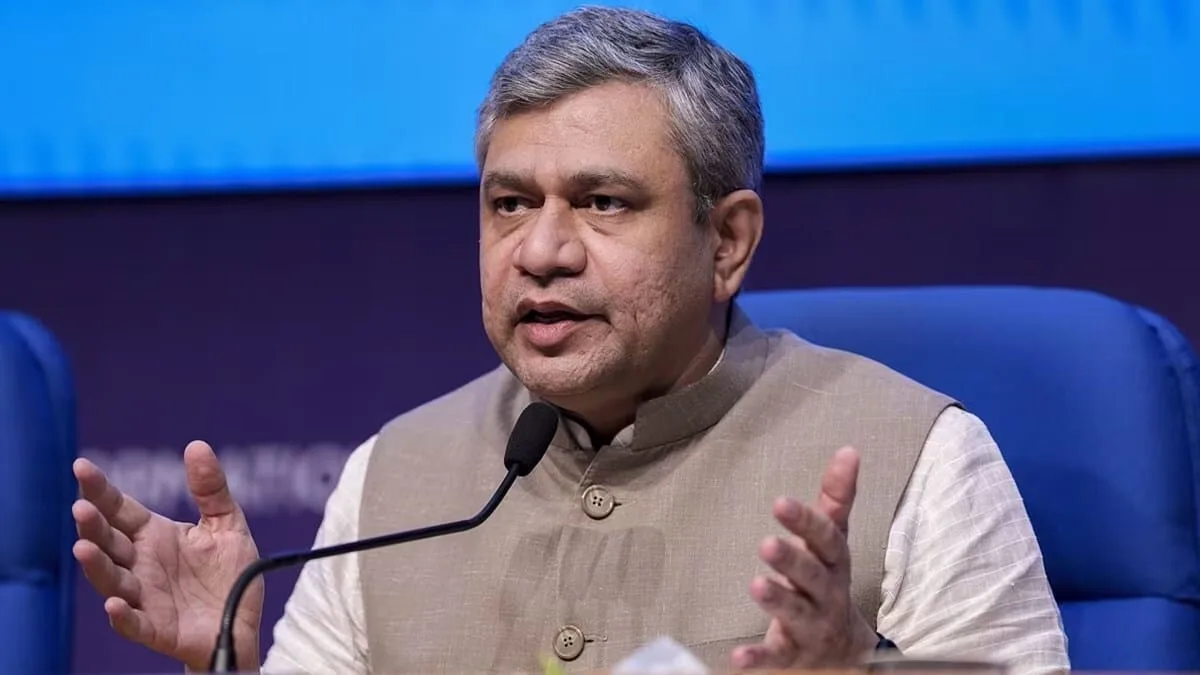
NEW DELHI: Union IT Minister Ashwini Vaishnaw has cautioned that India’s rapidly expanding semiconductor and electronics manufacturing sector could face attempts at disruption as the country moves towards becoming a global manufacturing hub.
"We will face cyberattacks, fake news, and physical attacks."
Union Minister Ashwini Vaishnaw issues a massive warning on attempts to sabotage India’s semiconductor push.
Citing past incidents during Apple’s India rollout, from cut power lines to deliberate food poisoning and… https://t.co/nTRO2dB3Jz pic.twitter.com/gpm6Qquxox
— Megh Updates 🚨™ (@MeghUpdates) September 24, 2026
Speaking about India’s emerging semiconductor industry, Vaishnaw said the country should remain prepared for challenges from elements opposed to India’s growing role in global manufacturing. He referred to the 2021 food poisoning incident involving workers at Foxconn’s facility near Chennai, saying such incidents were aimed at disrupting Apple’s manufacturing operations in India.
Vaishnaw also criticised what he described as negative publicity surrounding Apple’s manufacturing expansion in India. Referring to reports published by international media outlets, including Reuters, he claimed that attempts were made to portray India’s manufacturing environment negatively. “This is just a foundation. Until now, even building the foundation was very difficult in itself. But now, look, many global challenges will arise,” Vaishnaw said.
Recalling the initial phase of Apple’s manufacturing expansion, the Minister said, “Remember, when Apple’s manufacturing began, some people alleged food poisoning, and an organisation such as Reuters spread so much fake news, claiming that we do not allow married women. Things of this kind were circulated.” He further said that electricity cables were cut in attempts to disrupt manufacturing operations, adding that those opposed to India emerging as a manufacturing destination had “tried every trick”.
Vaishnaw said the semiconductor sector was still at a foundational stage and that India would need to remain vigilant as it expands its capabilities and seeks a larger role in global semiconductor and electronics supply chains.
Vaishnaw said India’s growing presence in the semiconductor and electronics manufacturing sector would attract both support and opposition, and urged the industry to remain prepared for attempts to disrupt the country’s progress.
“Once people start feeling that a new country has entered this industry, there will be people who support us, but there will also be people who oppose us, and they are the ones who will create problems. I have told the entire industry to be prepared for such incidents,” the Union Minister said. He warned that the challenges facing India could extend beyond physical disruptions to cyberattacks and attempts to influence public narratives.
“And this is not merely physical sabotage; there will certainly be sabotage of the narrative—sabotage of the narrative, that is. You will see what kinds of challenges they create: they will carry out cyber-attacks. They will spread a great deal of fake news. They will also try every kind of physical attack,” Vaishnaw said.
Emphasising the strategic importance of the semiconductor industry, he said India would need to establish its position through a methodical and cautious approach. “We have to be prepared for this, because this is a strategic industry. This is not an industry where people will give in so easily, right? So we have to establish our position. We will have to be very, very methodical, very conscious of the challenges, and do it,” he added.
Foxconn Plant Food Poisoning Incident
Vaishnaw’s remarks also brought renewed attention to the 2021 food poisoning incident involving workers at Foxconn’s manufacturing facility in Sriperumbudur, Tamil Nadu. The facility, which manufactures iPhones for Apple, was temporarily shut after protests by workers following a food poisoning incident.
According to reports at the time, 159 workers were hospitalised after falling ill at the company’s hostel. The incident led to protests and disruptions at the facility, with workers demanding better living conditions. The situation escalated after rumours circulated that some of the hospitalised workers had died. Female employees subsequently staged protests and blocked the Chennai-Bengaluru highway. However, the workers who had been hospitalised were treated and recovered.
The Foxconn episode followed another disruption involving an Apple supplier in India. In December 2020, workers at Wistron’s manufacturing facility in Kolar, Karnataka, protested over wage-related issues, with the demonstration later turning violent and resulting in damage to the facility.
Foxconn also faced controversy over allegations concerning its recruitment practices involving married women. A Reuters investigation reported allegations that married women were excluded from certain recruitment processes at the company’s India facility. Foxconn later said its hiring practices had changed and that married women were employed at the facility.
Vaishnaw has now cited these episodes while warning that India’s emergence as a major manufacturing and semiconductor destination could bring new forms of competition and challenges, including physical disruptions, cyberattacks and attempts to shape public narratives.