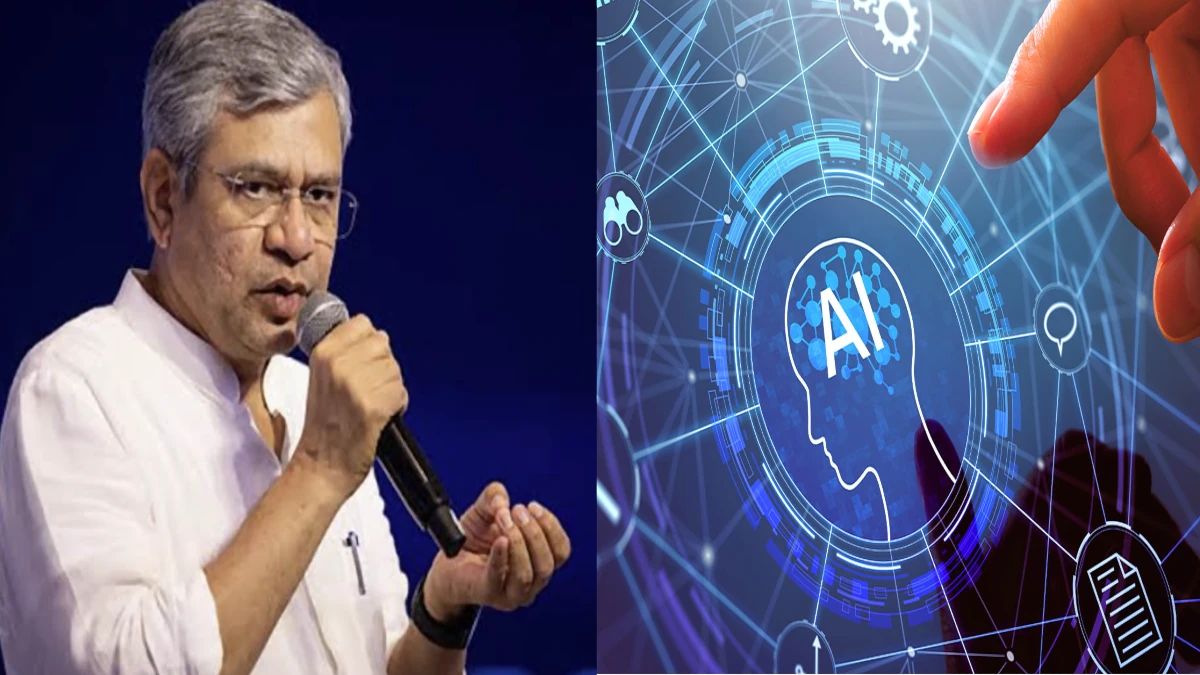
NEW DELHI: India is moving towards a dedicated regulatory framework for artificial intelligence, with IT Minister Ashwini Vaishnaw announcing that the government will release a regulation-focused consultation paper within a month, placing AI safety, deepfakes, user harm and a human-first approach at the centre of the proposed framework.
Speaking at an event marking the release of the World Development Report, Vaishnaw said the time had come for India to establish a clear framework to address the rapidly expanding impact of artificial intelligence.
The minister said the proposed consultation paper would focus first on safety, describing it as the most important consideration in the use of AI.
Deepfakes emerge as major threat
One of the key concerns identified by the government is the growing sophistication of deepfakes.
Vaishnaw described deepfakes as a major nuisance capable of causing serious problems in society, warning that their quality is improving rapidly and making it increasingly difficult for people to distinguish manipulated content from reality.
He cautioned that people can be persuaded to believe fabricated material, potentially creating false narratives and encouraging harmful behaviour.
The government’s proposed framework will therefore examine AI-related harms, including the misuse of the technology to create and circulate deceptive content.
Industry to shoulder primary responsibility
The minister made it clear that the government does not intend to rely on legislation alone to tackle the risks posed by artificial intelligence. India, he said, needs a “techno-legal solution” that combines regulation with technological safeguards and brings industry and other stakeholders into the process.
Vaishnaw placed particular responsibility on the technology industry, saying companies must take primary responsibility for addressing risks associated with AI. The areas identified include cybersecurity, safety, user harm, psychological disorders and deepfakes.
Human-first approach at the heart of AI policy
Beyond controlling AI risks, the proposed framework will also focus on ensuring that technological progress remains centred on people. The consultation paper is expected to address skilling and ensure that the benefits of AI do not leave sections of society behind.
Vaishnaw stressed that humanity must remain the most important element of the technological transformation underway. The government’s approach therefore appears aimed at striking a balance between encouraging innovation and preventing AI from becoming a source of widespread social harm.