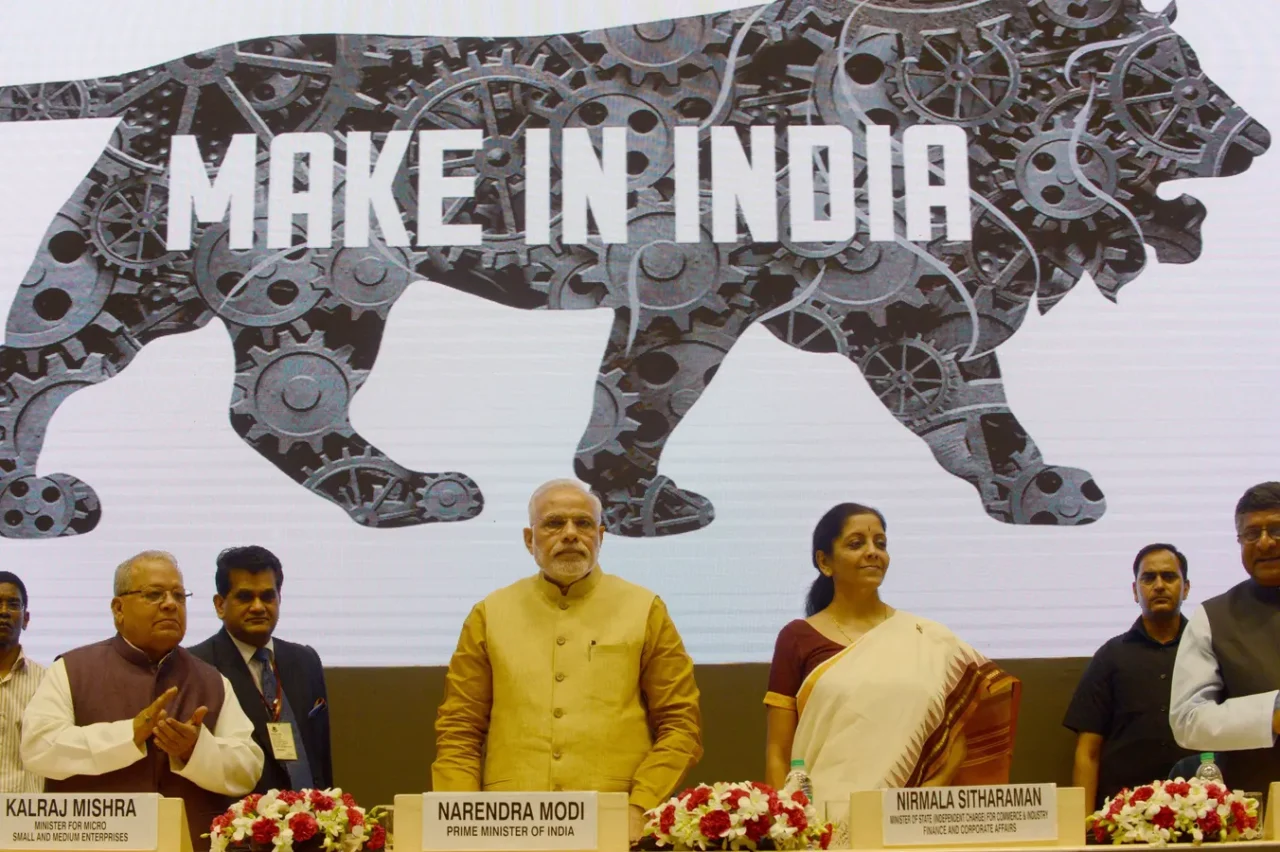
Launched on September 25, 2014, Make in India was conceived as an effort to position India as a global destination for manufacturing, design and innovation. The initiative focused on facilitating investment, encouraging innovation, improving infrastructure and simplifying processes for businesses.
The programme was framed around the principle of “Minimum Government, Maximum Governance”, with an emphasis on modernising policies and reducing barriers to investment and business activity.
Over the years, the initiative has expanded into Make in India 2.0, which currently covers 27 sectors: 15 manufacturing sectors and 12 services sectors. Its policy framework has also been supported by initiatives such as the Production Linked Incentive (PLI) schemes, the National Single Window System, the India Industrial Land Bank and PM GatiShakti.
The manufacturing story, however, is not uniform across every industry. The data points to particularly large increases in sectors such as electronics, mobile phones, defence and steel, while newer efforts are aimed at moving further up the value chain into semiconductors, rare-earth materials, industrial machinery and advanced components.
Manufacturing growth gains pace
One of the broad indicators of manufacturing activity is Manufacturing Gross Value Added, or GVA. According to the latest government data under the revised national accounts series, manufacturing GVA at constant prices recorded a compound annual growth rate of 10.88 per cent between 2022-23 and 2025-26.
The manufacturing component of the Index of Industrial Production also increased by 7 per cent during April-July 2026 compared with the corresponding period of 2025.
The changes become more visible when individual industries are examined.
Electronics production rises nearly seven-fold
Electronics has emerged as one of the most visible examples of India’s manufacturing expansion.
Official data shows electronics production rising from around Rs 1.9 lakh crore in 2014-15 to around Rs 13.11 lakh crore in 2025-26, an increase of nearly seven times.
Mobile-phone production has grown even more sharply. It increased from around Rs 18,900 crore in 2014-15 to around Rs 6.3 lakh crore in 2025-26. India is now the world’s second-largest mobile-phone manufacturer by volume.
Overall electronics production grew 15.8 per cent in 2025-26 over the previous year.
The significance of this shift goes beyond the number of phones assembled in India. Government policy has increasingly attempted to build an electronics ecosystem involving finished products, sub-assemblies, components and, eventually, machinery and tools used in production.
The next phase is therefore focused on increasing domestic value addition and strengthening supply chains rather than simply expanding assembly capacity.
Automobile manufacturing expands
The automobile industry remains another major pillar of Indian manufacturing.
Vehicle production reached 31.03 million units in 2024-25, around 33 per cent higher than in 2014-15.
The industry also recorded significant growth across vehicle categories when compared with 2020-21. Passenger vehicle and commercial vehicle production each increased by 65 per cent, while three-wheelers grew by 71 per cent and two-wheelers by 30 per cent by 2024-25.
The sector is also becoming increasingly linked to India’s electric-mobility ambitions. An indigenous 30 kW drive system combining a motor and inverter was launched in March 2026. The system has been designed, fabricated and validated in India and is ready for commercialisation, according to the government.
Pharmaceuticals and medical devices
India’s pharmaceutical industry has also expanded its manufacturing and research capabilities.
The country ranks third globally by pharmaceutical production volume and 11th by value. According to the latest government figures, pharmaceutical industry turnover reached Rs 5,08,630 crore in 2025-26, with average growth of 9.2 per cent over the preceding five years. Pharmaceutical exports stood at Rs 2,62,697 crore in 2025-26.
Medical-device manufacturing has also grown. Domestic production increased by around 48.2 per cent, from approximately Rs 28,000 crore in 2019-20 to Rs 41,500 crore in 2024-25.
The manufacturing push is also extending to complex products. Government data highlights Indian production of advanced pharmaceutical products such as Trastuzumab Emtansine, described as the world’s first biosimilar antibody-drug conjugate for breast cancer, and Docaravimab-Miromavimab, described as the world’s first anti-rabies monoclonal antibody combination.
Other examples include Miqnaf, described as India’s first developed macrolide antibiotic in three decades for bacterial pneumonia, and Desidustat, a new chemical entity used in treating anaemia in kidney patients.
Steel production more than doubles
Steel has remained a critical part of India’s industrial base.
Crude steel production increased from 81.7 million tonnes in 2014-15 to 170 million tonnes in 2025-26.
The expansion has also been accompanied by efforts to move into specialised steel products. The third round of the Production Linked Incentive Scheme for Specialty Steel, launched in November 2025, covers advanced categories such as super alloys, cold-rolled grain-oriented electrical steel, stainless-steel long and flat products, titanium alloys and coated steel.
Railways: From coaches to components
Indian Railways has also expanded domestic manufacturing.
Between 2014 and 2024, Indian Railways manufactured 54,809 coaches. Average annual coach production increased from fewer than 3,300 during 2004-14 to 5,481 during 2014-24.
In 2025-26, domestic production included 1,674 locomotives and 6,677 Linke Hofmann Busch (LHB) coaches.
Manufacturing is also extending into railway components. The Rail Wheel Factory produced 2,10,026 wheels, 1,22,000 axles and 1,20,100 wheelsets in 2025-26. Compared with the previous year, production of these three components increased by 4 per cent, 30 per cent and 22 per cent respectively.
Defence manufacturing reaches record level
Defence manufacturing has become another major area of domestic production.
The value of indigenous defence production increased from Rs 46,429 crore in 2014-15 to a record Rs 1.78 lakh crore in 2025-26, representing an increase of around 283 per cent over the 2014-15 level.
Aircraft production capacity has also expanded. Hindustan Aeronautics Limited opened its third Light Combat Aircraft Tejas Mk1A production assembly line in October 2025, taking annual capacity to 24 aircraft.
HAL also inaugurated a second production line for the HTT-40 trainer aircraft, covering major structures including fuselages, wings and control surfaces.
The shift is significant because defence manufacturing requires capabilities across an extensive industrial chain, from materials and components to engines, electronics, avionics and final platforms.
Manufacturing moves into strategic materials
The manufacturing expansion is increasingly moving beyond finished products.
A pilot plant for Nd-Fe-B, or neodymium-iron-boron, rare-earth permanent magnets was established at the International Advanced Research Centre for Powder Metallurgy and New Materials in Hyderabad in March 2026.
These magnets are used in electric vehicles, renewable-energy systems, electronics and other advanced manufacturing applications.
The pilot facility is intended to support technology validation, process optimisation and industry collaboration while helping move indigenous technologies towards commercial-scale manufacturing.
The government has subsequently notified a separate scheme with an allocation of Rs 7,280 crore to establish 6,000 MTPA of integrated manufacturing capacity for sintered NdFeB-type rare-earth permanent magnets.
India begins building semiconductor capabilities
Semiconductors represent one of the newer frontiers of India’s manufacturing strategy.
ISRO and the Semiconductor Laboratory developed the VIKRAM3201 and KALPANA3201 microprocessors for space applications.
VIKRAM3201 has been described by the government as the first fully Make-in-India microprocessor qualified for the harsh conditions of launch vehicles and fabricated at SCL’s facility. KALPANA3201 was designed to work with open-source software tools and has been tested with flight software.
The semiconductor push was expanded further with Semicon 2.0, approved in July 2026 with an outlay of Rs 1,27,500 crore.
The programme covers chip design, manufacturing, semiconductor equipment and materials, advanced packaging, research and development and talent development.
Government data says five semiconductor units have commenced commercial production, while 12 projects across six states have received approval with investment commitments exceeding Rs 1.64 lakh crore.
Solar manufacturing capacity expands
Renewable-energy manufacturing has also recorded a substantial increase.
Solar-module manufacturing capacity rose from 2.3 GW in 2014 to 192 GW by June 2026. Solar-cell capacity increased from 1.2 GW to around 30 GW during the same period.
The growth reflects an attempt to expand domestic manufacturing capacity across clean-energy supply chains at a time when solar modules, cells and associated components have become strategically important for India’s energy transition.
Machinery: Building the tools to manufacture
A manufacturing ecosystem cannot depend entirely on imported machinery. This makes the expansion of India’s capital-goods sector an important part of the broader story.
Production across various capital-goods sub-sectors and heavy-engineering equipment increased from Rs 2,87,233 crore in 2019-20 to Rs 5,69,900 crore in 2024-25, nearly doubling over the period.
Earthmoving and mining machinery production rose from Rs 31,028 crore to Rs 80,750 crore, an increase of 160.3 per cent.
Machine-tool production increased from Rs 6,152 crore to Rs 14,286 crore, while printing machinery rose from Rs 12,678 crore to Rs 29,716 crore.
Heavy electrical engineering equipment increased from Rs 1,79,199 crore to Rs 3,64,706 crore.
Food-processing machinery rose from Rs 7,547 crore to Rs 15,249 crore, while textile machinery increased from Rs 5,355 crore to Rs 10,461 crore. Production of dies, moulds and press tools rose from Rs 13,682 crore to Rs 18,400 crore.
These numbers point to a gradual expansion in the machinery and equipment needed by other manufacturing industries.
Investment reforms and ease of doing business
Manufacturing expansion has been accompanied by changes in investment and business processes.
India permits 100 per cent FDI through the automatic route in most sectors, with exceptions for certain strategic areas. Cumulative FDI between 2014-15 and 2025-26 reached USD 843 billion, an increase of 169 per cent over the preceding 12-year period.
The National Single Window System provides businesses access to more than 327 Central approvals and 3,452 State approvals across 34 States and Union Territories.
As of September 21, 2026, the platform had onboarded more than 5.69 lakh business entities and handled an average of more than 3.06 lakh applications annually.
The India Industrial Land Bank, meanwhile, had mapped 4,220 industrial parks covering around 6.98 lakh hectares as of May 2026.
GatiShakti and industrial infrastructure
Manufacturing also depends on roads, railways, ports, logistics networks and industrial corridors.
The PM GatiShakti National Master Plan, launched in October 2021, was designed to coordinate infrastructure planning across Central ministries, departments and States and Union Territories.
As of August 11, 2026, its Network Planning Group had evaluated 396 projects worth around Rs 18.66 lakh crore. Of these, 256 had been sanctioned, including 198 under implementation.
The India Industrial Land Bank and PM GatiShakti together seek to address two practical requirements for manufacturers: access to suitable industrial land and better connectivity between production centres and markets.
PLI becomes a major manufacturing instrument
The Production Linked Incentive scheme has become one of the central policy tools for expanding domestic manufacturing.
PLI schemes cover 14 sectors, including electronics, pharmaceuticals, automobiles, solar PV modules, specialty steel and textiles.
The latest government figures show that, as of June 2026, the schemes had attracted Rs 2.6 lakh crore in investment, generated Rs 23.8 lakh crore in production and sales, supported more than Rs 15.5 lakh crore in exports and created 14.6 lakh jobs.
Earlier official data released in July had reported more than Rs 2.40 lakh crore in actual investment, Rs 22.66 lakh crore in production and sales, exports exceeding Rs 15.20 lakh crore and more than 14.15 lakh jobs as of March 31, 2026. The later June figures represent an updated position.
New schemes target the next manufacturing cycle
The next phase of Make in India is increasingly focused on strategic and emerging sectors.
The Bharat Audyogik Vikas Yojana, or BHAVYA, approved in March 2026, has an allocation of Rs 33,660 crore for developing 100 investment-ready industrial parks.
The Mobile Phone Manufacturing Scheme, approved in July 2026, carries an allocation of Rs 62,500 crore for 2026-27 to 2030-31. Its stated objectives include scaling up mobile-phone production, increasing domestic value addition, strengthening supply-chain resilience and improving global competitiveness.
The government has also approved BHAVYA Rasayan, with an allocation of Rs 3,030 crore for establishing three dedicated chemical parks in India.
Meanwhile, the rare-earth magnet scheme and Semicon 2.0 are aimed at areas where India seeks to develop deeper domestic capabilities in strategically important technologies and materials.
Startup ecosystem adds another layer
Manufacturing is also being supported by the wider innovation and entrepreneurship ecosystem.
Startup India, launched in January 2016, aims to support innovation, entrepreneurship and investment. As of September 2026, around 2.54 lakh entities had been recognised as startups under the initiative.
This ecosystem matters to manufacturing because emerging technologies often enter industrial markets through smaller technology companies, research-led enterprises and specialised suppliers rather than only through large manufacturers.
From assembling products to building an ecosystem
The manufacturing story of the past 12 years therefore involves more than the growth of individual factories.
Electronics and mobile phones illustrate the movement from final-product assembly towards components and machinery. Defence manufacturing has expanded alongside aircraft and other indigenous platforms. Pharmaceuticals have moved into complex products and new drug technologies. Solar manufacturing has expanded sharply, while semiconductor policy is now targeting design, fabrication, packaging, materials, equipment and talent.
The same shift can be seen in railways, where domestic manufacturing extends from coaches and locomotives to wheels, axles and wheelsets, and in strategic materials such as rare-earth magnets.
The policy architecture has also broadened. PLI schemes provide incentives for production, the National Single Window System seeks to simplify approvals, the Industrial Land Bank provides information on industrial sites, and PM GatiShakti focuses on coordinated infrastructure planning.
What the next phase means for Indian manufacturing
As Make in India completes 12 years, the central question is no longer simply how much India can manufacture. Increasingly, it is about what portion of the manufacturing value chain can be located within the country.
The latest initiatives suggest a stronger focus on components, machinery, strategic materials, semiconductors, industrial parks and specialised technologies.
The numbers show substantial expansion in several major sectors, but the manufacturing journey remains an ongoing process. Building globally competitive manufacturing requires not only factories and production capacity but also skilled workers, research and development, reliable supply chains, infrastructure, capital, technology and access to international markets.
Twelve years after its launch, Make in India has consequently evolved from a broad manufacturing campaign into a larger policy framework aimed at building an industrial ecosystem. The latest government data points to significant gains in production and capacity across several sectors, while new schemes indicate that the next phase will focus increasingly on technology-intensive and strategically important areas.