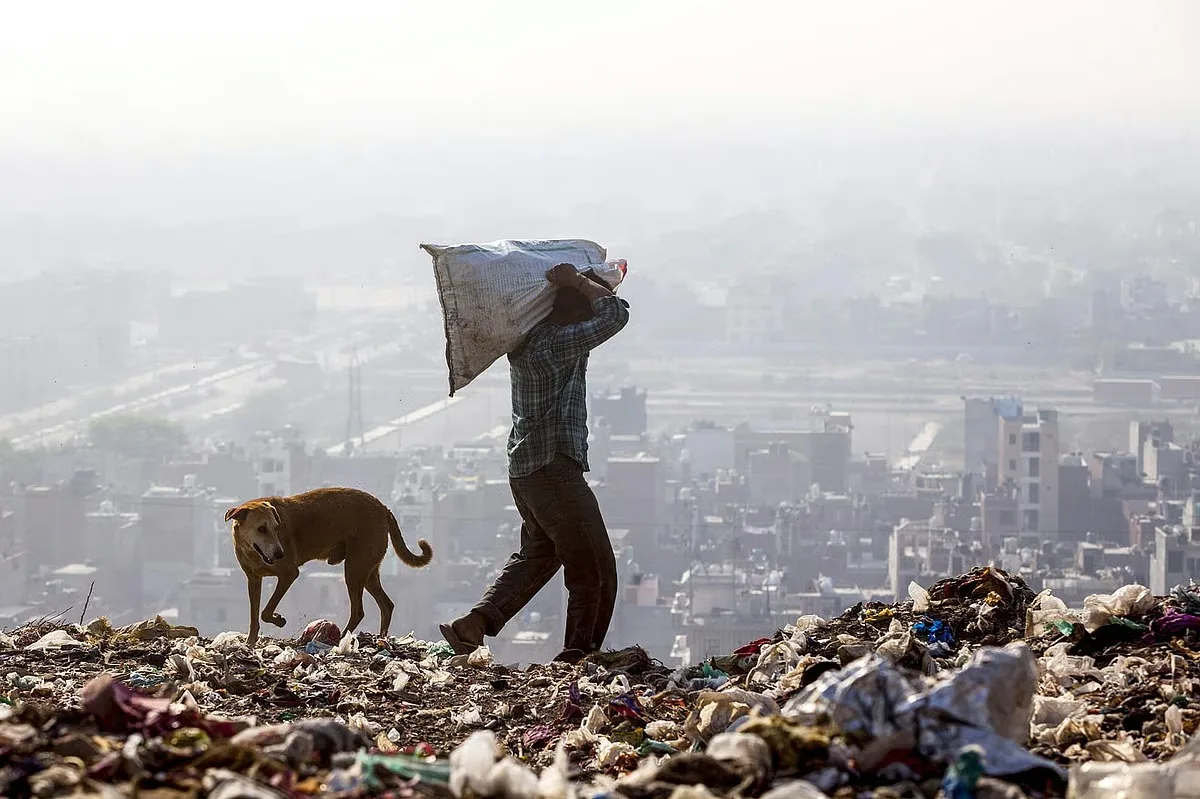
For years, large garbage dumps have been a familiar feature of India’s expanding cities. Mountains of untreated waste have occupied valuable urban land, created environmental concerns and affected communities living around dumping grounds.
The Swachh Bharat Mission-Urban (SBM-U) 2.0 is now seeking to change that through scientific remediation of these legacy dumpsites.
Instead of allowing old waste to remain buried indefinitely, cities are excavating, segregating and processing accumulated garbage and then putting the reclaimed land to productive use.
The government reported that 3.66 crore metric tonnes of legacy waste was processed between January and December 2025. During the same period, 459 Urban Local Bodies across 29 States achieved complete remediation of their dumpsites.
The approach combines waste processing with land reclamation, environmental safeguards and the creation of new public or ecological spaces.
Lakshya zero dumpsite and DRAP push remediation
The Centre has introduced initiatives such as Lakshya Zero Dumpsite and the Dumpsite Remediation Accelerator Programme (DRAP) to speed up the scientific and time-bound treatment of legacy waste.
The objective is not only to clear existing waste but also to prevent cities from creating new mountains of untreated garbage.
Under SBM-U 2.0, Urban Local Bodies are being encouraged to develop plans for excavating old waste, separating different materials and finding appropriate uses or disposal methods for the recovered material.
The approach can also help cities recover land that has remained unusable for years because of accumulated waste.
Several cities are now providing examples of how reclaimed dumpsites can be converted into parks, ecological zones and modern waste-processing facilities.
Gorakhpur turns 40 acre dumpsite into an eco park
One of the examples comes from Gorakhpur in Uttar Pradesh, where a site that once served as the city’s primary waste disposal area has been transformed into a public eco park.
The site covers around 40 acres and had been used for waste disposal for approximately seven years.
The transformation was carried out through biomining, a process in which accumulated waste is excavated, segregated and processed to recover usable materials.
At the Gorakhpur site, around 400 tonnes of waste were processed every day during the remediation work.
The excavated waste was separated into categories including refuse-derived fuel, black soil, recyclable material and inert waste.
The recovered black soil was used to fill low-lying areas, while refuse-derived fuel was sent to cement industries for co-processing.
This process helped reduce the quantity of waste remaining at the site while allowing the land to be reclaimed.
Kachre Se Kanchan Rapti eco park creates new public space
The reclaimed land in Gorakhpur has now been developed as the Kachre Se Kanchan Rapti Eco Park.
The site has been redesigned as a public recreational and green space rather than continuing as a waste-disposal area.
The park includes green lawns, walking and jogging tracks, a children’s play area, an open gym and a yoga zone.
It also has solar lighting, water conservation structures, food courts and parking facilities. Installations made from recycled materials have also been incorporated into the park.
The transformation has given the reclaimed land a new public purpose.
The project has also created livelihood opportunities. A women-led self-help group, Shakti Ki Rasoi, operates a restaurant at the park.
The eco park currently attracts around 500 visitors every day, according to the government.
The Gorakhpur example shows how dumpsite remediation can extend beyond simply removing garbage. Once the waste is processed, the recovered land can potentially be used for recreation, ecological restoration and community facilities.
Delhi’s Bhalswa dumpsite undergoes large-scale remediation
Delhi’s Bhalswa dumpsite represents a much larger remediation challenge.
Spread across approximately 70 acres, the dumpsite has accumulated waste over many years and has been undergoing biomining since July 2022.
The site received additional attention during the Swachhata Hi Seva campaign in September 2025.
In November 2025, the Centre launched the Dumpsite Remediation Accelerator Programme to speed up work at remaining legacy dumpsites, including large sites requiring sustained remediation efforts.
According to the Ministry, more than half of the Bhalswa site had been reclaimed by May 2026.
By July 31, 2026, around 99.07 lakh metric tonnes of legacy waste had been remediated at the site.
The work involves more than simply removing accumulated waste. Authorities are also implementing measures related to fire prevention, leachate management and other environmental safeguards.
Preventing fresh waste from creating another dumpsite
A major challenge for cities is ensuring that remediation does not become a temporary exercise.
If fresh waste continues to accumulate at a site after old waste has been removed, the problem can quickly return.
At Bhalswa, steps are therefore being taken to process fresh waste and prevent it from becoming new legacy waste.
This reflects an important part of the government’s approach under SBM-U 2.0: cities need to address both the waste already accumulated over decades and the waste being generated every day.
The long-term objective is to shift from dependence on open dumping towards systems based on segregation, processing, recovery and scientific disposal.
Nagpur moves Bhandewadi towards integrated waste processing
In Nagpur, Maharashtra, the Bhandewadi dumping yard is undergoing a similar transformation.
Nagpur has a population of more than 30 lakh, and the Bhandewadi site had accumulated large quantities of waste over the years.
Under the remediation programme, the accumulated waste has been excavated, segregated and processed.
More than 10 lakh metric tonnes of legacy waste have been treated, allowing valuable urban land to be reclaimed.
The site is also being developed as an integrated municipal solid waste-processing facility.
The facility includes systems for material recovery, composting and production of waste-derived fuel.
The project also incorporates modern equipment and monitoring systems. These include CCTV surveillance, real-time monitoring, dust-control measures and leachate treatment.
The objective is to create a more scientific waste-management system while reducing dependence on conventional landfill practices.
From dumping yard to resource recovery facility
The transformation underway at Bhandewadi reflects a broader change in how cities are approaching municipal waste.
Instead of viewing garbage simply as material to be transported and dumped outside the city, the new approach treats part of the waste stream as a potential resource.
During the remediation process, different materials can be separated and directed towards different uses. Recyclable material can be recovered, organic material can be processed, while other combustible waste can be converted into refuse-derived fuel.
This reduces the amount of material that ultimately needs to be placed in a landfill.
For cities with limited land availability, such systems can also help make better use of existing urban land.
Raichur converts old dumpsite into ecological space
Another example comes from Raichur in Karnataka, where scientific remediation is underway at the 35-acre Yakalaspura dumpsite.
Around 62,252 metric tonnes of waste have been processed at the site, resulting in the reclamation of nearly 22 acres of urban land.
The reclaimed area is being given an ecological purpose.
A section of around 5 to 7 acres is being developed as a Miyawaki forest, using bamboo and native plant species.
Around 60,000 bamboo and native saplings are being planted as part of the effort to increase green cover, support biodiversity and help restore the land.
The plantation work began on June 5, 2026, which coincided with World Environment Day.
‘Toxic waste to ecological wealth’
The Raichur project has been developed around the idea of “Toxic Waste to Ecological Wealth.”
The concept reflects the potential for reclaimed dumpsite land to serve an environmental purpose after the accumulated waste has been scientifically processed.
Instead of leaving the reclaimed area vacant, the project is using part of the land for ecological restoration.
The Miyawaki plantation model focuses on dense planting of native species over a relatively small area. The approach is being used in the project to create additional green cover on land that was previously occupied by accumulated waste.
Why legacy waste is a major urban challenge
Legacy waste refers to waste that has accumulated at old dumpsites over long periods, often without scientific processing or proper segregation.
Such sites can occupy large areas of land and create environmental and public-health concerns. Organic waste can generate gases and leachate, while mixed waste makes recycling and recovery more difficult.
Old dumpsites can also become difficult to manage because of fires, odour, dust and the continuous arrival of fresh waste.
Scientific remediation seeks to address these problems by excavating old waste and separating it into different categories.
The material can then be recycled, processed, reused or disposed of through appropriate methods.
Waste disposal to land recovery
The examples from Gorakhpur, Delhi, Nagpur and Raichur show different ways in which cities are dealing with legacy waste.
Gorakhpur has converted reclaimed land into a public eco park. Delhi is undertaking large-scale remediation at one of its major dumpsites. Nagpur is combining waste remediation with modern processing infrastructure, while Raichur is using reclaimed land for ecological restoration.
The common objective is to move away from the traditional model of simply accumulating waste at large dumping grounds.
Under SBM-U 2.0, the focus is increasingly on scientific processing, resource recovery, environmental safeguards and productive use of reclaimed land.
Preventing tomorrow’s legacy dumps
The government’s approach also focuses on preventing today’s waste from becoming tomorrow’s legacy waste.
This requires cities to improve waste segregation, processing capacity, recycling and scientific disposal alongside the remediation of old dumpsites.
Progress is being monitored through the SBM-U portal, while assessments under Swachh Survekshan provide another mechanism for tracking urban sanitation and waste-management performance.
The challenge remains significant because India’s cities continue to generate large quantities of municipal solid waste every day.
However, the remediation of old dumpsites provides an opportunity to recover land that had effectively been lost to garbage.
From a 40-acre dumping ground in Gorakhpur to the 70-acre Bhalswa site in Delhi, the projects demonstrate the scale of the challenge. At the same time, the transformation of reclaimed areas into eco parks, forests and waste-processing facilities shows how land buried under years of garbage can be brought back into productive use.
The broader goal under SBM-U 2.0 is therefore not simply to clear old dumps, but to create urban waste-management systems in which waste is processed scientifically, resources are recovered, environmental risks are managed and valuable land is returned to cities.