SC/ST Act: Legal advocacy, evidence & the need for fair process
September 27, 2026
  • Read Ecopy
  • Circulation
  • Advertise
  • Careers
  • About Us
  • Contact Us
Android AppiPhone AppArattai
Organiser
  • ‌
  • Bharat
    • Assam
    • Bihar
    • Chhattisgarh
    • Jharkhand
    • Maharashtra
    • View All States
  • World
    • Asia
    • Europe
    • North America
    • South America
    • Africa
    • Australia
  • Editorial
  • International
  • Opinion
  • RSS @ 100
  • More
    • World Hindu Congress 2026
    • Op Sindoor
    • Analysis
    • Sports
    • Defence
    • Politics
    • Business
    • Economy
    • Culture
    • Special Report
    • Sci & Tech
    • Entertainment
    • G20
    • Azadi Ka Amrit Mahotsav
    • Vocal4Local
    • Web Stories
    • Education
    • Employment
    • Books
    • Interviews
    • Travel
    • Law
    • Health
    • Obituary
  • Subscribe
    • Subscribe Print Edition
    • Subscribe Ecopy
    • Read Ecopy
  • ‌
  • Bharat
    • Assam
    • Bihar
    • Chhattisgarh
    • Jharkhand
    • Maharashtra
    • View All States
  • World
    • Asia
    • Europe
    • North America
    • South America
    • Africa
    • Australia
  • Editorial
  • International
  • Opinion
  • RSS @ 100
  • More
    • World Hindu Congress 2026
    • Op Sindoor
    • Analysis
    • Sports
    • Defence
    • Politics
    • Business
    • Economy
    • Culture
    • Special Report
    • Sci & Tech
    • Entertainment
    • G20
    • Azadi Ka Amrit Mahotsav
    • Vocal4Local
    • Web Stories
    • Education
    • Employment
    • Books
    • Interviews
    • Travel
    • Law
    • Health
    • Obituary
  • Subscribe
    • Subscribe Print Edition
    • Subscribe Ecopy
    • Read Ecopy
Organiser
  • Home
  • Bharat
  • World
  • Operation Sindoor
  • Editorial
  • Analysis
  • Opinion
  • Culture
  • Defence
  • International Edition
  • RSS @ 100
  • Magazine
  • Read Ecopy
Home Bharat

SC/ST Act and Legal Advocacy: How prejudice and unsubstantiated claims can complicate cases and undermine justice

The SC/ST (Prevention of Atrocities) Act is a crucial legal safeguard against caste-based violence and discrimination, but its implementation must remain rooted in evidence and due process. Responsible legal advocacy is essential to ensure that genuine victims are protected while unsubstantiated allegations do not unnecessarily escalate disputes

Adv Gauri JoshiAdv Gauri Joshi
Sep 24, 2026, 05:40 pm IST
inBharat, Law
Follow on Google News
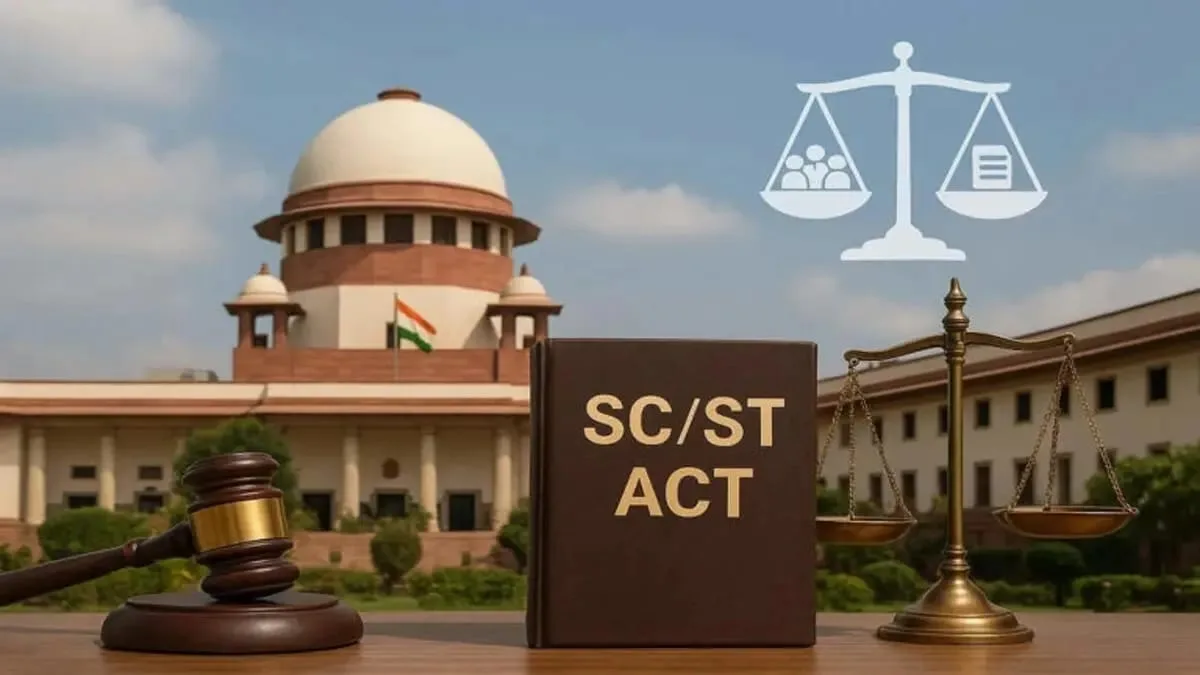
The SC/ST Act protects against caste-based atrocities, but its implementation must remain rooted in evidence and due process

The SC/ST Act protects against caste-based atrocities, but its implementation must remain rooted in evidence and due process

Facebook
Twitter
WhatsAppTelegramEmail

The Scheduled Castes and the Scheduled Tribes (Prevention of Atrocities) Act, 1989, is an important social-justice legislation designed to protect members of historically disadvantaged communities from atrocities, humiliation, violence, discrimination and other forms of targeted abuse. Its purpose is not merely punitive; it reflects the constitutional commitment to equality, dignity and protection against caste-based oppression.

However, like every law, its effectiveness depends upon responsible implementation. One concern that occasionally arises in litigation is the role of lawyers who approach SC/ST Act cases with preconceived notions, excessive aggression or an assumption that invoking the statute itself will determine the outcome. When legal strategy becomes driven by prejudice rather than evidence, the dispute can become more complicated, relationships can deteriorate further, and the interests of the actual victim may ultimately suffer.
It is important to distinguish between legitimate invocation of the SC/ST Act and what may be described as its strategic or unjustified invocation. A genuine allegation of an atrocity must be taken seriously. At the same time, the mere assertion that an offence has been committed cannot substitute for the legal requirements that must ultimately be established before a court.

A lawyer’s responsibility is particularly significant in such matters. Counsel is not merely an advocate who argues for victory at any cost. The legal profession carries duties to the client, the court and the administration of justice. A lawyer who approaches a case with the assumption that the accused must necessarily be guilty because of the existence of an SC/ST allegation risks converting a legal proceeding into a predetermined confrontation.

Similarly, describing every allegation under the Act as “false” or “misuse” merely because the accused disputes it is equally problematic. Such an approach can discourage genuine victims from seeking legal protection. The correct approach is to examine the complaint, surrounding circumstances, available evidence, statutory ingredients, witness accounts and the applicable judicial principles.

One particularly damaging practice is the use of the SC/ST Act as a rhetorical weapon during unrelated disputes. Employment disagreements, property disputes, personal conflicts, business disagreements or interpersonal quarrels can sometimes become significantly more complicated when caste allegations are introduced without a proper factual foundation. Where a caste-based offence has genuinely occurred, the law must operate fully. But where the allegation is unsupported, exaggeration or strategic legal advice can transform an otherwise manageable dispute into prolonged criminal litigation.

The consequences extend beyond the courtroom. Once a serious criminal allegation is made, reputations may be affected, professional relationships can collapse, families can become involved, and the parties may become entrenched in opposing positions. Lawyers who encourage unnecessary escalation may therefore contribute to the very harm that effective legal representation should seek to prevent.

Also Read: Rajasthan: Feroz detained over mandir vandalism in Udaipur, shivling damaged; Locals demand strict action

There is another danger: prejudice on either side. A lawyer must not assume that a complainant is automatically truthful because the complainant belongs to a protected community. Equally, a lawyer must not assume that an accused is innocent or guilty merely because of caste identity. Caste identity is relevant where the law makes it legally relevant; it should not become a substitute for evidence.

The answer is not to weaken the SC/ST Act. Rather, it is to strengthen fair, evidence-based and professionally responsible litigation under the Act. Investigating authorities must investigate impartially. Courts must apply the statutory requirements carefully. Prosecutors and defence counsel must present their cases responsibly. Lawyers advising complainants should explain both the protections available and the importance of truthful, complete and consistent factual disclosure. Lawyers representing accused persons should vigorously defend their clients while avoiding inflammatory arguments or attacks based solely on caste identity.

Ultimately, the strength of the SC/ST Act lies in its ability to provide meaningful protection against genuine caste-based atrocities while remaining part of a justice system governed by evidence and due process. The law should neither be trivialised nor transformed into a shortcut to conviction.

A lawyer’s role is therefore not to “play the SC/ST Act card.” It is to understand the law, identify whether its ingredients are actually attracted, advise the client honestly, present evidence responsibly and allow the judicial process to determine the dispute.

Justice is weakened when prejudice replaces evidence—regardless of which side the prejudice favours. A socially protective law deserves equally responsible legal advocacy. Genuine victims deserve protection, accused persons deserve a fair process, and the court deserves arguments based on law and facts rather than predetermined conclusions.




Topics: Indian Judiciarycaste discriminationSC ST ActLegal RightsDue ProcessLegal AdvocacyScheduled CastesScheduled Tribes
Share
Tweet
SendShareSend
✮ Subscribe Organiser YouTube Channel. ✮
✮ Join Organiser's WhatsApp channel for Nationalist views beyond the news. ✮
Previous News

G4 Nations Push UNSC Reforms: India vows to advance multilateralism to reflect geopolitical realities & seal security

Next News

BJP shook up politics in Meghalaya; how will eight UDP MLAs switching over strengthen the saffron party?

Related News

Parents of Sahil Wakode

Ex-IIT Bombay Chairman seeks action against student’s family over unproven SC/ST claims; Attempt to divert attention?

Sahil Wakode’s death at IIT Bombay has sparked debate over exam discipline, caste allegations and due process

IIT Bombay Tragedy: When discipline becomes “harassment”, and propaganda replaces facts

Two Supreme Court cases have put India’s constitutional safeguards for tribal land, representation and self-governance under renewed scrutiny

Demography as a Weapon: The Supreme Court’s twin test on tribal protections

Madras High Court

Untouchability has no place in Mandir: Madras HC reaffirms Samajik Samarasata

Punjab’s rural religious landscape is shifting as Pentecostal churches gain ground among Dalit communities

From Gurdwaras to Pentecostal Churches: Understanding the changing religious landscape of rural Punjab

The debate over ‘Vanvasi’ has sparked political controversy, raising questions over tribal identity and constitutional rights (This image is generated by AI)

Why is there so much objection to the term ‘Vanvasi’? Read the Constitution, then raise your questions!

Load More

Latest News

Beyond Banned Chips: How India builds silicon strategic autonomy in the age of geopolitical upheavals

Protesting villagers in Mathura following the elopement and interfaith marriages in the village

Back to back Love Jihad in Mathura: Mustaq accused of taking Hindu woman; village Panchayat calls for social boycott

AI Generated Representative Image

The Tech-led Renaissance: Space, semiconductors and AI in PM Narendra Modi’s India

Shahnawaz Accused of Blackmailing Dalit Woman, Conversion Pressure

UP: Shahnawaz accused of forcibly applying sindoor to Dalit woman, blackmailed & exploited on refusing to convert

Hindu girl Nimisha Thakuria killed by her Islamist boyfriend Ashiq Ali

‘Love Jihad’ in Assam! Guwahati University student Nimisha killed by Ashiq Ali in a home stay

Tamil Nadu: Madras HC says ‘Like housewife, we will have house husband; let this become a new normal’

‘Muslim personal law cannot override POCSO’: Delhi HC refuses to quash case against man accused of raping minor wife

World Tourism Day: Rediscovering Blissful Heritage

West Bengal | Sacrifice of Kothari brothers inspires society to undertake constructive work: Dattatreya Hosabale

Pitru Paksha: The Meaning Behind Shraddha and Ancestral Rites

Pitru Paksha: The deeper wisdom of shraddha, pinda daan and ancestral remembrance

Load More
  • Privacy
  • Terms
  • Cookie Policy
  • Refund and Cancellation
  • Delivery and Shipping

© Bharat Prakashan (Delhi) Limited.
Tech-enabled by Ananthapuri Technologies

  • Home
  • Search Organiser
  • Bharat
    • Assam
    • Bihar
    • Chhattisgarh
    • Jharkhand
    • Maharashtra
    • View All States
  • World
    • Asia
    • Africa
    • North America
    • South America
    • Europe
    • Australia
  • Editorial
  • Operation Sindoor
  • Opinion
  • Analysis
  • Defence
  • Culture
  • Sports
  • Business
  • RSS @ 100
  • Entertainment
  • More ..
    • Sci & Tech
    • Vocal4Local
    • Special Report
    • Education
    • Employment
    • Books
    • Interviews
    • Travel
    • Health
    • Politics
    • Law
    • Economy
    • Obituary
  • Subscribe Magazine
  • Read Ecopy
  • Advertise
  • Circulation
  • Careers
  • About Us
  • Contact Us
  • Policies & Terms
    • Privacy Policy
    • Cookie Policy
    • Refund and Cancellation
    • Terms of Use

© Bharat Prakashan (Delhi) Limited.
Tech-enabled by Ananthapuri Technologies