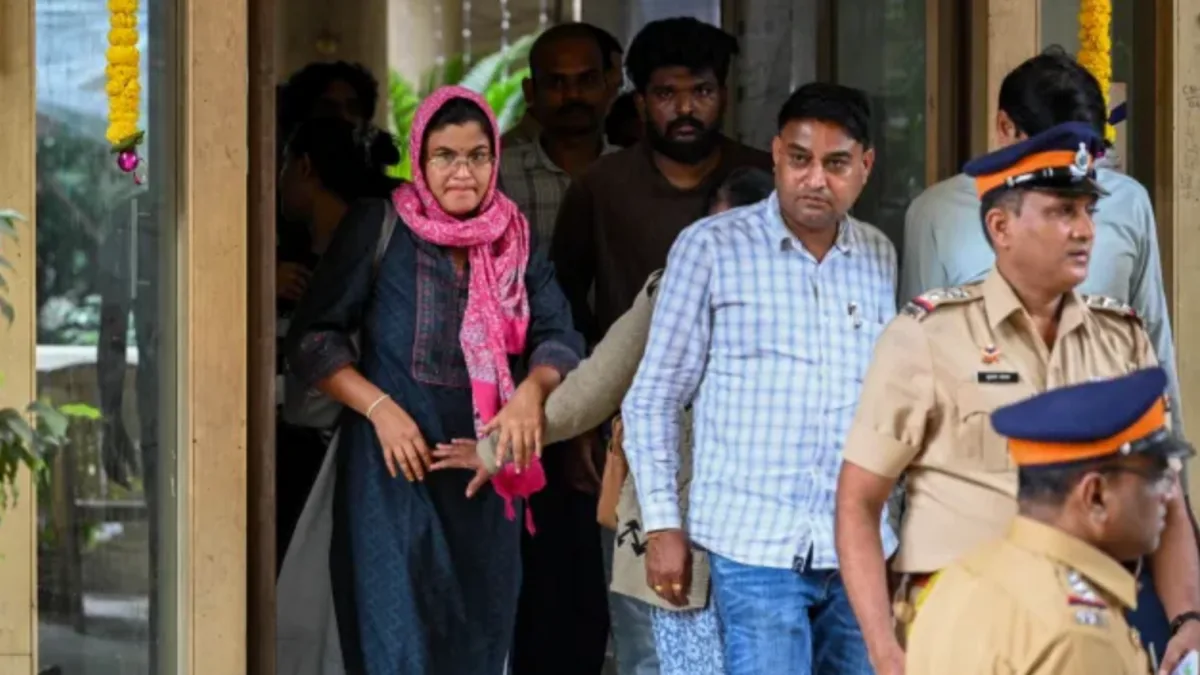
MUMBAI: Former IIT Bombay Board of Governors Chairman Dr Sharad Kumar Saraf has demanded legal action against the parents of second-year BTech student Sahil Ravindra Wakode, whose death by suicide on 18 September 2026 triggered campus protests and an FIR under abetment-to-suicide provisions and the SC/ST (Prevention of Atrocities) Act.
An important voice of #IITB alumni, Sharad Saraf, writes to the present director to file cases against parents of deceased young man for cases under SCST atrocities act. pic.twitter.com/kY0cN0nsNR
— Ratan Sharda 🇮🇳 रतन शारदा (@RatanSharda55) September 23, 2026
Writing as an alumnus (not in his former official capacity) to the institute’s director, Saraf expressed concern over the “indiscriminate use” of the SC/ST Act.
He contended that the allegations against faculty, particularly Professor Suryanarayana Doolla (who invigilated the mid-semester exam in which Wakode was found using a mobile phone and allegedly accessing ChatGPT), were unsupported by evidence and seemed intended to shift focus from the academic misconduct case involving the deceased student.
🚨 BIG STATEMENT ON IIT BOMBAY CASE
Former IIT-Bombay Board of Governors Chairman Sharad Kumar Saraf says Professor Doolla is “TOTALLY INNOCENT” with “no iota of evidence” against him.
He says Doolla was one of IIT Bombay’s “MOST upright professors”, a HIGHLY decorated,…
— Megh Updates 🚨™ (@MeghUpdates) September 24, 2026
In a widely circulated video statement, former IIT Bombay Board of Governors Chairman Sharad Kumar Saraf categorically declared that Professor Suryanarayana Doolla is “totally innocent” and that there is “no iota of evidence” against him.
Saraf described Doolla as one of the institute’s “most upright professors”, a highly decorated and award-winning faculty member who, during his tenure as Dean of Students’ Affairs, took several initiatives for student welfare.
He emphasised that there had “never” been any case of discrimination or caste-related complaint against Doolla throughout his career. Calling the current treatment of the professor “mentally torturing”, “offensive” and “very shameful”, Saraf noted that caste was never discussed in the matter until two days after Sahil Wakode’s death, when the parents first raised the issue.
As per the Times of India report, Saraf warned that the controversy has already damaged IIT Bombay’s reputation and could harm the jobs and social standing of its alumni. He copied IIT Bombay Alumni Association chairman Manish Vora and suggested that the association or individual alumni consider legal steps seeking evidence to support the allegations, their withdrawal, and a public apology.
“Kindly let me know your views to see if I can proceed with (a) defamation case,” Saraf wrote, adding that he was willing to join any litigation and share the legal costs. He also cautioned that linking disciplinary action against exam malpractice to potential criminal consequences could make faculty reluctant to enforce academic rules.
Meanwhile, the IIT-Bombay Alumni Association on Tuesday condemned online speculation, media trials, and hasty conclusions against any individual connected with the incident, while supporting a fair, transparent and speedy investigation.
What is the recent Bombay IIT Controversy?
Sahil Wakode, a second-year BTech student in the Department of Energy Science and Engineering from Maharashtra’s Yavatmal district, was found dead in his hostel room on the Powai campus on the evening of 18 September 2026.
Hours earlier, during a mid-semester examination invigilated by Prof. Suryanarayana Doolla, he was found in possession of a mobile phone and is reported to have uploaded the question paper to an AI platform.
The institute initially stated that he was counselled by the instructor and Head of Department and assured that the incident would not adversely affect his academic career; no formal disciplinary action had been initiated at the time of his death. No suicide note was recovered.
Police initially registered an accidental death report. The next day, based on a complaint by Wakode’s father Ravindra, an FIR was registered invoking abetment of suicide (under relevant BNS provisions) and sections of the SC/ST Act against Doolla and others.
The family alleged months of caste-based harassment and mental pressure by the professor; the parents have publicly demanded arrests of Doolla and the institute director. The probe was transferred to the Mumbai Crime Branch.
IIT Bombay’s SC/ST Students and Staff Cell stated that Wakode had lodged no complaint of caste discrimination with it. The institute has denied that caste information is available to faculty or administrators in a manner that would enable such targeting and has rejected the discrimination allegations.
Faculty forums have stood by Doolla, describing him as an upright academic who was discharging his invigilation duties in line with Senate-approved policies. Doolla was removed from his position as Dean (Administrative Affairs) and later asked to proceed on leave pending inquiry.
Student protests led to an 18-point charter of demands (including independent investigation and further action against the professor) that the director discussed and signed in a late-night meeting. The institute later apologised for aspects of its initial public characterisation of the examination incident.
Other relevant developments on the issue
In statements to media on 23 September, Saraf defended Doolla as “totally innocent,” stating there was “no iota of evidence” against him, describing him as a highly decorated, upright former Dean of Students’ Affairs known for student-welfare initiatives, and noting that caste was not raised until two days after the death.
He alleged political stage-managing aimed at destabilising the institute and warned of demoralisation of faculty who might fear enforcing rules against cheating. The Alumni Association has emphasised the need for an equitable, inclusive, and supportive campus environment while opposing media trials.
A high-level internal committee has been constituted by the institute to examine the circumstances. Crime Branch investigation continues; arrests have not been made on the basis of the current record as reported.
Broader context includes ongoing debates in IITs about examination integrity in the age of AI tools, student mental health support, disciplinary processes, and the application of the SC/ST Act in academic settings.
Courts and legal commentary have repeatedly stressed that the Act does not exempt students from ordinary academic rules or create a bar on legitimate disciplinary action. The matter remains under active police investigation. All parties are entitled to due process; allegations of both academic misconduct and caste-based harassment are subject to evidence-based scrutiny.