Universities have historically served as crucial centers for social movements, exposing young minds to unfamiliar causes and diverse experiences. However, this same isolation can transform universities into prime recruitment centers for questionable ideologies and organizations. What can we do about this? We should listen, learn and care. Many of these groups, fueled by substantial funds and agendas that may not serve the common good, often influence which issues gain our attention. They promote their own ideologies and narratives, leading to some causes receiving significant attention while others, which are equally valid, go unnoticed.
For many young minds, universities may be the first environment where they experience the intersection of religion and geopolitical issues, especially regarding Bharat. This can lead to vigorous debates about Bharat’s government, politics, its neighbors and distant conflicts, often accompanied by narratives portraying Bharat and its Hindus as predominantly majoritarian, intolerant, or culpable for the challenges faced by religious minorities. Criticisms of political issues sometimes generalize to broad accusations against Hindu Dharma, Hindu organizations, or Hindu society as a whole.
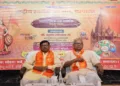
In a speech at the “One World One Humanity” event in New York on August 29, 2026, RSS Sarsanghchalak Dr. Mohan Bhagawat spoke about Hindutva and Humanity, urging us to grasp the deeper meaning of his message. He articulated that Hindutva reflects a profound understanding of our identity and humanity, deeply rooted in our historical legacy. To reject Hindutva is to misunderstand it, akin to denying one’s own physical traits. Opposition to Hindutva, therefore, is akin to opposing humanity itself. Hindutva pertains to all humanitarian aspects in a social context and symbolizes global good. Its worldview unifies people sharing a common heritage and motherland, contrasting with polarization and narrow-minded ideologies.
Broadly speaking, Hindutva posits that it transcends individual religions, ideologies or worship styles, offering a universal lifestyle accessible to all. In a progressive society, it represents a holistic journey of spiritual development incorporating rituals, practices, meditation, and social service, while embracing cultural aspects such as dance and music. Since Hindutva views all individuals as equal, it does not discriminate based on caste, Religion, language, or gender.
Hindutva challenges injustices and superstitions that have emerged over time and fosters social reform across all religions. It offers a remedy to the division caused by violence and propaganda, aiming to unite people for global good. It counters the feelings of inferiority stemming from colonial violence, promoting a sense of self-respect. Hindutva embodies the principle of Vasudhaiva Kutumbakam, which emphasizes that all individuals are part of one family.
अयं निजः परो वा इति गणना लघु चेतसाम् ।
उदार चरितानां तु वसुधा एव कुटुम्बकम् ॥
The mindset of “This man belongs to me and that one does not” is characteristic of narrow-minded individuals. In contrast, those who are naturally generous perceive the entire world as their family.
Hindutva views Bharat as a rich, ancient civilization, rather than just a physical place, which is why it is referred to as Bharat Mata. Savarkar articulated that “Hindutva is a history, not just a term.” It establishes the national Dharma and the constitutional framework while promoting the integration of the entire community with democracy and modernity to foster a just and efficient Bharat and world.
People will be equipped with a high-quality, values-based education across various subjects—like Science, Math, Ethics, and Life Skills—enabling them to grow into intelligent, helpful individuals who can withstand threats, terrorism, crime, and corruption. Indeed, Hindutva encourages collaboration among diverse groups, including people of all faiths and even atheists, to enhance social ideals and improve infrastructure. Historically, Hindu Dharma has seen various reformative movements, such as the Bhakti and Vedanta movements, aimed at ensuring social justice. The essence of social harmony is beautifully captured in this hymn from the Rig Veda:
ॐसंगच्छध्वं संवदध्वं
सं वो मनांसि जानताम्
देवा भागं यथा पूर्वे
सञ्जानाना उपासते ||
(May you move together, speak together, let your minds be in harmony). Hindutva promotes the idea that members of a society should unite, develop a shared understanding, and think in synchrony. It emphasizes nurturing collective insight and pursuing common goals that foster lasting social cohesion and spiritual peace.
Hindutva is a comprehensive and instinctive ideology that fosters collective growth and self-preservation, resonating with millions of self-aware Bharatiyas who appreciate the rich heritage of Hindu culture and its illustrious history. It aspires to position Bharat as a “Vishwaguru” for the global good, aiming to promote peace worldwide, benefiting not only the nation but also the environment and international relations by encouraging goodwill among nations. Hindutva opposes the notion of Bharat becoming a superpower at the expense of other cultures or dominating other countries.
In Hindu Dharma, nature is revered as divine. The ancient Rig Veda features numerous hymns that celebrate nature, which is seen not as mere matter but as a sacred, conscious force integral to our existence. Therefore, it should be preserved rather than exploited. Vedic texts articulate the relationship between humanity and nature, expressing that
पुत्रो अहं पृथिव्याः पर्जन्यः पिता स उ नः पिपर्तु॥
“Earth is my mother, and I am her son”.
Hindutva seeks to establish an educational system that nurtures each individual’s unique national identity. It aims to propel the nation and the world forward through research and innovation while ensuring environmental sustainability. Upholding the values expressed in Hindu texts like the Vedas, Upanishads, Gita, Ramayana and Mahabharata is at the heart of Hindutva. Whether it involves visiting, appreciating or restoring temples or exploring spirituality through practices like yoga and meditation, all of these are commendable.
Hindutva, which literally means “Hinduness”, embodies inclusivity and breadth, reflecting the spirit of Dharma. It offers a platform for finding common ground globally under a single philosophy, achieving an unparalleled level of integration. Hindutva transcends mere community or religious devotion, encapsulating a cultural essence shared by followers of all faiths in the nation.
The term “Hindu” denotes a shared lineage with common values, customs, and beliefs. As a cultural and nationalistic concept, Hindutva strives to define Bharat’s identity without being confined to theological boundaries. In its broadest sense, Hindutva posits that non-Hindu communities also embrace and practice aspects of a shared Hindu culture. In social contexts, Hindutva encompasses everything related to Bharat.
In conclusion, ‘Hindutva’ signifies Hinduness, which fundamentally integrates the acceptance of universal divinity and the idea of oneness. This essential tenet of Hindu Dharma encourages Hindus to acknowledge the divine in all beings, including flora and fauna, as well as fellow humans. The notion of Hinduness being exclusionary or extremist cannot be reconciled with this foundational principle. Such claims often rely on selective instances, particularly involving religious conflicts between indigenous Hindus and other non-Indic faiths, framing Hindus as oppressors. This flawed portrayal is even extended to Hindus living abroad, who may not have any ties to the religious disputes in Bharat.
The goal is not to identify as Hindu solely due to one’s familial lineage. Instead, individuals should engage with the tradition as seekers, experiencing its depth and richness. We should not abandon Hindu Dharma simply because another worldview is more effectively articulated. It is essential to understand, question, compare, explore and then make informed choices. We trust that Dr. Mohan Bhagwat’s insightful exploration of Hindutva and humanity may help those who feel confused, resentful or have adopted misconceptions due to misleading narratives.