As political protests once again converge around Parliament, many have drawn comparisons with the historic cow protection agitation of November 7, 1966, when thousands of Hindu sadhus, Naga sadhus and gau rakshaks marched to Parliament demanding a nationwide ban on cow slaughter. While both movements centred around Parliament and sought to pressure the Union government, the response of the administration and the nature of the protests have become subjects of renewed debate.
For several days before the march, the protesters had been allowed to hold a sit-in at Jantar Mantar under police supervision without any use of force. Security arrangements remained in place, and the demonstration continued peacefully despite its proximity to Parliament. The situation changed only when the protesters began marching towards Parliament without permission, with sections of the crowd raising incendiary slogans, threatening to storm and burn down Parliament, and confronting police personnel deployed along the route.
According to Delhi Police, protesters attempted to breach multiple security barricades, pelted stones and physically attacked police personnel, leaving several officers injured. Police said repeated appeals to maintain peace and disperse were ignored, following which they resorted to a lathi-charge and other crowd-control measures to prevent the crowd from advancing towards the high-security zone around Parliament. During the violence, over 118 police personnel sustained injuries, and a Delhi Police constable later succumbed to injuries sustained while on duty, drawing condemnation from across the political spectrum.
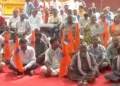
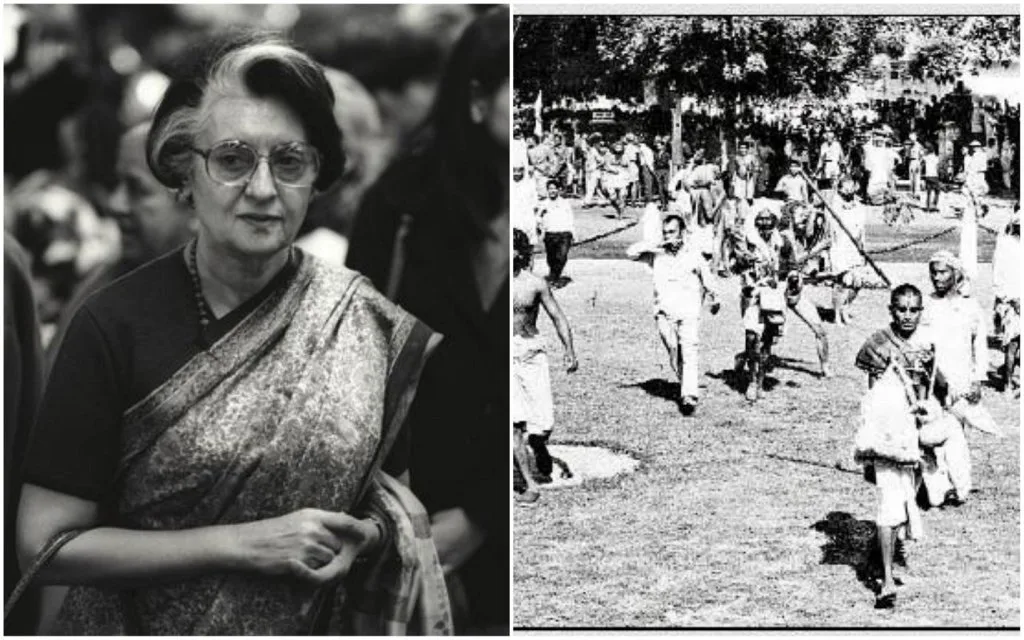
Nearly six decades earlier, on November 7, 1966, coinciding with Gopashtami, one of the largest cow protection agitations in independent India unfolded outside Parliament. The protest was organised by Hindu religious leaders, including Swami Karpatri Ji Maharaj, Naga sadhus and various gau raksha organisations. They demanded that the Union government implement a nationwide prohibition on cow slaughter, arguing that Article 48 of the Directive Principles of State Policy directs the State to organise agriculture and animal husbandry while prohibiting the slaughter of cows and calves.
For many Hindus, the cow occupies a sacred place in religious tradition and is revered as a symbol of dharma. Hindu scriptures, including the Vedas, Smritis and Puranas, describe the importance of cow protection, while several historical rulers, including Chhatrapati Shivaji Maharaj, are remembered for measures aimed at protecting cattle. Swami Karpatri Ji had led sustained campaigns, public meetings and fasts demanding a central anti-cow slaughter law.
Despite constitutional directives and repeated demands from Hindu organisations, the Union government led by Prime Minister Indira Gandhi did not introduce a nationwide law banning cow slaughter, although several states already had varying restrictions in place. Dissatisfaction over the issue culminated in the massive demonstration outside Parliament.
Historical accounts estimate that tens of thousands of protesters, with some accounts placing the number above one lakh, gathered in Delhi. The crowd included sadhus, devotees and public representatives, including Jan Sangh MP Swami Rameshwaranand. Leaders addressed the gathering and urged the government to fulfil its constitutional obligation regarding cow protection.
The situation deteriorated when sections of the crowd attempted to move past security barricades towards Parliament. According to historical records, police initially used lathi-charge and tear gas in an effort to control the crowd. As clashes intensified and the security cordon came under pressure, police opened fire.
The exact number of casualties remains contested. Official figures reported significantly fewer deaths, while several participants and Hindu organisations have long alleged that hundreds or even thousands of protesters were killed and that many bodies were removed overnight. These claims remain disputed and have not been conclusively established by official historical records. Contemporary government records and many mainstream historical accounts describe the incident as a violent riot that culminated in police firing, while several Hindu organisations continue to remember it as a massacre of sadhus and gau rakshaks.
The fallout was immediate. Then Union Home Minister Gulzarilal Nanda accepted moral responsibility and resigned from office. He was succeeded by Yashwantrao Chavan. Several religious leaders, including Swami Karpatri Ji, continued their agitation through fasts and public campaigns, pressing the government to enact a comprehensive anti-cow slaughter law. Although successive governments assured consideration of the demand, Parliament never enacted a uniform nationwide prohibition, leaving the matter largely within the jurisdiction of individual states.
Nearly six decades later, the events of November 7, 1966, continue to provoke debate over how the Indira Gandhi government handled one of the largest cow protection agitations in independent India. Questions persist over whether the situation could have been managed without police firing, whether adequate efforts were made to de-escalate the confrontation, and why the demand for a nationwide law under Article 48 remained unaddressed despite sustained appeals from religious leaders. While historians continue to debate the scale of casualties and other aspects of the incident, the episode remains deeply etched in the collective memory of many Hindu organisations.
As Parliament once again witnesses protests over different issues, the 1966 agitation has resurfaced in public discourse, with many pointing out that younger generations know little about this chapter of India’s post-Independence history. They argue that while contemporary protesters have often been permitted to assemble for days at designated sites and exercise their democratic right to protest, the events of 1966 serve as a reminder of how the State’s response to public demonstrations has evolved, and why the handling of that agitation continues to invite scrutiny.