
KASHI: Varanasi, one of Bharat’s oldest continuously inhabited cities, is inseparable from the River Ganga. Along its eastern edge stretches a spectacular riverfront of ghats, stone steps descending towards the sacred river, each carrying its own history, traditions, mandirs, legends and social memory. The ghats are not merely architectural structures; they form the spiritual and cultural heart of Kashi.
The Varanasi district administration describes 88 ghats along the Ganga, most of which are used for bathing and religious ceremonies, while two are primarily associated with cremation. UNESCO’s tentative-list documentation, meanwhile, identifies a historic chain of 84 ghats forming the principal heritage riverfront. The difference reflects the fact that different official and heritage inventories count the riverfront differently.
The Ganga and the sacred landscape of Kashi
For centuries, the Ganga has been at the centre of religious life in Varanasi. Pilgrims arrive at the river to take a sacred dip, offer prayers to the rising Sun, perform rituals for ancestors and participate in festivals. The ghats provide the physical connection between the city and the river.
The historic riverfront extends for around 6.5 kilometres and contains an extraordinary concentration of mandirs, palaces, shrines and other heritage structures. UNESCO notes that the sacred waterfront tradition goes back to at least the early medieval period, while the construction of stone-stepped ghats developed from the 14th century onwards.
The present appearance of many ghats, however, is comparatively recent. The Varanasi district administration notes that most of the existing ghats were rebuilt after the 1700s, during a period when Maratha rulers and other royal patrons played a major role in developing the riverfront. This makes the ghats a fascinating combination of ancient sacred geography and later architectural patronage.
Dashashwamedh Ghat: The centre of Ganga aarti
Among all the ghats, Dashashwamedh Ghat is perhaps the most recognisable. Located close to the Kashi Vishwanath Mandir, it remains one of the busiest centres of pilgrimage and religious activity in Varanasi.
The name Dashashwamedh is traditionally connected with the performance of ten Ashwamedha Yagyas by Bhagwan Brahma. The ghat’s association with this tradition contributes to its importance in the sacred geography of Kashi.
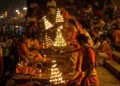
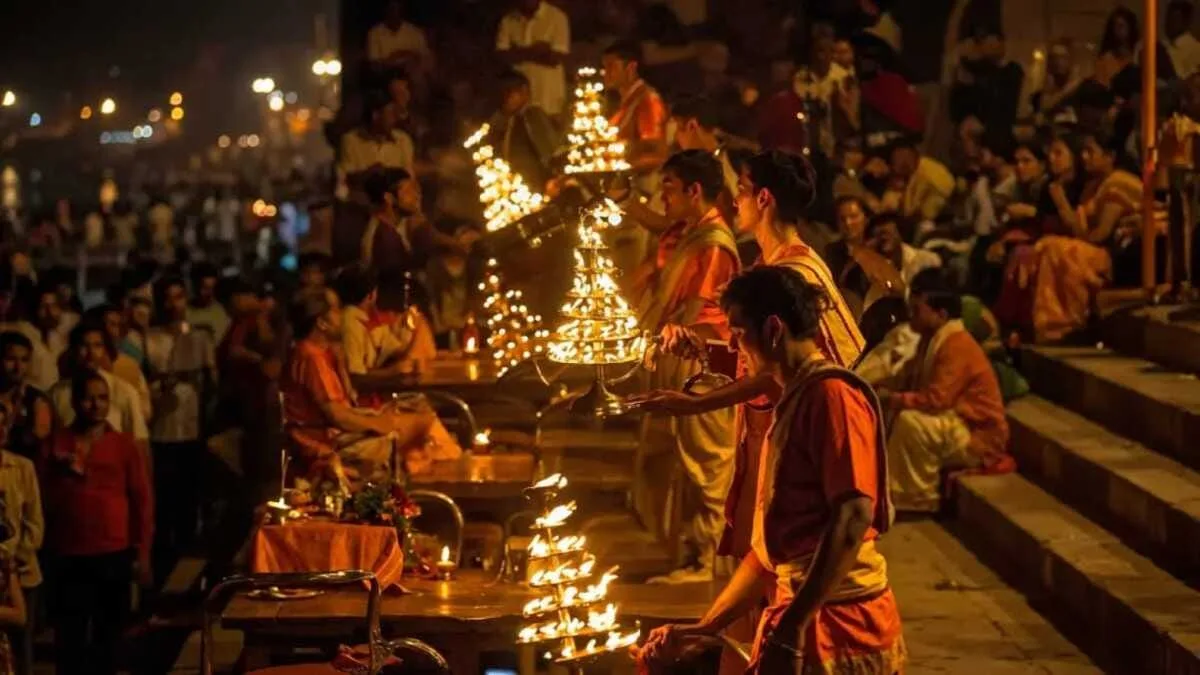
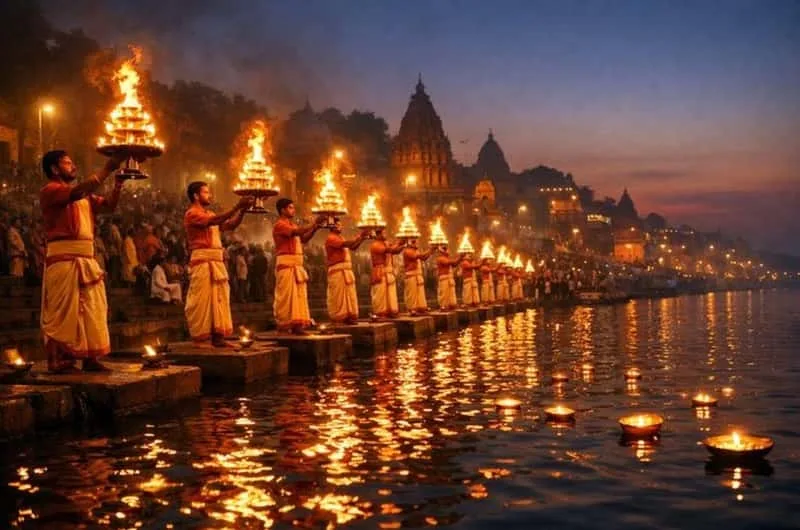
Its most famous attraction is the Ganga Aarti, performed every evening. Pandits conduct the elaborate ritual with lamps, incense, flowers and conch shells as devotees gather along the steps and boats assemble on the river. The illuminated lamps reflected in the Ganga have become one of the defining images of Varanasi. The ghat becomes particularly spectacular during festivals such as Dev Deepawali, Kartik Purnima and Ganga Dussehra, when thousands of lamps illuminate the riverfront.
Assi Ghat: The southern gateway of the riverfront
At the southern end of the principal ghat sequence lies Assi Ghat, traditionally associated with the meeting of the Assi stream and the Ganga. According to local tradition, the site is associated with Maa Durga and the emergence of the Assi stream after she defeated the demons Shumbha and Nishumbha. The ghat also has a longstanding association with worship of Bhagwan Shiva.
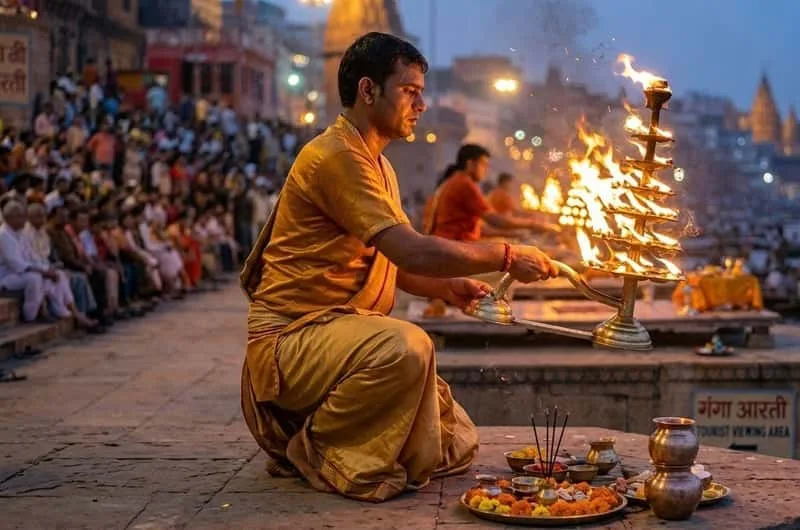
Today, Assi Ghat has developed into one of the city’s most popular cultural spaces. Its mornings are particularly distinctive because of Subah-e-Banaras, which combines devotional activity, Vedic chanting, yoga and meditation against the backdrop of sunrise over the Ganga.
The atmosphere at Assi differs from the intense bustle of Dashashwamedh. Early morning visitors can see students, pilgrims, sadhus, musicians, yoga practitioners and residents sharing the riverfront.
Manikarnika Ghat: The sacred space of cremation
If Dashashwamedh represents the public celebration of devotion, Manikarnika Ghat represents Varanasi’s profound engagement with mortality and liberation. Manikarnika is one of the most important Hindu cremation grounds and is situated between Dashashwamedh and Scindia Ghat. Cremation rituals continue here as part of the city’s living religious tradition.
The ghat is also surrounded by powerful traditions associated with Bhagwan Shiva, Maa Parvati and Bhagwan Vishnu. One prominent tradition connects the name Manikarnika with a jewel or earring, mani, said to have fallen at the site. The nearby Manikarnika Kund is also associated with these traditions.
What makes Manikarnika particularly significant is the way Varanasi places life and death within the same sacred landscape. Pilgrims bathe, pray and perform rituals at one ghat while cremation fires burn at another. Death is not hidden away from everyday life; instead, it remains visibly integrated into the spiritual geography of Kashi.
Harish Chandra Ghat: Another ancient cremation ground
Harish Chandra Ghat is the other major cremation ghat of Varanasi. It is traditionally associated with Raja Harish Chandra, whose story is deeply connected with truth, sacrifice and unwavering adherence to dharma. The ghat is also known as Adi Manikarnika in some traditions. It was modernised in the 20th century, including the establishment of an electric crematorium.
Together, Harish Chandra and Manikarnika demonstrate an unusual characteristic of Varanasi: the city’s sacred riverfront serves not only as a place of pilgrimage and celebration but also as a setting for the final rites of life.
Panchganga Ghat: Confluence of sacred traditions
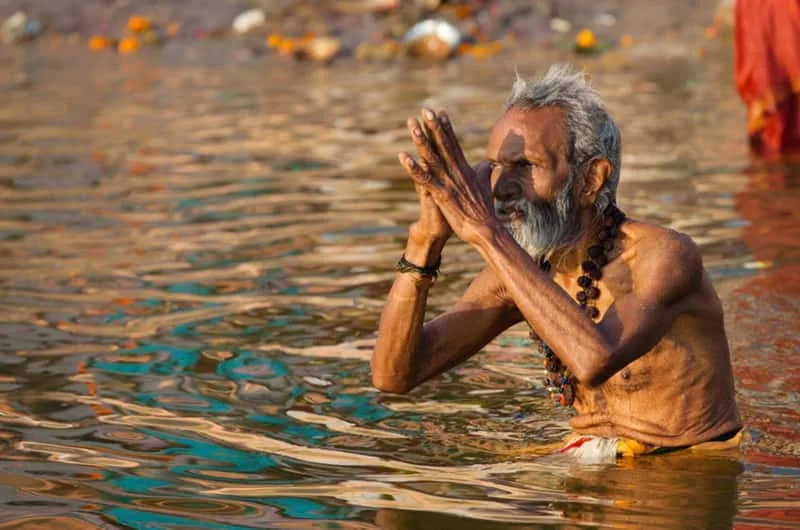
Further north lies Panchganga Ghat, whose name refers to the traditional belief in the confluence of five sacred rivers, Ganga, Yamuna, Saraswati, Kirana and Dhutapapa. While only the Ganga is visibly present, the other rivers are believed to have a mystical presence here according to local and scriptural traditions.
Panchganga has also been associated with important figures and traditions beyond Hindu pilgrimage. The Kashi official portal notes its association with Guru Nanak, with a Gurudwara commemorating his visit and teachings. The ghat therefore reflects the layered religious history of Varanasi. The ghat is also associated with saints, scholars and devotional traditions, making it an important location for spiritual contemplation.
Kedar Ghat: A southern centre of shaiva tradition
Kedar Ghat is among the prominent southern ghats and is strongly associated with Bhagwan Shiva. Its importance is enhanced by the presence of the Kedareshwar Mandir. The ghat is particularly known for its distinctive architectural character and religious activity. Pilgrims visit the area to perform worship and take a dip in the Ganga, while the temple connects the riverfront with Varanasi’s broader Shaiva tradition. Its importance also reflects how the ghats function as extensions of the city’s mandirs: devotees move between the river, shrines and narrow lanes, creating a continuous sacred landscape rather than treating each monument as an isolated attraction.
Man Mandir Ghat: Astronomy, architecture and royal patronage
Man Mandir Ghat offers another dimension to the history of Varanasi. The ghat is associated with the royal family of Jaipur and the astronomical traditions connected with Maharaja Sawai Jai Singh II. The historic astronomical observatory, or Jantar Mantar, near the ghat demonstrates that Varanasi’s riverfront was not exclusively a space for ritual. It also became a centre for scholarship, astronomy and scientific observation. This combination of spirituality, architecture, astronomy and royal patronage illustrates the diversity of traditions that developed along the Ganga.
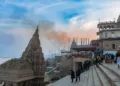
One of the most striking features of this section of the riverfront is the presence of partially submerged mandirs. Their tilted forms, especially when viewed from a boat, create one of the most distinctive architectural scenes along the Ganga.
The sight also demonstrates the changing relationship between the river and the built environment. The Ganga has continuously interacted with the city’s architecture, sometimes revealing structures and sometimes partially submerging them.
Tulsi Ghat: Literature, devotion and cultural memory
Tulsi Ghat is associated with the great poet-saint Goswami Tulsidas, who is traditionally believed to have lived and composed works in Varanasi. The ghat is consequently connected with the literary and devotional heritage of Kashi. It also hosts cultural and religious activities, including performances associated with the city’s traditional theatre and devotional culture.
Tulsi Ghat shows that the Varanasi riverfront is not simply a collection of pilgrimage sites. It has also been a place where literature, music, theatre and devotional expression have flourished.
Darbhanga Ghat: Architectural grandeur
The riverfront also displays the influence of royal families from outside Varanasi. Darbhanga Ghat, for instance, is distinguished by its palace-like architecture. The monumental structures rising behind the steps demonstrate how Indian royal houses invested in the sacred landscape of Kashi. Several ghats were built or expanded under the patronage of rulers from different regions, creating an architectural mosaic along the Ganga. This regional diversity is one reason the Varanasi riverfront is so distinctive: Rajasthan, Maharashtra, Bihar, Bengal, Nepal and other cultural regions have all left their imprint on the ghats.
The ghats as living heritage
The greatest strength of the Varanasi ghats is that they are not museum pieces. Every day, the same steps accommodate remarkably different activities: pilgrims performing puja, families conducting ancestral rituals, devotees taking a sacred bath, pandits conducting ceremonies, musicians performing, boatmen navigating the Ganga, students gathering for cultural programmes and visitors observing the riverfront.
The official heritage description of the Varanasi riverfront emphasises that many of the ghats remain active centres of festivals and rituals, preserving traditions that have continued across generations.
This continuity gives the ghats their unique character. Their heritage does not survive merely through preserved buildings; it survives through continued use.
Dev Deepawali: When the ghats become a sea of lamps
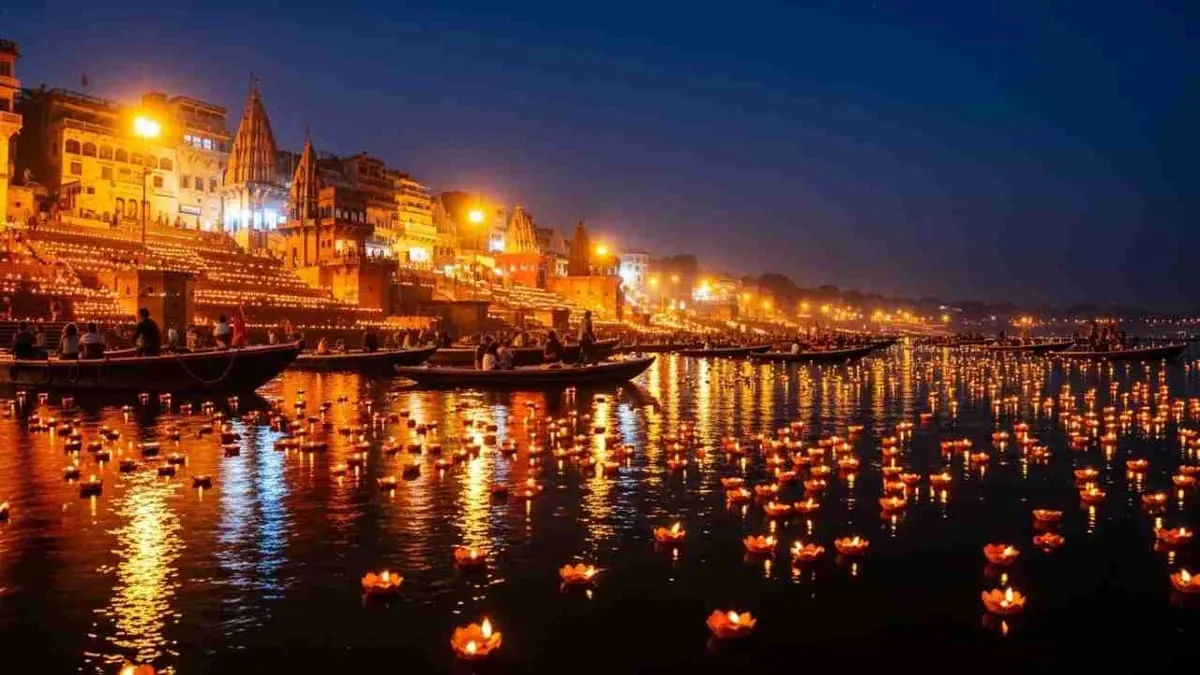
Among the most spectacular celebrations on the Varanasi riverfront is Dev Deepawali, observed on Kartik Purnima. During the festival, thousands of diyas are placed along the ghats, turning the riverfront into a vast illuminated landscape. The diyas, mandir architecture and reflections on the Ganga create a visual expression of devotion that draws pilgrims and visitors from across Bharat and beyond.
The celebration also demonstrates the connection between the city’s sacred calendar and its physical landscape. The ghats become not merely a backdrop for the festival but an integral part of the celebration itself.
Seeing Kashi from the Ganga
One of the most effective ways to understand the ghats is to view them from the river. From a boat, the entire riverfront appears as a continuous architectural panorama. Mandirs, palaces, shrines and stone steps rise behind the water, while different ghats reveal different aspects of the city’s religious and cultural life.
The Kashi official portal describes river cruising as a way to experience the history and heritage of the ghats, with cruises covering the principal ghat stretch. A sunrise boat ride offers an especially distinctive perspective: the first light falls on the eastern-facing riverfront while devotees perform prayers and the city gradually awakens.
The ghats of Varanasi cannot be understood only through their stone steps. They represent a unique Indian idea of sacred geography in which river, temple, pilgrimage, ritual, music, death, celebration and everyday life coexist.
At Assi, the morning begins with prayers and yoga. At Dashashwamedh, evening arrives with the Ganga Aarti. At Manikarnika, cremation rituals continue through the day. At Panchganga, ancient traditions coexist with memories of Guru Nanak. At Tulsi Ghat, literary and devotional traditions survive. At Man Mandir, astronomy forms part of the riverfront’s heritage. Each ghat therefore contributes a different chapter to the larger story of Kashi.
Preserving the heritage of the Ghats
The scale and antiquity of the riverfront also create a responsibility for preservation. The ghats face the pressures that accompany a heavily visited historic city: large crowds, environmental concerns, changing river conditions, infrastructure demands and the need to preserve historic buildings while keeping the riverfront functional for residents and pilgrims. Heritage conservation in Varanasi therefore cannot mean simply preserving stone structures. The living rituals, traditional occupations, festivals and relationship between the people and the Ganga are equally important components of the cultural landscape.
The UNESCO tentative-list description recognises precisely this connection between the architecture above the river and the religious and cultural traditions conducted along the waterfront. The ghats ultimately explain why Varanasi occupies such a distinctive place in India’s civilisational imagination. They bring together the visible and invisible dimensions of Kashi: the flowing Ganga, ancient traditions, temples, rituals, music, scholarship, devotion, death and the hope of liberation.
From the first light at Assi Ghat to the evening flames of Dashashwamedh, from the solemn fires of Manikarnika to the lamps of Dev Deepawali, the riverfront presents an extraordinary continuity of Indian traditions. The ghats are therefore not simply places to visit. They are a living civilisational landscape, where the past continues to participate in the present and where the Ganga remains at the centre of the spiritual life of Kashi.