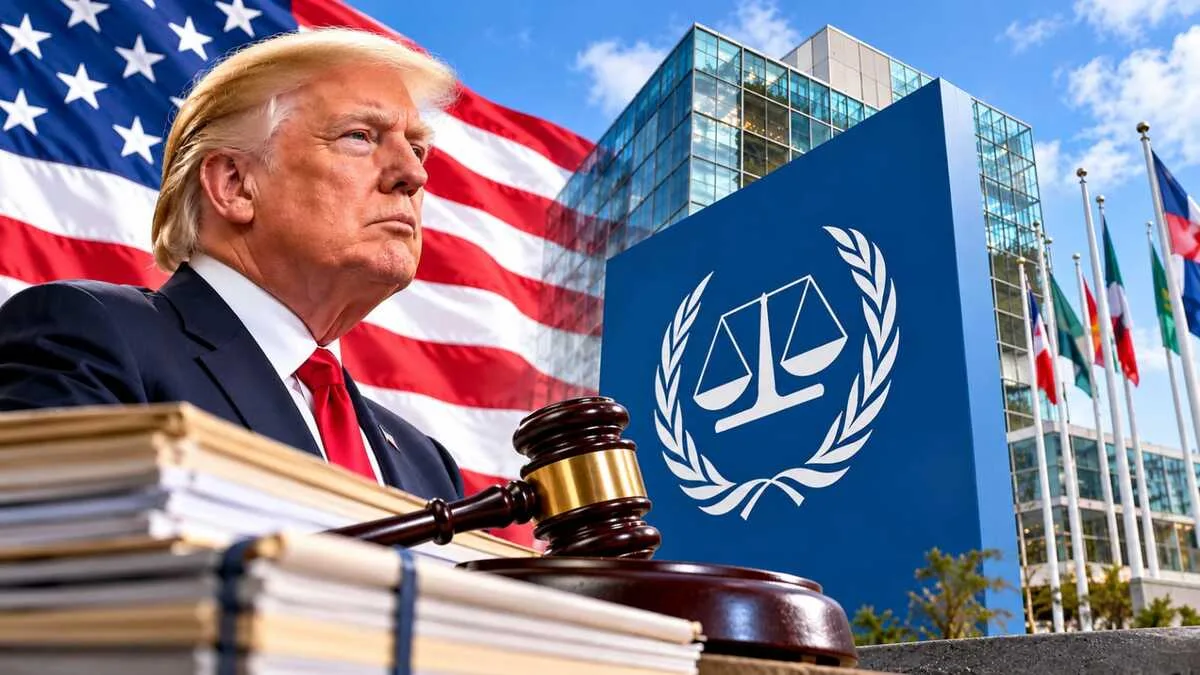
The Trump administration on October 9 imposed sweeping sanctions against the International Criminal Court (ICC), escalating its confrontation with the international judicial institution and threatening its ability to operate financially.
Washington has defended the move as necessary to protect American sovereignty, while the court has condemned it as an attack on the rule of law and the foundations of the international legal order.
US Secretary of State Marco Rubio announced the measures, which prohibit US entities from conducting transactions with the ICC. The restrictions could disrupt the court’s access to essential services, including banking, software and other support provided by American companies.
The latest action marks a significant escalation in Washington’s campaign against the court. The United States has already sanctioned 17 ICC judges and officials, but the new measures target the institution itself.
Rubio accused the ICC of attempting to exercise jurisdiction over Americans and interfering with US sovereignty. He said President Donald Trump would not allow the court to prosecute American citizens and warned that Washington would take further action unless the institution addressed its concerns. “Either the ICC will end its threats, or we will end the ICC,” Rubio said.
The sanctions come amid growing tensions over the ICC’s investigations into alleged international crimes, including its actions involving American personnel and Israeli leaders.
Washington challenges ICC’s authority
The Trump administration has repeatedly criticised the ICC, arguing that it operates beyond its legitimate mandate and threatens national sovereignty. Washington is particularly angered by a previous investigation into alleged crimes committed by US soldiers in Afghanistan, which the court has since closed, and its arrest warrants for Israeli officials, including Prime Minister Benjamin Netanyahu.
The latest sanctions do not explicitly require the ICC to withdraw those warrants as a condition for lifting the restrictions. However, Washington has made clear that it expects the court and its member states to address American objections.
Today, the Trump Administration is sanctioning the ICC.
This action should encourage our Allies within the Court to work for solutions to end this threat to U.S. sovereignty forever. pic.twitter.com/D86dCqLUaZ
— Secretary Marco Rubio (@SecRubio) October 9, 2026
The administration has also accused the institution of being influenced by what it describes as globalist interests that undermine national sovereignty. Israeli Prime Minister Benjamin Netanyahu welcomed the sanctions, describing the ICC as a political body rather than a legitimate court. He argued that its actions threatened law-abiding democracies and the principle of national sovereignty.
The US has nevertheless allowed a six-month grace period before certain restrictions take effect. According to Washington, the delay is intended to give ICC member states time to negotiate a possible solution and address American concerns. Rubio has also urged US allies that are members of the ICC, including the United Kingdom, to rein in the institution.
Allies defend court as international tensions deepen
The sanctions have drawn criticism from international leaders who consider the ICC an essential institution for prosecuting serious international crimes.
UN Secretary-General Antonio Guterres described the American decision as a serious blow to the international community’s collective pursuit of criminal justice, emphasising the court’s central role in the system.
The United Kingdom, Canada, Denmark, Germany, France, Italy, Japan and the Netherlands reaffirmed their continued support for the ICC. They expressed strong disagreement with the sanctions and praised the court’s efforts to bring individuals accused of serious international crimes to justice and support victims.
The Netherlands faces particular pressure because The Hague hosts the court. Dutch Foreign Minister Tom Berendsen has warned that the restrictions could seriously affect its ability to function.
Founded in 2002, the ICC prosecutes individuals accused of genocide, war crimes and crimes against humanity. It has 125 member states, although several major powers, including the United States, India, China, Russia and Israel, remain outside the institution.
The court has vowed not to be deterred, arguing that the sanctions are intended to disrupt its work and intimidate those cooperating with it. It described the measures as an assault on the rule of law and insisted that individuals serving international justice should not be punished for their work.
The confrontation represents one of the most serious challenges in the ICC’s 24-year history. By targeting the institution rather than individual judges and prosecutors alone, Washington has intensified a dispute that could have lasting implications for international criminal justice and also relations between the United States and its allies.