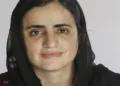
Detained leaders of the Baloch Yakjehti Committee (BYC) continued a sit-in inside Huda Jail in Quetta for the fifth consecutive day on Wednesday against what they describe as a “non-transparent” and “faceless” trial. On the other hand, lawyers in the city also protested against video link proceedings and demanded open court hearings.
Several BYC leaders, including its chief organiser Dr Mahrang Baloch, Beebow Baloch, Gulzadi, Bebarg Zehri and Sibghatullah Shahji, have been incarcerated since March 2025 and are protesting against the transfer of their cases to video link proceedings from inside jail. This is the latest tactic adopted by repressive Pakistani authorities to intimidate the BYC as support for its peaceful protests have been growing, according to The Balochistan Post.
According to the BYC, the detained leaders say they have a constitutional and legal right to a fair hearing in an open court and cannot be denied access to lawyers, family members and public oversight. This is also a way to keep them confined to jail premises and not present them even during trial before the designated courts.
Faceless Trials Through Video Links
The organisation said the move towards a “faceless trial” raised serious questions about judicial transparency and the basic principles of a fair hearing. Family members of the detained leaders said they repeatedly visited the jail over the past few days and waited for several hours, but were not allowed to meet them. They pointed out that repressive policies of Pakistan are for the whole world to see and take note of. They pointed out that this behaviour is in conformity with the wide pattern being seen all over Pakistan as family and lawyers of former Prime Minister Imran Khan are not allowed to meet him, despite court orders.
They said the sit-in had entered its fifth day, while family meetings and access to lawyers had still not been allowed. Relatives said they were concerned about the health and condition of the detained leaders, particularly as the protest continued in intense heat and difficult prison conditions. The detained leaders have warned that if their demands continue to be ignored, they will expand the protest and begin a hunger strike, according to the BYC.
The BYC demanded an immediate end to “faceless trials” and jail trials, the transfer of the cases to an open court, an urgent hearing on the petition seeking a change of judge, and the restoration of the detained leaders’ legal and constitutional rights. The BYC said its leadership had remained in state custody for more than a year under charges it rejected, adding that the repeated shift from open-court proceedings to jail trials and now to video-link proceedings showed that the process was being shaped by “the exercise of power” rather than law.
“From open court proceedings to jail trials, and now to faceless proceedings, the repeated changes in judicial procedure further make it clear that these decisions are not based on law but on the exercise of power,” the BYC said.
It may be mentioned here that several Baloch armed rebel groups have been waging an open war against the Pakistani state for freedom of Balochistan. These groups have repeatedly hit at interests of Pakistan government, whom they call as an occupying force. They have also been targeting Chinese interests, particularly convoys on some routes which are linked to China Pakistan Economic Corridor (CPEC).
BYC Is Mobiliser of Ordinary Baloch
In sharp contrast, the Baloch Yekjehti Committee (BYC) has emerged as a massive mobiliser of people leading peaceful protests. Most Pakistani leaders now name the BYC in their speeches in legislatures repeatedly. However, the peaceful protests by the BYC are being sought to be criminalised. To do so, the state forces arrested Dr Mahrang Baloch and others in March 2025 when they were leading such protests.
Since then, these leaders have been continuously in jails even as repression, mainly through enforced disappearances, continues unabated all over Balochistan. Hardly a day goes by when some Baloch civilians are not picked up by various security forces of Pakistan, including the Army, Counter Terrorism squads, Military Intelligence (MI) and the police. These repressive measures have, however, failed to deter ordinary Baloch civilians.
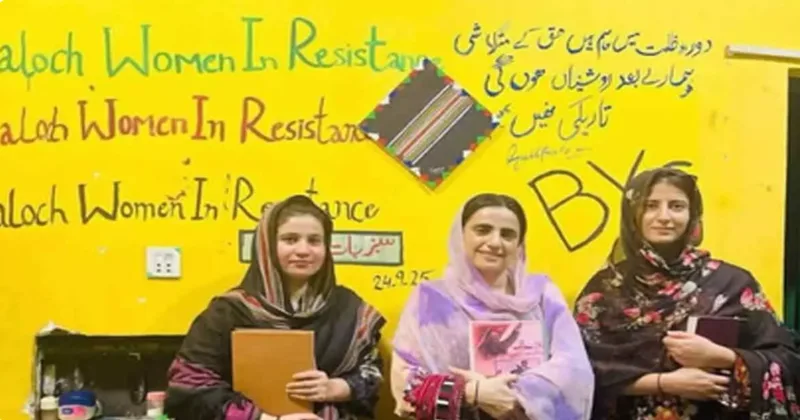
One of the most outstanding feature of BYC protests has been mass mobilisation of women and children. From a conservative society where women were confined to the four walls of home, the mobilisation and repeated protests by BYC has led to thousands of them turning out on streets. This aspect of social transformation where women and children lead the protests has been deeply unsettling for the powers that be in Pakistan.
Clear Violation of Principles of Fair Trial
Lawyers in Quetta, the capital of Balochistan, held a protest outside the Sessions Court, Kacheri and the Anti-Terrorism Court, rejecting what they called “faceless” and non-transparent trials. The lawyers said the proceedings against the BYC leaders violated the Constitution, the right to a fair trial and the basic principles of justice.
They demanded that all notifications related to the video link trial be withdrawn and that the proceedings be conducted publicly and transparently. The lawyers said the issue was not limited to the cases of a few political prisoners, but concerned “the entire judicial system, civil liberties and the supremacy of law.”
“If silence is maintained today over the violation of the basic principles of justice, then tomorrow every citizen will be affected by this lawlessness,” the lawyers said. They described the move as a serious constitutional and legal crisis and called on lawyers in Balochistan and across Pakistan to join the effort to protect justice, the Constitution and fundamental rights.