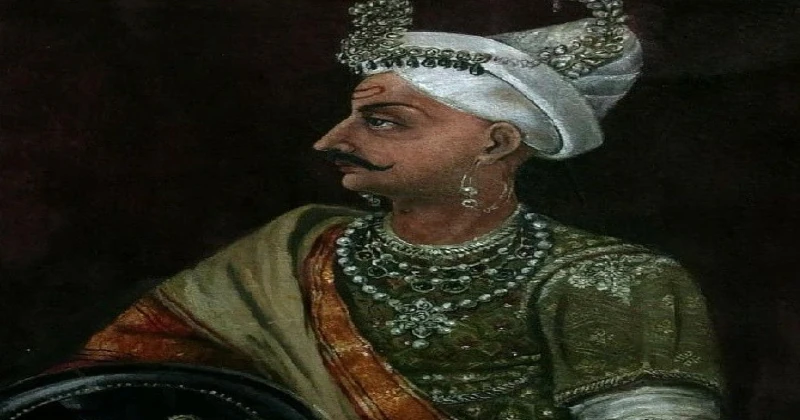
At a time when the Mughal Empire still sought to dominate large parts of India, one Maratha commander turned warfare into an instrument of expansion and made the saffron flag a symbol of an advancing Swarajya. Peshwa Bajirao I, born on 18 August 1700, remains one of the most formidable military leaders in Indian history.
Born at Duberg, Bajirao inherited a formidable legacy. His father, Balaji Vishwanath, served as Peshwa to Chhatrapati Shahu Maharaj, while his family had a long association with the Maratha struggle. But Bajirao did not merely inherit that legacy he expanded it with extraordinary speed, strategic brilliance and an unwavering commitment to the Maratha cause.
18 अगस्त/जन्म-दिवस
अपराजेय नायक पेशवा बाजीराव
छत्रपति शिवाजी महाराज ने अपने भुजबल से एक विशाल भूभाग मुगलों से मुक्त करा लिया था। उनके बाद इस ‘स्वराज्य’ को सँभाले रखने में जिस वीर का सर्वाधिक महत्त्वपूर्ण योगदान रहा, उनका नाम था बाजीराव पेशवा।
बाजीराव का जन्म 18 अगस्त, 1700 को… pic.twitter.com/7FhcN04Pq1
— Rashtra Sevika Samiti Delhi Prant (@sevikasamiti) August 17, 2026
His fascination with warfare began in childhood. When offered a choice of gifts at his sacred-thread ceremony, the young Bajirao chose a sword. On another occasion, when Shahu Maharaj offered him a precious pearl necklace, Bajirao reportedly asked instead for a horse. Taken to the stables, he selected the fastest and most difficult horse and immediately rode it. The episode offered an early glimpse of the warrior he would become.
By the age of fourteen, Bajirao was already participating in military campaigns. His daring capture of Pandavgad Fort, approached from its difficult rear side, demonstrated the audacity that would later define his battlefield strategy. His abilities soon earned recognition, including from Shahu Maharaj, who bestowed upon him the title of Sardar.
Then came the moment that changed the course of Maratha history.
After the death of his father on 2 April 1720, 20-year-old Bajirao was appointed Peshwa by Chhatrapati Shahu Maharaj on 17 April 1720. At an age when many would still be considered inexperienced, Bajirao assumed responsibility for a rapidly expanding power surrounded by formidable enemies.
He responded not with caution, but with audacity.
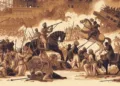
His campaigns repeatedly challenged the Nizam of Hyderabad and Mughal power. At the Battle of Palkhed in 1728, Bajirao outmanoeuvred Nizam-ul-Mulk through speed, mobility and superior strategic planning, forcing the Nizam to seek peace. The battle became a landmark of military strategy and established Bajirao’s reputation far beyond the Maratha territories.
His campaigns pushed Maratha influence deep into the subcontinent. From Malwa and Gujarat to Bundelkhand and the Deccan, Bajirao’s armies repeatedly defeated opponents and expanded the reach of Swarajya. He also recognised that military power required capable commanders and nurtured young leaders such as Ranoji Shinde, Malharrao Holkar and Udaji Pawar, who would go on to play decisive roles in the expansion of Maratha power.
Bajirao’s military brilliance was not confined to conventional battles. His strategy centred on mobility, speed and striking the enemy at its weakest point. His famous military principle was simple yet devastating: strike at the root, and the branches will fall automatically.
When the Mughal court faced the devastating invasion of Nadir Shah, Bajirao was reportedly preparing to move towards Delhi. His very advance was enough to create apprehension among those who had witnessed his battlefield record.
He also came to the aid of the ageing Chhatrasal Bundela, who was fighting Muhammad Khan Bangash. Bajirao’s intervention helped free Chhatrasal from a desperate situation and further strengthened Maratha influence in northern India.
Yet the life of the undefeated warrior ended unexpectedly.
While travelling towards Delhi, Bajirao fell seriously ill at Raverkhedi on the banks of the Narmada, reportedly due to heatstroke amid the harsh weather conditions. On 28 April 1740, at just 40 years of age, the Peshwa who had remained undefeated on the battlefield breathed his last.
His death did not erase his achievement. In barely two decades of leadership, Bajirao transformed the Marathas from a regional power into a force capable of challenging the Mughal Empire across vast stretches of India.
The Shaniwar Wada in Pune, once the centre of Maratha power, continues to evoke memories of the Peshwa whose cavalry moved with extraordinary speed and whose campaigns changed the political map of 18th-century India.
Peshwa Bajirao’s legacy is ultimately the story of a commander who refused to fight on his enemy’s terms. He moved faster, struck deeper and thought beyond conventional battlefields.