No dispute on women entering Mosques since Prophet’s time
June 23, 2026
  • Read Ecopy
  • Circulation
  • Advertise
  • Careers
  • About Us
  • Contact Us
Android AppiPhone AppArattai
Organiser
  • ‌
  • Bharat
    • Assam
    • Bihar
    • Chhattisgarh
    • Jharkhand
    • Maharashtra
    • View All States
  • World
    • Asia
    • Europe
    • North America
    • South America
    • Africa
    • Australia
  • Editorial
  • International
  • Opinion
  • RSS @ 100
  • More
    • Op Sindoor
    • Analysis
    • Sports
    • Defence
    • Politics
    • Business
    • Economy
    • Culture
    • Special Report
    • Sci & Tech
    • Entertainment
    • G20
    • Azadi Ka Amrit Mahotsav
    • Vocal4Local
    • Web Stories
    • Education
    • Employment
    • Books
    • Interviews
    • Travel
    • Law
    • Health
    • Obituary
  • Subscribe
    • Subscribe Print Edition
    • Subscribe Ecopy
    • Read Ecopy
  • ‌
  • Bharat
    • Assam
    • Bihar
    • Chhattisgarh
    • Jharkhand
    • Maharashtra
    • View All States
  • World
    • Asia
    • Europe
    • North America
    • South America
    • Africa
    • Australia
  • Editorial
  • International
  • Opinion
  • RSS @ 100
  • More
    • Op Sindoor
    • Analysis
    • Sports
    • Defence
    • Politics
    • Business
    • Economy
    • Culture
    • Special Report
    • Sci & Tech
    • Entertainment
    • G20
    • Azadi Ka Amrit Mahotsav
    • Vocal4Local
    • Web Stories
    • Education
    • Employment
    • Books
    • Interviews
    • Travel
    • Law
    • Health
    • Obituary
  • Subscribe
    • Subscribe Print Edition
    • Subscribe Ecopy
    • Read Ecopy
Organiser
  • Home
  • Bharat
  • World
  • Operation Sindoor
  • Editorial
  • Analysis
  • Opinion
  • Culture
  • Defence
  • International Edition
  • RSS @ 100
  • Magazine
  • Read Ecopy
Home Bharat

No dispute on women entering Mosques since Prophet’s time: Justice Amanullah during SC hearing

During the Sabarimala case hearings, Justice Ahsanuddin Amanullah noted that women’s entry into mosques has historically been undisputed, even as the All India Muslim Personal Law Board outlined limits on how that right is exercised

Kirti PandeyKirti Pandey
Apr 25, 2026, 11:15 pm IST
in Bharat, Law
Follow on Google News
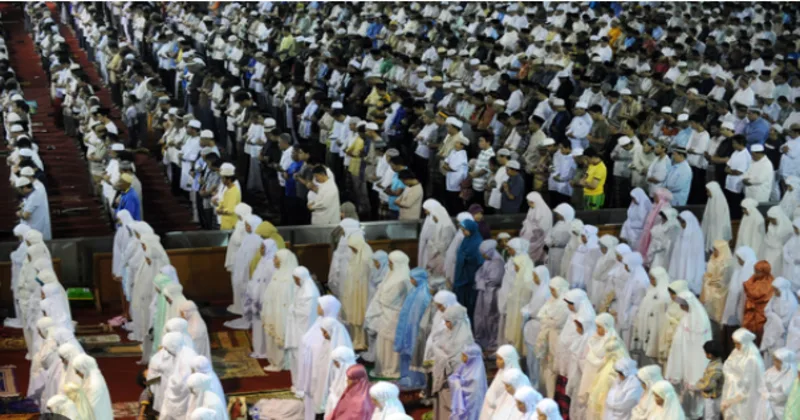
Representative image

Representative image

FacebookTwitterWhatsAppTelegramEmail

A key moment in the ongoing hearings linked to the Sabarimala case came when Justice Ahsanuddin Amanullah observed that there has historically been no dispute over Muslim women entering mosques, tracing the practice back to the time of the Prophet.

The observation came during submissions by senior advocate MR Shamshad, appearing for the All-India Muslim Personal Law Board (AIPLMB) before a nine-judge bench of the Supreme Court of India.

Agreeing with the court’s remark, Shamshad stated that Islamic sources clearly record that women should not be stopped from entering mosques. He reiterated that there is consensus across Islamic denominations permitting women to enter mosques and offer namaz.

At the same time, he argued that certain disciplinary norms apply, including that women cannot insist on entering through a particular door or seek removal of physical barriers separating men and women inside mosques.

Read More: From Vedic Mathematics to Biogas Innovation: A deep dive into Anaadi Dharma Gurukulam’s education ecosystem

The bench, led by Chief Justice Surya Kant, sought clarifications on multiple aspects, including participation in congregational prayers. Shamshad responded that while women do take part in congregational namaz when they attend mosques, such participation is not mandatory for them, unlike for men. He added that praying at home is considered equally rewarding.

During the exchange, Justice Amanullah also noted that historical practices reflected social considerations, including the need for someone to remain at home to care for children.

Shamshad further submitted that a mosque does not have a “sanctum sanctorum”, and therefore no individual can claim a right to a specific position or role, including leading prayers.

A significant portion of the arguments focused on the Essential Religious Practices (ERP) test, which the AIMPLB argued has been wrongly applied to Islam. Shamshad said Islamic practices are clearly categorised as mandatory, recommended, or forbidden, but courts have often relied on incomplete or inaccurate interpretations.

Referring to past rulings, he argued that courts have held that a mosque is not essential to Islam because namaz can be offered anywhere. “Masjid is the core of the belief of Muslims. All practices are ultimately relatable to mosque. But then we face a judgment saying masjid is not essential. Then what will we do with Article 25?” he submitted.

Justice BV Nagarathna responded that such a view would be akin to questioning the essentiality of a temple. Shamshad agreed, stating that this was precisely his concern.

The bench also briefly touched upon religious expression in other contexts. When Shamshad referred to a case involving a Muslim man dismissed from the Army for keeping a beard, the Chief Justice said the Court would not enter that debate, noting that a beard is expressly mandated in Sikhism as one of its core principles.

Shamshad also highlighted how facially neutral regulations may have differential impacts, citing rules of the Archaeological Survey of India that restrict access to protected monuments from sunrise to sunset. He argued that such rules, when applied to mosques under ASI control, could effectively prevent certain daily prayers.

Before concluding, he pointed to a contradiction before the court: “Here is a petition which says for a Muslim woman, mosque is essential. And I have a judgment which says mosque is not essential.”

The matter is being heard by a Constitution Bench comprising Chief Justice Surya Kant and Justices BV Nagarathna, MM Sundresh, Ahsanuddin Amanullah, Aravind Kumar, Augustine George Masih, Prasanna B Varale and Joymalya Bagchi.

A defining constitutional debate has been taking shape. The courtroom battle seemed to be moving past legal arguments into a deeper clash of faith and constitutional authority.

During the Sabarimala hearings, J Sai Deepak strongly challenged the scope of judicial review, asserting that courts should not evaluate essential religious practices merely because the State is involved.

Opposing this stance, the Bench led by Surya Kant replied that judicial review remains a fundamental feature of the Constitution.

Before concluding his arguments, Shamshad submitted, "Here is a petition, which says for a Muslim women, mosque is essential. And I have a judgment, which says mosque is not essential."https://t.co/Iuif8lWhP0 https://t.co/A35PABkPNq

— Asaduddin Owaisi (@asadowaisi) April 24, 2026

Separately, Asaduddin Owaisi, the AIMIM party chief and Lok Sabha MP, reacted to the proceedings on social media, echoing concerns around the interpretation of essential religious practices and the status of mosques within constitutional protections.
 

Topics: Essential Religious PracticesAll India Muslim Personal Law BoardMosquesSabarimala caseMR Shamshad
ShareTweetSendShareSend
✮ Subscribe Organiser YouTube Channel. ✮
✮ Join Organiser's WhatsApp channel for Nationalist views beyond the news. ✮
Previous News

India and New Zealand ties are strongest ever, Both nations set to seal FTA: New Zealand Trade Minister Todd McClay

Next News

From Outrage to Equation: How an NCERT Maths update sparked a fact-based rebuttal on India’s scientific legacy

Related News

Chairman of the Islamic Centre of India, Maulana Khalid Rasheed Firangi Mahali, has issued a comprehensive 12-point advisory for Bakrid (This is an AI generated image)

Bakrid 2026 Advisory | No cow sacrifice, avoid namaz on road or public places: Islamic Centre’s appeal to Muslims

Nine Member Constitution Bench questions the legitimacy of PIL-driven intervention in Sabarimala traditions, raising sharp observations on faith, locus standi and judicial process.

Sabarimala Case: ‘Mind your business’, SC slams petitioner Naushad Khan of Young Lawyers Association

Centre backs mandir autonomy, stresses limited state role and respect for diverse religious practices

Sabarimala Case: Centre tells Supreme Court it opposes state control of Mandirs, backs autonomy

Supreme Court of India bench hears Sabarimala review pleas as Justice B. V. Nagarathna questions non-devotee challenges to rituals

Sabarimala Case: “Believers don’t question rituals; non-believers can’t challenge them,” says Justice B. V. Nagarathna

During Sabarimala review hearings, Supreme Court underscores limits of reform and cautions against diluting core religious beliefs

Religion cannot be “Hollowed Out” in the name of social reform, says Supreme Court in Sabarimala case

SC bench led by CJI Surya Kant hears Sabarimala case, flags PIL misuse and stresses stricter locus standi norms

SC flags PIL misuse, says Sabarimala plea would have been dismissed, backs stricter locus standi in faith cases

Load More

Latest News

Delhi Chief Minister Rekha Gupta paid tribute to Bharatiya Jana Sangh founder Syama Prasad Mookerjee on his death anniversary

Article 370 abrogation was the greatest tribute to Syama Prasad Mookerjee: Delhi CM Rekha Gupta

Prime Minister Narendra Modi

Viksit Bharat: PM Modi slams Congress — ‘Blocks development, claims credit’

(Left) Petrol bomb hurled at BJP leader’s clinic opposite newly inaugurated RSS office in Bhatinda (Right) BJP leader Dr Tarsem Garg

Punjab: Petrol bomb hurled at BJP leader’s clinic opposite newly inaugurated RSS office in Bhatinda

Functionaries of Akhil Bharatiya Rashtriya Seva Bharati on the stage release Rashtriya Seva Sadhana–2026

Tamil Nadu: Seva Bharati reviews service initiatives, charts roadmap for future expansion

PM Modi Pays Homage to Jan Sangh Founder Syama Prasad Mookerjee

Balidan Diwas: PM Modi pays tribute to Jan Sangh founder Syama Prasad Mookerjee, hails his nationalist legacy

Odisha Legislative Assembly Speaker Surama Padhy conducting proceedings of the State Assembly in Bhubaneswar. (File Photo)

Odisha Speaker rejects BJD and Congress petitions seeking disqualification of 11 MLAs over Rajya Sabha cross-voting

Bastar Yatra 2026: Inside Chhattisgarh’s unique Goncha festival celebrating Bhagwan Jagannath and tribal traditions

(Left) Dr. Shyama Prasad Mookerjee (Right) of Dr Keshav Baliram Hedgewar

Bengal and the Sangh: The historical bond forged by Dr Keshav Baliram Hedgewar and Shyama Prasad Mookerjee

French President Emmanuel Macron welcomes India's Prime Minister Narendra Modi during the G7 summit, in Evian-les-Bains, France, June 16, 2026.

From Global South to Global Power: Why G7 continues to seek India’s presence and partnership

Remembering Dr Shyama Prasad Mookerjee on his death anniversary – A great Nationalist and architect of political vision

Load More
  • Privacy
  • Terms
  • Cookie Policy
  • Refund and Cancellation
  • Delivery and Shipping

© Bharat Prakashan (Delhi) Limited.
Tech-enabled by Ananthapuri Technologies

  • Home
  • Search Organiser
  • Bharat
    • Assam
    • Bihar
    • Chhattisgarh
    • Jharkhand
    • Maharashtra
    • View All States
  • World
    • Asia
    • Africa
    • North America
    • South America
    • Europe
    • Australia
  • Editorial
  • Operation Sindoor
  • Opinion
  • Analysis
  • Defence
  • Culture
  • Sports
  • Business
  • RSS @ 100
  • Entertainment
  • More ..
    • Sci & Tech
    • Vocal4Local
    • Special Report
    • Education
    • Employment
    • Books
    • Interviews
    • Travel
    • Health
    • Politics
    • Law
    • Economy
    • Obituary
  • Subscribe Magazine
  • Read Ecopy
  • Advertise
  • Circulation
  • Careers
  • About Us
  • Contact Us
  • Policies & Terms
    • Privacy Policy
    • Cookie Policy
    • Refund and Cancellation
    • Terms of Use

© Bharat Prakashan (Delhi) Limited.
Tech-enabled by Ananthapuri Technologies