
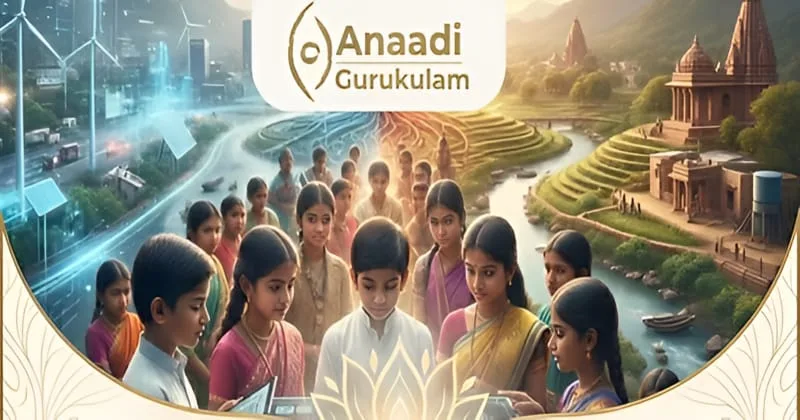
Coimbatore: Nestled in the outskirts of Coimbatore, Anaadi Dharma Gurukulam represents an emerging educational model that blends ancient Indian knowledge systems with contemporary academic disciplines.
Founded by two computer science professors and guided by a diverse group of acharyas from institutions such as IITs, IIMs, Roorkee, NID, and NIFT, the gurukulam seeks to reimagine education through a culturally rooted yet interdisciplinary framework.
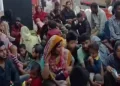
Spent couple of days at Anaadi Dharma Gurukulam near Coimbatore.
It was mesmerizing.
Vidyarthies were learning Vedic Maths, Sanskrit, English, Vedic Science 🧬 Vedic astronomy 🪐, Ayurveda and true indian history.
They were reading all text in Sanskrit and communicating the… pic.twitter.com/sBsHuwV6Rv
— Shantanu Gupta (@shantanug_) April 20, 2026
During a recent visit, the campus presented itself less like a conventional school and more like a self-contained learning ecosystem, where academics, practical skills, and daily living are tightly interwoven.
A Multilingual, Multi-Disciplinary Learning Environment
Students at the Gurukulam are introduced to a wide spectrum of subjects, including Vedic Mathematics, Sanskrit, English, Ayurveda, Vedic astronomy, and what is referred to as traditional Indian knowledge systems (IKS). Instruction often begins in Sanskrit, with students demonstrating the ability to read, interpret, and then communicate their understanding in multiple languages such as English, Hindi, Telugu, and Tamil. This multilingual fluency is not treated as a separate language curriculum but as a natural extension of learning classical texts and concepts.
Blending Ancient Sciences with Modern Context
One of the distinctive aspects of the gurukulam is its effort to present ancient knowledge systems in dialogue with modern scientific understanding. Students explore concepts in astronomy, mathematics, and environmental science through both traditional frameworks and contemporary interpretations.
For instance, sessions on Vedic astronomy are supplemented with discussions on modern astronomical instruments, while mathematical concepts are taught using both classical methods and modern problem-solving approaches.
Senior students reportedly engage in outreach activities, including teaching Indian Knowledge Systems in private schools and participating in academic conferences such as those held in Ujjain, focusing on traditional astronomical instruments.
Physical Disciplines and Traditional Practices
Physical education at the Gurukulam extends beyond conventional sports. Students practice yoga and Mallakhamb, a traditional Indian gymnastic discipline that combines strength, flexibility, and balance using poles and ropes. These activities are integrated into daily routines rather than being treated as extracurricular pursuits.
Sustainable Living and Rural Skills
A notable feature of the campus is its emphasis on sustainability and self-reliance. The gurukulam operates without LPG dependence, with students actively involved in managing cattle, preparing cow dung cakes, and exploring bio-energy systems such as gobar gas. This includes learning the technical aspects of gas generation and its practical applications, sometimes referred to as “cylinderification” of biogas systems.
Such practices are positioned not only as ecological habits but also as part of experiential learning in rural technology and sustainable living systems.
Cultural Expression Through Performance Arts
The Gurukulam also invests heavily in storytelling and cultural expression. Students create puppet shows based on Puranic narratives, which are then performed at literary festivals and cultural events across India.
These performances serve both as artistic training and as a medium for engaging contemporary audiences with mythological and philosophical themes.
Interdisciplinary Faculty and Institutional Background
One of the more unusual aspects of Anaadi Dharma Gurukulam is its leadership structure. It is reportedly founded by individuals with backgrounds in computer science, while its teaching ecosystem includes professionals and scholars from diverse institutions such as IITs, IIMs, Roorkee, NID, and NIFT. This blend of engineering, management, design, and traditional scholarship reflects the institution’s attempt to bridge technical education with cultural and philosophical studies.
A Hybrid Model of Education
Anaadi Dharma Gurukulam represents a hybrid educational experiment—one that integrates:
Classical Indian texts and languages
Modern academic disciplines
Physical and yogic training
Environmental and rural sustainability practices
Arts and performance traditions
Experiential, community-based learning
While such models remain relatively niche within India’s broader education system, they reflect a growing interest in alternative pedagogies that emphasise cultural continuity alongside academic and scientific development.
The Gurukulam near Coimbatore offers a distinctive vision of education where learning is not confined to classrooms or textbooks but extends into language, labour, performance, and daily living. Whether viewed as an educational innovation or a revivalist experiment, it clearly reflects a broader conversation in India about how traditional knowledge systems can coexist with modern disciplines in structured learning environments.