New Delhi/Washington: India and the United States are engaged in constructive and forward-moving discussions aimed at securing a balanced and mutually beneficial trade agreement, the government said on Thursday, underlining New Delhi’s calibrated and interest-driven approach to negotiations. The remarks followed a three-day visit to Washington by an Indian trade delegation led by senior commerce ministry official Darpan Jain, which held detailed consultations with US counterparts.
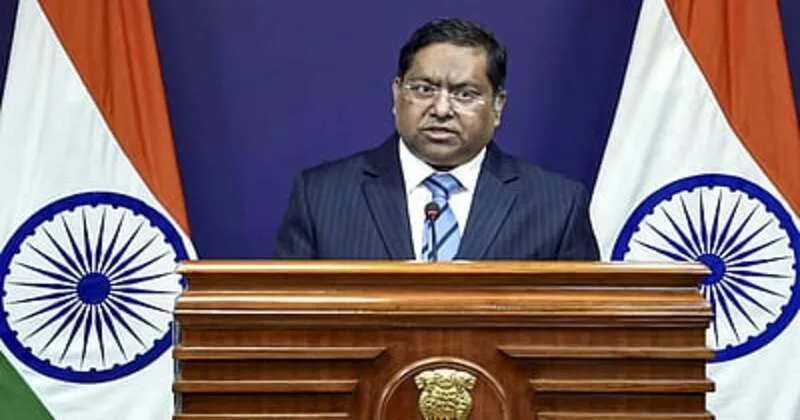
“These engagements are ongoing and constructive,” external affairs ministry spokesperson Randhir Jaiswal said during the weekly media briefing. “Both sides are working towards a balanced, mutually beneficial and forward-looking trade agreement, taking into account each other’s concerns and priorities, and to achieve a trade target of $500 billion by 2030,” he added. That target would more than double the current bilateral goods and services trade, which stood at approximately $212 billion in 2024, reflecting the scale of ambition guiding India’s trade strategy.
Advancing strategic trade goals
The ongoing negotiations are part of a broader effort by New Delhi and Washington to finalise a trade pact. Earlier this week, Trade Minister Piyush Goyal stated that both sides had nearly finalised the first tranche of a bilateral agreement. Discussions are now focused on resolving remaining issues, including establishing a mechanism that would ensure preferential market access for Indian goods in the US relative to competing nations, an area of key importance for India.
While no definitive outcome emerged from the latest round, officials confirmed that engagement will continue. A government source noted that the Indian delegation was expected to return to New Delhi by early Friday.
Efforts to shape an interim trade arrangement, including a proposal to reduce US tariffs on Indian goods to around 18 per cent, have been complicated by uncertainty following a ruling by the U.S. Supreme Court. However, negotiations remain active and focused.
Some trade analysts have raised concerns following President Donald Trump’s announcement of a temporary 10 per cent import duty on goods from all countries. Despite these challenges, India is carefully aligning its approach with anticipated US changes to Section 301 tariffs expected in June, which could significantly influence duties across sectors and reshape market access dynamics in a way that supports India’s long-term trade interests.