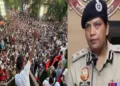
New Delhi: What was projected as a student-led protest over education-related concerns in Delhi rapidly descended into violence, leaving scores of police personnel injured, public property damaged, and the national capital on edge. While organisers portrayed the agitation as a movement of students and common citizens, several political observers and reports have alleged that the protest was driven by organised political groups and activist networks rather than a spontaneous public uprising. These allegations remain contested, and investigations into the incident are ongoing.
Don't fall for any left propaganda
Common public are not part of this protestFollowing groups are there in disguise of common public
▪️Samajwadi Party goons
▪️Left Student unions of JNU, DU, Jamia
▪️AAP volunteers
▪️Azad Samaj Party volunteers
▪️Communist Party members… pic.twitter.com/tZUFrqj41q— STAR Boy TARUN (@Starboy2079) July 20, 2026
From Student Protest to Street Violence
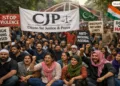
On July 19, central Delhi witnessed one of the most intense confrontations between protesters and security forces in recent months. The demonstration, organised under the banner of the Cockroach Janata Party (CJP), was initially presented as a march highlighting issues affecting students and youth, including concerns related to examinations and education policy.
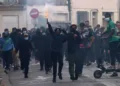
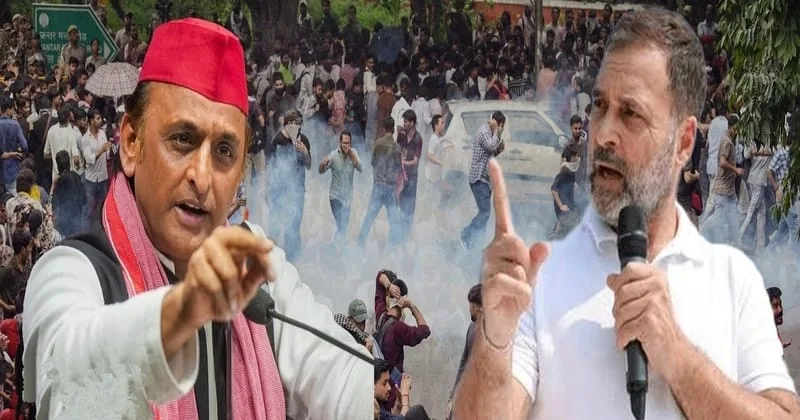
However, as protesters attempted to march towards Parliament during an active session, the situation quickly escalated. Police erected multiple barricades to prevent the crowd from entering high-security zones, but sections of the protesters allegedly attempted to force their way through. Visuals circulating across social media showed broken barricades, stone pelting, damaged buses, shattered police vehicles and clashes between demonstrators and Delhi Police personnel.
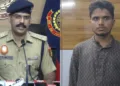
According to Delhi Police, more than 100 police personnel sustained injuries during the violence, while several government vehicles and public assets were damaged.
Politically Driven Mobilisation
Although the protest was projected as a citizens’ movement, the composition of the crowd suggested a far more organised political mobilisation. They contend that a significant number of participants were not ordinary students or unaffiliated citizens but members or supporters of opposition political organisations and activist groups.
These claims have been widely circulated by political commentators and on social media, though they have not been independently verified in full.
Groups alleged by these commentators to have participated include:
* Samajwadi Party (SP) workers, accused of strengthening the crowd’s numerical presence.
* Left-affiliated student organisations from institutions such as JNU, Delhi University and Jamia Millia Islamia, alleged to have played a leading role in mobilisation and slogan campaigns.
* Aam Aadmi Party (AAP) volunteers, alleged to have coordinated logistics and mobilisation.
* Azad Samaj Party workers, alleged to have participated in frontline demonstrations.
* Members associated with Left political organisations, alleged to have shaped the ideological messaging during the protest.
Attempt to Reach Parliament Raises Security Concerns
Security agencies had designated the Parliament area as a high-security zone due to the ongoing Monsoon Session. Despite repeated announcements by police, sections of the protesters allegedly attempted to breach multiple barricades. Police used layered security arrangements, including barricades, water cannons and controlled crowd management measures, to prevent the march from advancing further.
Officials stated that the confrontation intensified after protesters allegedly began throwing stones and other objects at police personnel deployed on duty. The resulting clashes disrupted traffic across several parts of New Delhi and affected normal movement in nearby areas for several hours.
The violence also resulted in damage to public infrastructure. Several buses, police vehicles, barricades and other government assets suffered damage during the confrontation. Public property funded by taxpayers became collateral in the clashes, prompting renewed debate over accountability during protests. Authorities have begun assessing the financial losses caused by the vandalism and are expected to recover damages from those found responsible, subject to legal proceedings.
Investigation into Organisation and Coordination
Following the violence, investigative agencies have begun examining several aspects of the protest, including:
* The planning and coordination of the march.
* Communication channels used for mobilisation.
* Funding and logistical arrangements.
* The role of various organisations and individuals in organising the event.
* Whether any pre-planned strategy existed to provoke confrontation with security forces.
Authorities are also reviewing video footage, social media posts, CCTV recordings and digital communications to identify individuals allegedly involved in violence and damage to public property.
The Delhi protest has become more than a law-and-order issue; it has evolved into a political flashpoint, with competing narratives surrounding its purpose, participants and organisation. While critics describe it as a politically orchestrated mobilisation disguised as a student movement, supporters reject those characterisations and maintain that it represented genuine public grievances.