Love Jihad & TCS Nashik Case: A wake-up call for Hindu society
July 21, 2026
  • Read Ecopy
  • Circulation
  • Advertise
  • Careers
  • About Us
  • Contact Us
Android AppiPhone AppArattai
Organiser
  • ‌
  • Bharat
    • Assam
    • Bihar
    • Chhattisgarh
    • Jharkhand
    • Maharashtra
    • View All States
  • World
    • Asia
    • Europe
    • North America
    • South America
    • Africa
    • Australia
  • Editorial
  • International
  • Opinion
  • RSS @ 100
  • More
    • Op Sindoor
    • Analysis
    • Sports
    • Defence
    • Politics
    • Business
    • Economy
    • Culture
    • Special Report
    • Sci & Tech
    • Entertainment
    • G20
    • Azadi Ka Amrit Mahotsav
    • Vocal4Local
    • Web Stories
    • Education
    • Employment
    • Books
    • Interviews
    • Travel
    • Law
    • Health
    • Obituary
  • Subscribe
    • Subscribe Print Edition
    • Subscribe Ecopy
    • Read Ecopy
  • ‌
  • Bharat
    • Assam
    • Bihar
    • Chhattisgarh
    • Jharkhand
    • Maharashtra
    • View All States
  • World
    • Asia
    • Europe
    • North America
    • South America
    • Africa
    • Australia
  • Editorial
  • International
  • Opinion
  • RSS @ 100
  • More
    • Op Sindoor
    • Analysis
    • Sports
    • Defence
    • Politics
    • Business
    • Economy
    • Culture
    • Special Report
    • Sci & Tech
    • Entertainment
    • G20
    • Azadi Ka Amrit Mahotsav
    • Vocal4Local
    • Web Stories
    • Education
    • Employment
    • Books
    • Interviews
    • Travel
    • Law
    • Health
    • Obituary
  • Subscribe
    • Subscribe Print Edition
    • Subscribe Ecopy
    • Read Ecopy
Organiser
  • Home
  • Bharat
  • World
  • Operation Sindoor
  • Editorial
  • Analysis
  • Opinion
  • Culture
  • Defence
  • International Edition
  • RSS @ 100
  • Magazine
  • Read Ecopy
Home Bharat

Love Jihad and the TCS Nashik Case: A civilizational wake-up call for the Hindu society

The TCS Nashik case must be understood as part of a larger awakening within Hindu society. It serves as a reminder that material progress alone is not enough. Corporate careers, English education, urban lifestyles and social status by themselves cannot shield any community from organised ideological influences. Economic advancement without cultural awareness often leaves a society prosperous yet vulnerable. Civilizational continuity requires not only success, but also consciousness, confidence and the will to preserve one’s identity

Diganta ChakrabortyDiganta Chakraborty
Apr 19, 2026, 04:00 pm IST
in Bharat, Analysis, Maharashtra
Follow on Google News
FacebookTwitterWhatsAppTelegramEmail

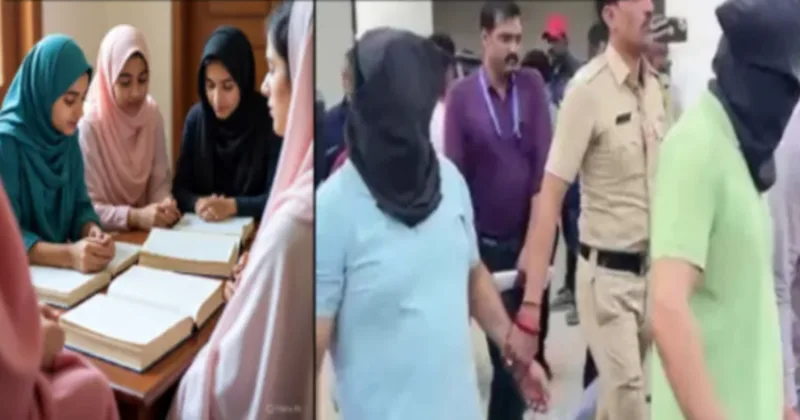
The recent controversy surrounding the Tata Consultancy Services unit in Nashik has once again ignited a debate that many in India have tried to avoid for years. Allegations involving harassment, abuse of authority and pressure linked to religious identity have raised serious concerns. Regardless of the final legal outcome, the case has already exposed an uncomfortable truth: some issues are amplified instantly, while others are downplayed when they do not fit a preferred ideological narrative.

For years, whenever concerns were raised about deceptive relationships, coercive conversion or identity-based targeting of Hindu women, many commentators rushed to dismiss such concerns as fiction, hysteria or political propaganda. Yet, when repeated incidents emerge from different parts of the country, society must ask whether denial has become more ideological than factual.

The term “Love Jihad” remains politically debated, but the larger concern cannot be ignored: can emotional relationships be misused as tools for religious conversion, control or identity-based manipulation? If the answer is even occasionally yes, dismissing every case outright becomes intellectually dishonest. A deeper contradiction also deserves attention. Many voices repeatedly say all religions are equal and all paths lead to the same truth. If that is sincerely believed, then why is there such persistent pressure in some circles to convert others? Why must someone abandon their ancestral tradition to validate another faith? If spiritual truth is universal, it should inspire through character, ethics and wisdom—not through deception, dependency or emotional pressure.

Rabindranath Tagore, in his Bengali essay Hindu Mussalman, once wrote: “There are two religious communities in the world whose opposition to all other religions is extremely intense—these are Christianity and Islam. They are not satisfied with merely practicing their own religion; they seek to destroy other religions. Therefore, apart from accepting their religion, there is no other way to come into harmony with them”.(Translated by author from original Bengali Essay) Although he wrote this many years ago, these examples clearly show that nothing has changed.

The Nashik case is significant because it did not arise in a remote or lawless environment. It surfaced in a modern corporate setting associated with professionalism and institutional safeguards. If such allegations can emerge there, then it becomes harder to dismiss concerns elsewhere as mere imagination. Another issue exposed by such incidents is the global double standard in moral outrage. Around the world, whenever minorities from certain communities face discrimination, it becomes an international headline.

Governments comment, editorials are written, think tanks issue reports and social media campaigns erupt. But when Hindus face targeted violence, forced conversion, temple desecration or demographic intimidation in different regions, the same urgency often disappears. This asymmetry is not always openly stated, but it is visible. Some forms of suffering are treated as universal human rights concerns; others are reduced to local disputes or ignored entirely. Such selective empathy damages the credibility of human rights discourse itself.

Within India too, sections of ideological activism often frame Hindu concerns as inherently suspect. If Hindus speak about civilizational insecurity, cultural erosion or conversion pressure, they are labelled majoritarian. If any other group raises identity concerns, it is called resistance or justice. This imbalance has created resentment among ordinary citizens who increasingly feel that equal standards are applied unequally. This debate is not merely political—it is civilizational.

Hindu Dharma historically did not depend on centralized missionary expansion. It spread through philosophy, pilgrimage, knowledge systems, trade and culture. It absorbed diversity rather than erasing it. It did not insist that salvation required abandoning one’s inherited ancestors, language or customs. That is why many Hindus view aggressive conversion efforts not as theological competition, but as an assault on continuity, memory and identity. When conversion is tied to romance, inducement, fear or deception, the concern becomes even sharper.

Also Read: Hormuz reopens after ceasefire deal, but tight controls and geopolitical uncertainty persist

The TCS Nashik case must be understood as part of a larger awakening within Hindu society. It serves as a reminder that material progress alone is not enough. Corporate careers, English education, urban lifestyles and social status by themselves cannot shield any community from organised ideological influences. Economic advancement without cultural awareness often leaves a society prosperous yet vulnerable. Civilizational continuity requires not only success, but also consciousness, confidence and the will to preserve one’s identity. The TCS Nashik controversy has thus grown beyond the scope of a mere local scandal.

It has exposed the manner in which selective outrage and selective silence continue to shape public discourse. It has shown how certain narratives are defended even when emerging facts raise uncomfortable questions. More importantly, it has reminded many Hindus that if they do not articulate their concerns with clarity and conviction, others will continue to interpret, minimise or dismiss those concerns on their behalf. Truth does not cease to exist because it is politically inconvenient. Nor do legitimate concerns become expressions of hatred simply because they challenge dominant narratives. A mature democracy must possess the courage to confront both prejudice and denial alike—without fear, without favour and without double standards.

Topics: JIhadHindu societyHindu civilisationControversyTCS Nashik case
ShareTweetSendShareSend
✮ Subscribe Organiser YouTube Channel. ✮
✮ Join Organiser's WhatsApp channel for Nationalist views beyond the news. ✮
Previous News

Nashik TCS Corporate Jihad: How media narratives are downplaying multiple FIRs and serious allegations?

Next News

The Myth of Neutrality: Ravish Kumar’s selective outrage and the erosion of journalistic credibility

Related News

Guruji MS Golwalkar: The lessons for social harmony and united Hindu society

Rath Yatra at Puri

Jagannath Rath Yatra: How Bharat’s tribal heritage shaped one of Hinduism’s greatest civilisational traditions

Book Review | Swayamsevak: Insightful accounts to decipher RSS

Rabindranath Tagore

Rabindranath Tagore and the revival of Hindu civilisational pride

Odisha: RSS Sangh Shiksha Varg concludes in Sambalpur; Dr. Mahapatra cites century-long effort to unite hindu society

Imtiyaz Jaleel and Nida Khan named in the SIT Chargesheet in Nashik TCS Corporate Jihad probe

AIMIM leader Imtiaz Jaleel under scanner in TCS Nashik Corporate Jihad case after name surfaces in SIT chargesheet

Load More

Latest News

Karnataka HC pulls up Congress govt for chasing tweets instead of criminals, stays FIR probe

Viral social media posts falsely claimed that India's first hydrogen-powered train suffered a technical failure

Fact Check: Routine servicing of India’s Hydrogen train misconstrued as indigenous tech failure in viral video

ABVP demands immediate INSPIRE SHE scholarship release, flags delay affecting thousands of science students

A CJP protest in Delhi turned violent, injuring police personnel, damaging government property, and triggering an investigation

CJP Protest in Delhi Turns Violent: Police injured, government property damaged; Investigation underway

Britain's market opens wider as India's textile sector gains a long-awaited competitive edge

India-UK CETA: Duty-Free access set to double textile exports, adding $1.6 billion, challenging China and Bangladesh

Representative Image

Pune Horror: 4 Muslim men Farhan, Fazal, Rehan & Sahil arrested for year long rape and blackmail of college student

Congress supremo Rahul Gandhi

If Rahul Gandhi backed Sonam Wangchuk, why did he never visit the CJP protest at Jantar Mantar?

Senior IPS officer G S Rao

Tripura govt appoints G S Rao as in-charge DGP after Anurag Dhankar found dead at police headquarters

Dipke was at NCP-SP leader Anish Gawande's house when Delhi Police detained him

Who is Anish Gawande? NCP (SP) spokesperson at whose house CJP founder Abhijeet Dipke was staying during Delhi protest

When Indira Gandhi government killed hundreds of Sadhus and Gau rakshaks

Do you know, Indira Govt killed thousands of sadhus & Gaurakshaks? Revisiting Jantar Mantar to Parliament march of 1966

Load More
  • Privacy
  • Terms
  • Cookie Policy
  • Refund and Cancellation
  • Delivery and Shipping

© Bharat Prakashan (Delhi) Limited.
Tech-enabled by Ananthapuri Technologies

  • Home
  • Search Organiser
  • Bharat
    • Assam
    • Bihar
    • Chhattisgarh
    • Jharkhand
    • Maharashtra
    • View All States
  • World
    • Asia
    • Africa
    • North America
    • South America
    • Europe
    • Australia
  • Editorial
  • Operation Sindoor
  • Opinion
  • Analysis
  • Defence
  • Culture
  • Sports
  • Business
  • RSS @ 100
  • Entertainment
  • More ..
    • Sci & Tech
    • Vocal4Local
    • Special Report
    • Education
    • Employment
    • Books
    • Interviews
    • Travel
    • Health
    • Politics
    • Law
    • Economy
    • Obituary
  • Subscribe Magazine
  • Read Ecopy
  • Advertise
  • Circulation
  • Careers
  • About Us
  • Contact Us
  • Policies & Terms
    • Privacy Policy
    • Cookie Policy
    • Refund and Cancellation
    • Terms of Use

© Bharat Prakashan (Delhi) Limited.
Tech-enabled by Ananthapuri Technologies