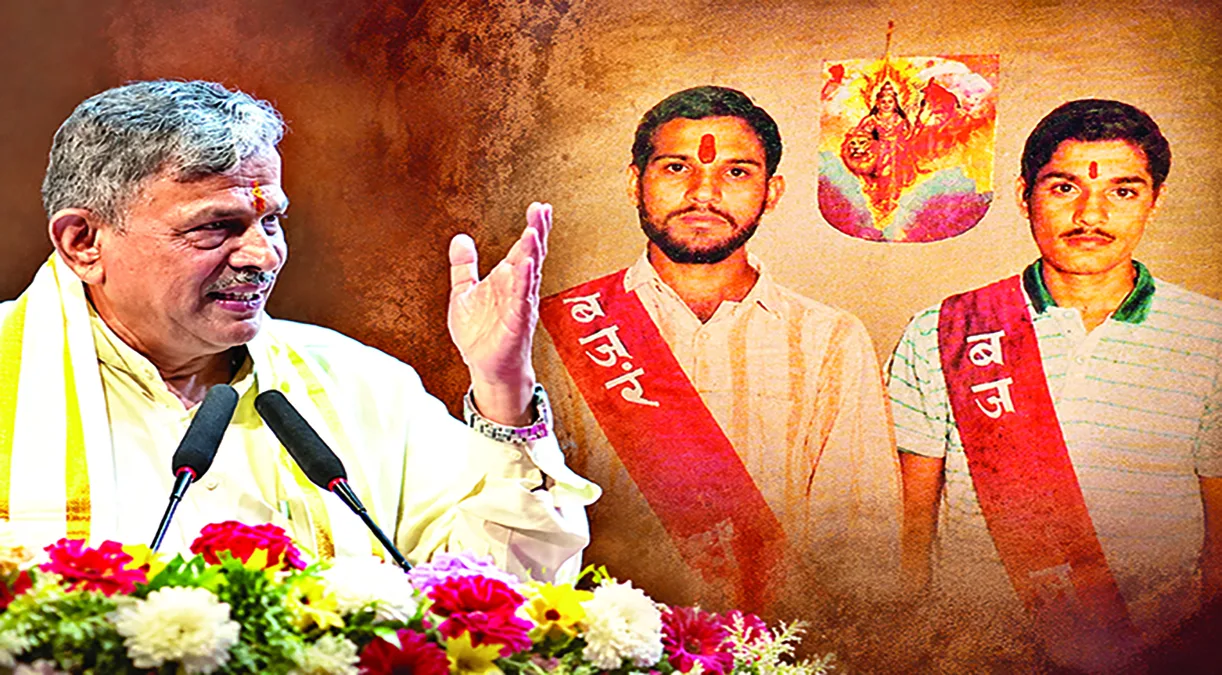
“The sacrifice of Ram and Sharad Kothari continues to inspire people to work for the nation and society, while the social service initiatives undertaken in their memory are also worthy of appreciation. Paying tribute to their sacrifice should inspire society to undertake constructive and developmental work. Meeting people engaged in social work, encouraging them, felicitating them and expressing gratitude for their contribution to society is also a responsibility,” said RSS Sarkaryavah Dattatreya Hosabale while addressing the Ram-Sharad Kothari Pratibha Samman 2026, organised by the Ram-Sharad Kothari Smriti Sangha at the Alipore National Library Auditorium in Kolkata on September 26.
Hosabale appreciated the work being undertaken by the Ram-Sharad Kothari Smriti Sangha in this direction. He recalled that Ram and Sharad Kothari had begun their association with the Rashtriya Swayamsevak Sangh as Swayamsevaks in Kolkata during their student years. Their personalities, he noted, were shaped by the sanskars imparted by their parents, Hiralal ji and Sumitra Devi, as well as the values of the Sangh.
The brothers later resolved to participate in the Ram Janmabhoomi movement. Recalling October 30, 1990, Hosabale stated that Ram and Sharad Kothari climbed the dome of the structure in Ayodhya and hoisted the saffron flag. Two days later, they were killed in Ayodhya while pursuing the cause to which they had dedicated themselves. Their last rites were performed on the banks of the Saryu, he recalled, describing their sacrifice at a young age as an expression of courage, patriotism and devotion to Dharma.
Adhikari Highlights Security, Sanskriti and Development
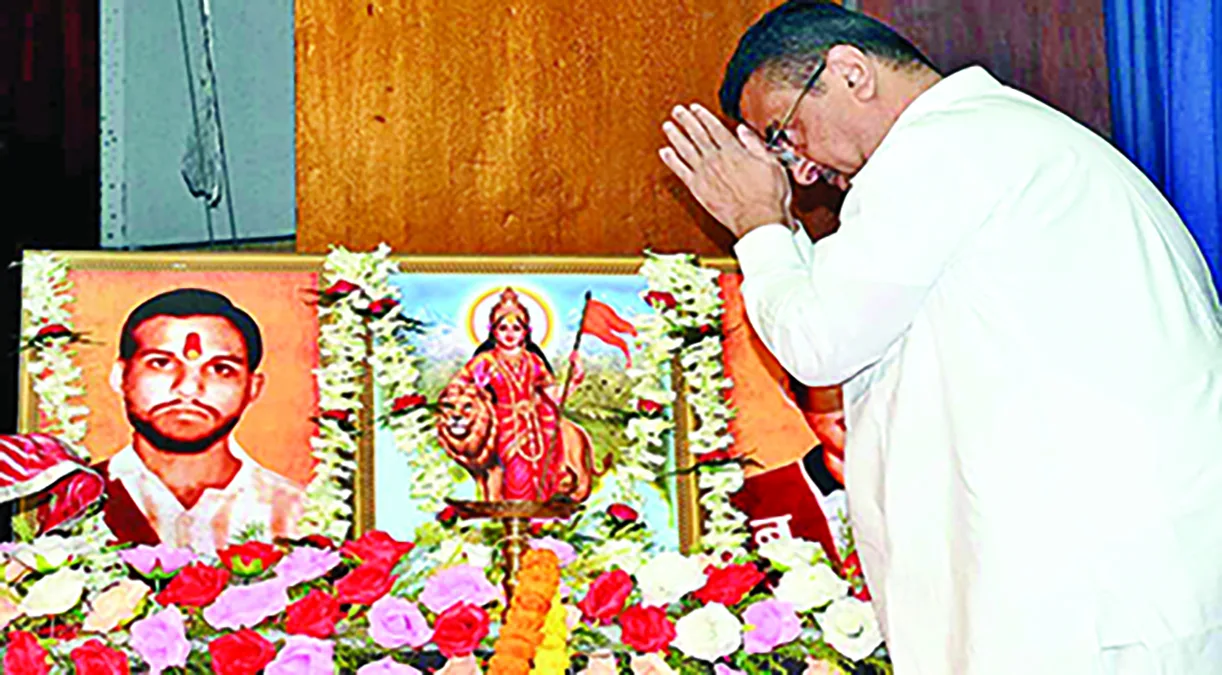
Chief Minister Suvendu Adhikari, who was the chief guest, highlighted measures undertaken by his Government and spoke about national security, sanskritik traditions, cow protection, the Uniform Civil Code and development.
“After assuming power, we have prioritised providing land to the BSF along our borders. We have implemented the Bharatiya Nyaya Sanhita and enacted stringent laws to protect our mothers, sisters and daughters. We have launched a campaign against anti-national forces and initiated the process of sending illegal infiltrators back, while also implementing all relevant Central Government laws. We have made Vande Mataram mandatory in all schools, including registered madrasas,” Adhikari said.
Describing Bengal’s sanskritik character, Adhikari said, “Bengal is not only the cultural capital of the nation but also a devotional and spiritual land.” Remembering the sacrifice of Ram and Sharad Kothari for Sanatan Dharma, Adhikari said, “This time, the public saved West Bengal; otherwise, we wouldn’t even know what our condition would have been. I would have had to send my elderly parents to Odisha as the situation would not have been conducive for them to stay here.”
Adhikari recalled that he was a college student when the Kothari brothers were martyred in Ayodhya during the Ram Mandir movement. “Lal Krishna Advani led the Rath Yatra, but it did not take place in Bengal,” he said. The Vishva Hindu Parishad held a separate Rath Yatra in his hometown, and he worked as a sevak under former MLA Satyabrata Maiti, who was the VHP president for that region.
The Chief Minister also said Durga Puja would be celebrated with attention to traditional practices this year. “I have urged everyone that Puja inaugurations will not happen during ‘Pitri Paksha’, but during ‘Matri Paksha’, honouring our ancient traditions,” he said. “Occasions like Durga Puja should retain our Sanatani values, rituals and tradition… No puja will be inaugurated on ‘Pitri Paksha’, as was practised during the TMC rule,” he said.
“Ram and Sharad are not physically among us, but the resolve they took and the purpose for which they sacrificed their lives continue to inspire all of us,” Hosabale said. He observed that the Kothari brothers had become an enduring part of the tradition of those who dedicated themselves to the nation and society and made the ultimate sacrifice.
Collective Dedication
Hosabale also recalled examples from Bharat’s history of brothers dedicating themselves to a common national cause. Referring to the Chapekar brothers — Damodar, Balkrishna and Vasudev — he recalled their role in the struggle against British rule.
He also mentioned the Savarkar brothers and the four sons of Guru Gobind Singh ji, noting that Bharat’s history contains examples of brothers who displayed extraordinary courage and dedication in the service of the nation and Dharma.
Such lives, he said, demonstrate a tradition of collective dedication to the nation and society. While freedom fighters and revolutionaries showed how to sacrifice one’s life for the nation, society must also learn to dedicate its life to the nation through continuous service and constructive work.
Recalling Dr Keshav Baliram Hedgewar’s emphasis on dedicated national service, Hosabale stressed that remembrance of those who sacrificed their lives should not remain confined to commemorative programmes. Their lives should inspire people to dedicate themselves to the service of society and the nation.
“People Are Freely Expressing Their Thoughts”
Speaking about Bengal, Hosabale recalled his visits to Bangabhoomi and Kolkata over several decades. “In the past few decades, I have paid visits to Bangabhoomi and Kolkata several times, but this is the first time people of Bengal are heaving a sigh of relief. They are freely expressing their thoughts,” he said.
Observing that some work had already begun and more remained to be done, Hosabale urged people to have patience. He said it was not realistic to expect all Government initiatives to be completed within the first year. He remarked that a Government that understands the sentiments and aspirations of society, and a society that understands the intentions of the Government and supports constructive work, can together contribute to the development of the State. “When the Government and society move towards the same national goal and towards the development of society, that nation, society and State will certainly develop,” Hosabale said.
Martyrdom of Kothari brothers became an enduring chapter of the movement, reflecting their devotion to Bhagwan Sri Ram and their commitment to the aspirations of Hindu society
He added that when the aspirations of society and the objectives of the Government move in the same direction, the process of development gains greater strength. He urged people to give sufficient time to the Government to fulfil its commitments, while stating that society has every right to question the Government if promised work remains incomplete after a reasonable period.
Bengal’s Historic Contribution
Recalling Bengal’s historic contribution to the nation’s intellectual, cultural and national life, Hosabale referred to the expression, “What Bengal thinks today, Bharat thinks tomorrow.” He expressed the desire to see such an era return, with Bengal once again making a significant contribution to the country’s progress. He also linked the remembrance of the Kothari brothers with this responsibility, stating that honouring their sacrifice should go beyond remembering their martyrdom and should inspire individuals and organisations to work for the welfare of society and the nation.
Ram and Sharad Kothari, known as the Kothari brothers, were kar sevaks from Kolkata who participated in the Ram Janmabhoomi movement in Ayodhya in 1990. On November 2, they were among the kar sevaks killed in police firing. Their Martyrdom of Kothari brothers became an enduring chapter of the movement, reflecting their devotion to Bhagwan Sri Ram and their commitment to the aspirations of Hindu society.
The annual event is organised in their memory to honour individuals and organisations making notable contributions to social development. At the 2026 event, Ishwarchandra Hembram, Headmaster of Vidyasagar Shishu Shiksha Niketan in Purulia; Ramesh Chandra Mishra, an environmental activist from Odisha; and Dhyan Foundation from Jharkhand were honoured for their contributions to society.