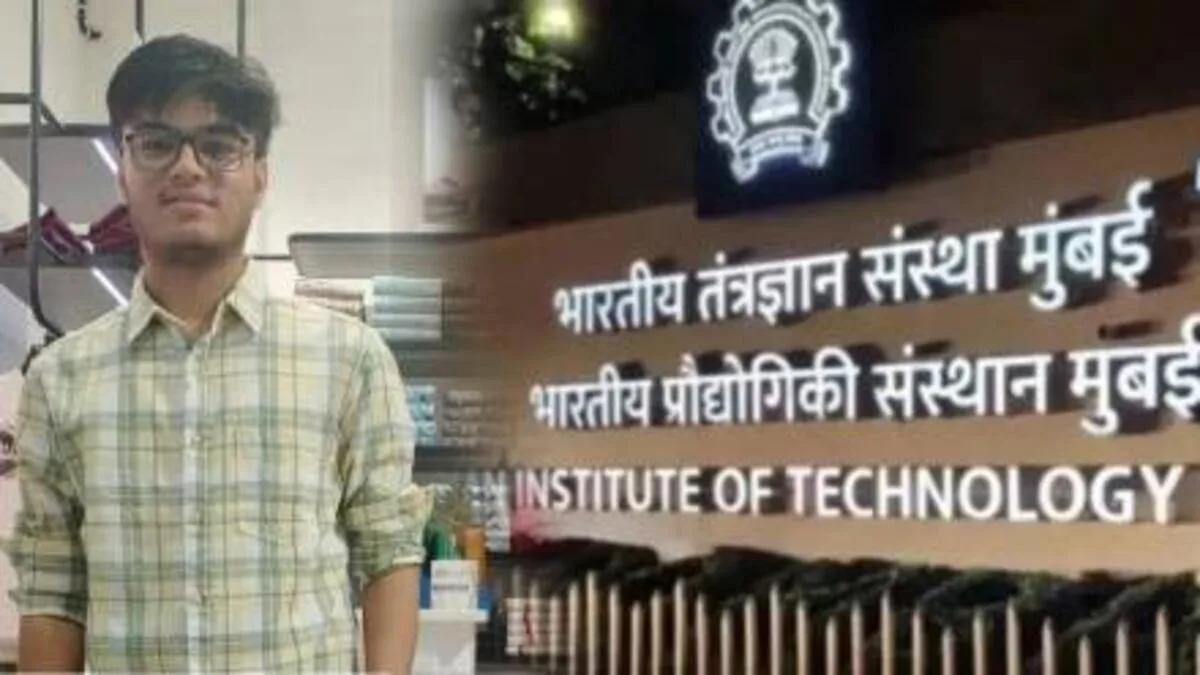
The death of IIT Bombay student Sahil Wakode on September 18, 2026, has triggered a deeply contested debate involving alleged caste discrimination, institutional accountability, student activism and the role of external advocacy networks. While the student’s family has alleged caste-based harassment, a parallel report has emerged over the conduct of individuals mobilising around the incident.
According to media reports, the Legal Rights Observatory (LRO) submitted a complaint to Mumbai Police against Navneet and Senior Adv. Mihir Desai, IIT Bombay Prof. Suryakant Waghmore, students Huma Namal and Amar Kant Thakur and others. The complaint reportedly seeks investigation under provisions of the UAPA, National Security Act and Maharashtra Special Public Security Act, 2025.
The allegations include spreading misinformation, provocative social-media activity and attempts to intensify caste-based tensions.
The question of foreign citizenship and advocacy
One of the most discussed claims concerns Navneet, reportedly an Overseas Citizen of India (OCI) cardholder and German citizen, who is to be associated with Senior Adv. Mihir Desai’s chamber. The distinction between Indian citizenship and OCI status is legally significant. OCI status does not confer Indian citizenship or voting rights. However, foreign citizenship or OCI status, by itself, does not establish unlawful conduct or disqualify an individual from participating in lawful advocacy.
The relevant question is whether any individual, irrespective of nationality, engaged in conduct prohibited by the Indian law. Allegations have also circulated regarding Navneet’s presence at the hospital where Sahil’s parents and relatives were present and claims that she encouraged the family to pursue proceedings under the Scheduled Castes and Scheduled Tribes (Prevention of Atrocities) Act against Professor Suryanarayana Doolla.
If substantiated, the circumstances of such interactions deserve examination.
The HRLN-SLIC and funding allegations
Senior Adv. Mihir Desai is associated with the Human Rights Law Network (HRLN), including its Social Legal Information Centre (SLIC) framework. Questions have been raised regarding alleged financial support from German Catholic-linked organisations, including Misereor. Any claim concerning the nature, extent and purpose of such funding should be assessed through audited accounts, donor disclosures and official records.
Similarly, reports that lawyers associated with human-rights organisations represented accused persons in the 2020 Delhi riots must be understood within the framework of professional legal representation. Transparency concerning institutional funding, foreign contributions and the activities of organisations engaged in politically sensitive matters is a legitimate subject of public scrutiny.
The reported Marxist intellectual background of Mihir Desai’s father has also been mentioned in public discussions.
The danger of weaponising a tragedy
Sahil Wakode’s death must not become a convenient instrument for competing ideological narratives. His parents have alleged caste-based harassment and police registered an FIR naming Prof. Doolla under provisions relating to abetment of suicide and the SC/ST Act. IIT Bombay has also issued an apology for its earlier communication concerning the circumstances of his death.
The allegations against the professor remain subject to investigation. Likewise, allegations against activists, lawyers and students must receive the same evidentiary scrutiny. Two principles must coexist: caste discrimination must never be dismissed merely because it is politically inconvenient and criminal accusations must never be treated as proven merely because they advance a particular narrative.
From social media outrage to legal accountability
The controversy raises important questions about the circulation of unverified information, the possibility of coordinated online mobilisation, the role of external advocacy organisations and the responsibility of influential legal professionals.
If digital evidence establishes deliberate incitement, fabricated claims or unlawful conspiracy, the authorities must proceed under applicable law. A student’s death deserves truth, not political appropriation. Caste justice deserves credibility, not manipulation. And national security deserves evidence-based enforcement, not allegations substituting for proof.
The rule of law must remain the common ground on which every competing narrative is examined!