Bharat is progressing rapidly, and this progress is visible in many dimensions. Bharat’s progress is necessary not only for Bharat but also for humanity across the world. Today, Bharat’s achievements can be seen in many fields across the world. Bharatiya scientists have taken the country’s name forward in science, space and other fields. Along with this, in many parts of the world, a feeling of curiosity, respect, reverence and pride towards Bharat is also visible.
The Rashtriya Swayamsevak Sangh is working with the goal of Bharat’s supreme glory. This journey does not end with a single achievement. The work of organising society and building the character of individuals is a continuous process.
One thing is clearly visible in Bharat’s nearly 5,000-year civilisational journey: no matter how big the crisis, Bharat has overcome it every time and moved forward. Bharat faced crises and struggles in different periods, but the vitality of society did not end. There have been many civilisations and nations in the world that were once powerful, but today they are remembered in history, or their remains are seen in museums. In contrast, Bharat still stands today as a living society.
Bharat is an indestructible and deathless nation. The real strength of a society does not lie in whether problems arise before it or not. What is important is how much capacity exists within society to stand before problems and face them.
Bharat’s history witnessed invasions, struggles, social weakening and many kinds of challenges. Despite this, society maintained its existence and cultural continuity. During the long period of subjugation, forgetfulness regarding its own identity and strength arose within Bharatiya society. The awareness that should have existed about society’s inner strength, national feeling and its responsibilities became weak.
Mutual hatred, conflicts and social evils also affected the unity of society. When society forgets its history, culture and collective responsibility, its strength becomes weak.
It was in this context that Dr Keshav Baliram Hedgewar thought about the establishment of the Rashtriya Swayamsevak Sangh. Bharat had witnessed periods in history when it had reached the peak of progress in both material and spiritual fields and had influence in the world. Why, then, did a situation arise in which society became subjugated? One reason was that society had forgotten its national feeling, its role and its collective responsibility. To bring society out of this forgetfulness, work was begun by placing individual development and social organisation at the centre.
The episode of Hanuman and Jambavan from the Ramayan illustrates this truth. Sometimes an individual forgets his own strength. When the question of crossing the ocean arose in the search for Mata Sita, different members of the vanara sena were describing their abilities, but no one had the courage to make the decisive leap.
Dr Hedgewar, while establishing the Sangh, similarly attempted to awaken the inherent strength of society. When society recognises its strength, even tasks that appear impossible can become possible and goals that appear unattainable can become attainable
At that time, Jambavan Ji reminded Hanuman Ji of his strength. The power already existed within Hanuman Ji; only the awakening of that power was needed. Recalling the story of Hanuman Ji jumping towards the Sun in his childhood, thinking it to be a fruit, Jambavan Ji made him aware of his capability, after which Hanuman Ji crossed the ocean.
Hindu society too often forgets its strength and capability. At such times, some great person, some thought or some organisation from within society reminds it of its strength. Dr Hedgewar, while establishing the Sangh, similarly attempted to awaken the inherent strength of society. When society recognises its strength, even tasks that appear impossible can become possible and goals that appear unattainable can become attainable.
Character Builds the Nation
Bharat’s identity is not defined only by its geography. It is not merely a piece of land or a system of governance. It is a civilisation that has not limited life merely to material comforts and consumption. This is the land of Ram, Buddha and Mahavir. This means that it is a land of character and conduct.
Bharatiya thought has given great importance to the building of an individual’s character. Therefore, through the Sangh shakha, efforts are made to build the character of individuals and awaken the spirit of organisation in society. A shakha is not merely a place for physical exercise. There, an individual learns to move beyond himself and think about society and the nation.
Every individual should think that he is a citizen of this nation and therefore he too has a responsibility. Every day, one should think about what one can do in the national interest for one’s village, neighbourhood, workplace and society. Patriotism is not a feeling that is expressed only on January 26, August 15 or on any particular occasion. Patriotism means that a sense of responsibility towards the nation remains in an individual’s life 24 hours a day.
Performing one’s work honestly, giving time to society, helping those in need, improving the environment around oneself and taking decisions keeping the national interest in mind are also part of civic responsibility.
Every citizen has a role in Bharat’s journey of resurgence. Bharat must be understood not merely as a geographical entity but as a living civilisation and society. A teacher can contribute to nation-building by giving good values to students, a farmer through his labour, a scientist through his research, a soldier through his service, a trader by conducting business honestly and an ordinary citizen by fulfilling his responsibility towards the society around him.
Responsibility towards the nation cannot be separated from the ordinary activities of life. The manner in which an individual behaves in his daily life also influences the environment of society.
Service Is Collective Responsibility
During the COVID–19 pandemic, Swayamsevaks and society together carried out numerous service activities. During that difficult period, people from different sections of society came together and participated in service activities according to the need. Patriotism or service is not the responsibility of Swayamsevaks alone. Every person in society should come forward during a crisis. The Sangh’s effort is to awaken this collective strength of society. The relief work carried out by Sewa Bharati Swayamsevaks during the floods in Assam is another example. Swayamsevaks were engaged in relief and assistance work in flood-affected areas, and people from different sections of society also came forward to help affected families. The spirit of service cannot be limited to any one organisation. The entire society standing together during a crisis is the sign of a healthy social order.
During the past year, through small and large programmes across the country, thought was given to what positive activities could be undertaken together with society. From this thinking, the idea of Panch Parivartan was placed before society. In Panch Parivartan, social harmony, civic duties, self-awareness, environmental protection and family awareness were given prominence. These five subjects are connected with the life of society and can prepare the direction for positive change in society.
The example of Mahamana Madan Mohan Malaviya also reminds us that the responsibility for the development of a village and settlement cannot rest only with the government and administration. Every person living there also has a role. If there is a deficiency in education, cleanliness, health or any other field in a village, society should also make efforts according to its capacity instead of merely expecting the government to act. This feeling of collective responsibility can make a village and settlement self-reliant
and empowered.
Organisation Is Continuous Work
Society should familiarise its new generation with the Ramayan, Mahabharat, the teachings of sants and the teachings of Gurus. These traditions contain many messages related to life, duty, sacrifice, service and character-building. Families and society should make efforts to take these values to the new generation.
Considering oneself separate on the basis of caste, sect, language and province weakens the collective strength of society. If four fingers remain separate, they possess limited strength, but when they come together to form a fist, their strength increases many times. This is the strength of organisation.
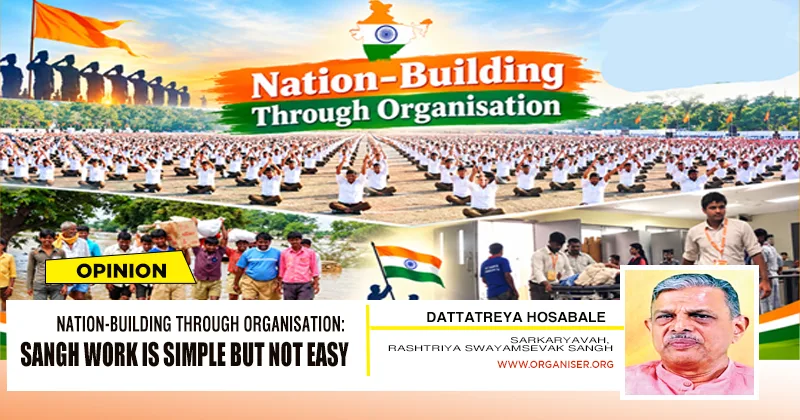
In a vast and diverse country like Bharat, unity does not mean eliminating diversity but considering oneself part of a larger national family despite those diversities. We are all members of one vast Bharatiya family. The spirit of Vasudhaiva Kutumbakam expresses Bharat’s broad outlook. Therefore, it is necessary to connect different sections of society and participate in each other’s happiness and sorrow. Organising society is not a one-day task. Just as a player or runner has to practise every day to maintain his capability, continuous effort is also necessary for organising society. For a runner, practising running every day is not always easy, but without continuous practice, he cannot develop his ability. Similarly, organising society may appear simple but it is not easy as it requires discipline,patience and persistence. In the shakha, the feeling of devotion to the nation is developed by rising above differences of caste and language. This work of individual development and social organisation should continue constantly. The Rashtriya Swayamsevak Sangh does not work by considering itself separate from society. The Sangh is itself a part of society. Organising the strength of society, building character in individuals and awakening society towards its responsibilities are part of its work.
The Sangh’s objective is not limited to any one field. The journey from individual development to social organisation and from social organisation to nation-building is a continuous process. Bharat’s supreme glory does not mean only economic or military strength. Bharat’s supreme glory lies in building a society that is characterised, capable, organised, sensitive and aware of its responsibilities.
Self-confidence alone is not sufficient in society; strength and capability are also necessary. The purpose of a powerful society should not be to harm another society or individual, but to establish humanity and contribute to the development of human life. In Bharat’s tradition, strength has always been connected with public welfare. Therefore, the strength of society should be used for the protection and development of humanity, the nation and culture.
Bharat is progressing rapidly and, along with this, self-confidence among the citizens of the country is also increasing. The growing interest and respect for Bharat in the world is an indication of this change. Bharat’s journey is a continuous journey. Problems will continue to arise, circumstances will continue to change, and new challenges will continue to emerge, but society will have to retain the capacity to face them on the strength of its power, character and organisation. This strength has been a characteristic of Bharat’s enduring civilisation.
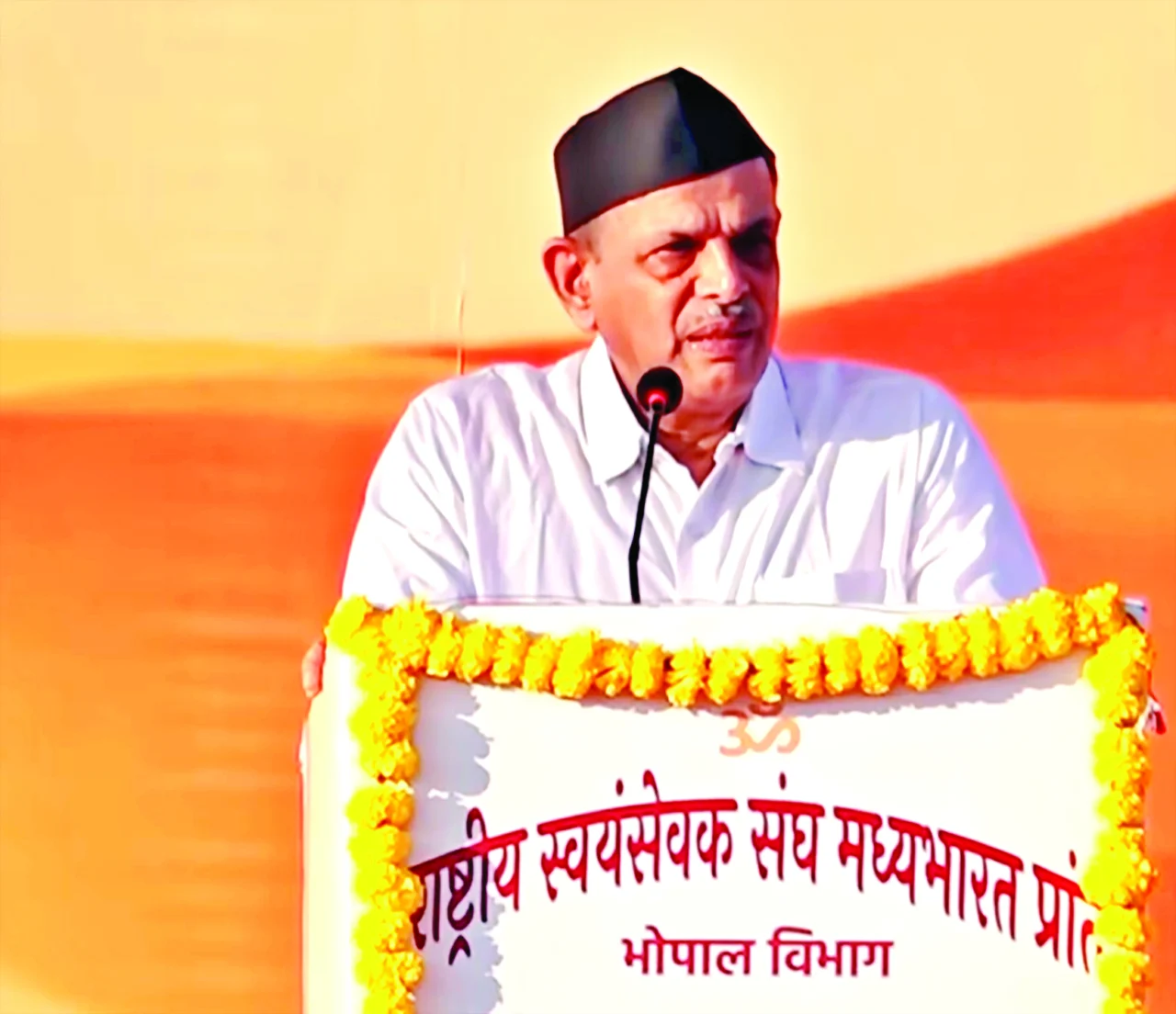
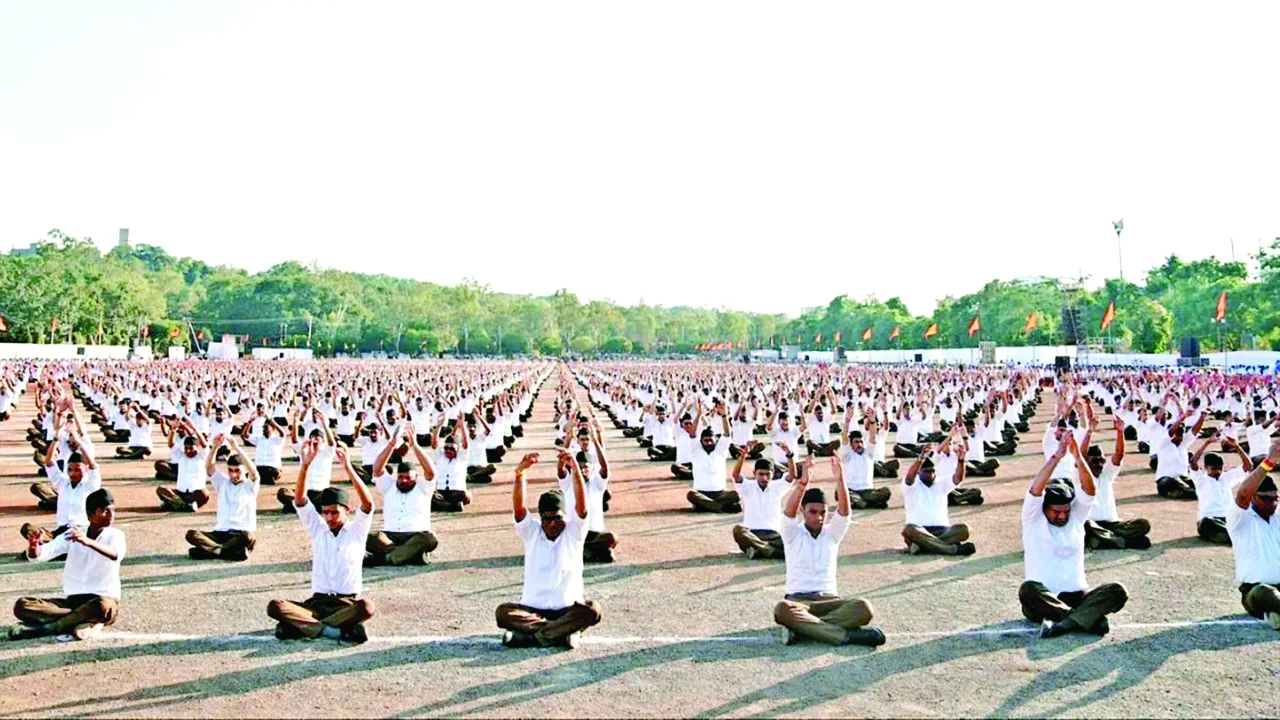
(This was a keynote speech given by RSS Sarkaryavah Dattatreya Hosabale, addressed to 30,000 Swayamsevaks and 5,000 members of society during the Sangh’s centenary year celebrations at Lal Parade Ground, Bhopal on September 20, 2026)