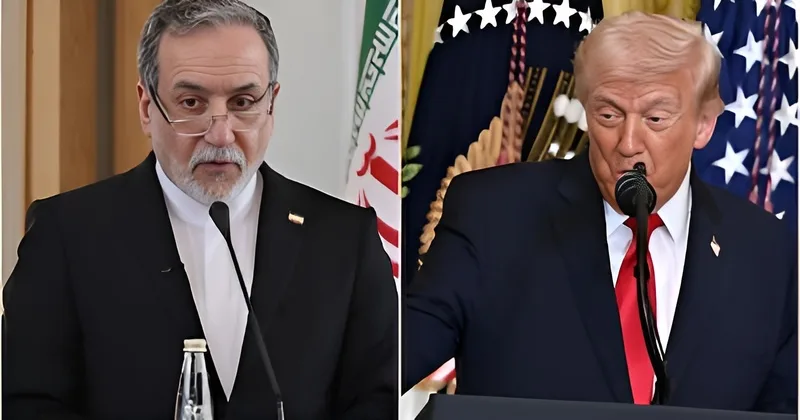
Washington/ Tehran: Iran has announced the reopening of the Strait of Hormuz following the declaration of a 10-day ceasefire between Israel and Lebanon. However, confusion and uncertainty continue to surround the decision. Iranian Foreign Minister Abbas Araghchi clarified that the strait will remain open for only 10 days, and strictly for commercial shipping. Despite this clarification, the move has triggered criticism within Iran.
Several Iranian media outlets and student organisations have called for a reassessment of the decision. At the same time, groups and media networks affiliated with the Islamic Revolutionary Guard Corps (IRGC) have voiced strong opposition, warning that “Iran must not yield to the interests of the enemy.”
Restricted passage and internal divisions
The reopening marks the first time the Strait of Hormuz has been accessible since the Israeli-US coalition launched its offensive against Iran in late February. However, reports indicate that access remains tightly controlled. Only ships that receive prior approval following inspection by the IRGC are currently allowed to pass. There is also uncertainty over whether Iran is imposing a “toll” on vessels using the strait. Some reports suggest that the IRGC is selectively permitting passage only to ships from countries that have not supported the Israeli-US coalition’s military actions. Since the announcement, eight ships have reportedly passed through the strait. Iran has also begun clearing booby traps, including naval mines, that had been deployed in the waterway during the conflict.
Trump’s response and strategic signals
US President Donald Trump welcomed Iran’s decision, calling it “a great day for the world” and publicly thanking Tehran. However, he also made it clear that the US military would continue its operations in the region. According to Trump, US forces will maintain restrictions on vessels linked to Iran, specifically blocking ships travelling to and from the country. Trump further stated that a peace agreement between the United States and Iran could be signed soon. He suggested that negotiations have progressed significantly, with “a lot of agreement” and no particularly strict conditions.
In a notable and controversial remark, Donald Trump said that the United States would take control of Iran’s nuclear waste, stating that the US would buy Iran’s nuclear waste, described as “nuclear dust,” from the nuclear programmes that American warplanes had destroyed. At the same time, Trump dismissed reports that the US would pay $20 billion in exchange for this material, insisting that no financial compensation would be involved. Trump took a critical stance toward NATO, urging the alliance to stand aside despite its earlier statements supporting safe passage through the Strait of Hormuz. He appeared frustrated that NATO had previously declined to assist when requested and indicated that the United States could consider withdrawing from the alliance.
Peace talks, Uranium deal, and economic fallout
Fresh rounds of Iran-US peace talks are expected to take place in Islamabad, with mediation led by Pakistan and support from Egypt and Turkey. If negotiations progress to the stage of a formal agreement, Trump is likely to attend the signing ceremony in person.
Meanwhile, emerging reports suggest that Iran has demanded financial compensation in exchange for transferring nuclear material, specifically uranium. Approximately 2,000 kilograms of uranium are expected to be part of this transfer. The US believes that acquiring this material could help prevent Iran from advancing its nuclear weapons programme. Iran has reportedly demanded $27 billion in compensation for war-related losses. In response, the United States is said to have offered $600 billion in humanitarian assistance, although details of this proposal remain unclear.
The reopening of the Strait of Hormuz has had immediate effects on global markets. Crude oil prices dropped sharply following the announcement. US West Texas Intermediate (WTI) crude fell by 11.45 per cent to $83.85 per barrel, while Brent crude declined by 7.21 per cent to $92.22 per barrel. Both benchmarks had previously surged to between $110 and $120 per barrel during the peak of the conflict. Gold prices, however, moved in the opposite direction. As the US dollar weakened, gold gained value. The US dollar index, which measures the currency against six major counterparts including the euro, yen, and pound, fell to 97.65 before recovering slightly to 98.23. Meanwhile, international gold prices rose by $45 per ounce, reaching $4,831.
Despite the temporary reopening of one of the world’s most critical maritime chokepoints, the broader geopolitical and economic outlook remains uncertain, with multiple unresolved questions continuing to shape the situation.